Squash rackets are the lightest in the racket family — typical strung weights run 110–170 g. Ten grams either way changes how the racket feels dramatically, which is why the “what weight should I buy” question answers differently depending on who’s asking.
This chart and guide give a straight answer for beginners, juniors, advanced players, and players with arm or elbow complaints, plus the two numbers people often ignore: the balance point and the frame head size.
Weights below are strung weight (what the racket weighs ready to play, including strings). Unstrung, subtract roughly 15–20 g. Same frame, different marketing label is the single biggest source of confusion in equipment stores.
Player profile
Recommended weight
Why
Junior (8–12)
110–125 g
Short arms, light swing; a heavy racket is tiring and slows the hit.
Adult beginner (most)
130–140 g
The all-rounder sweet spot: fast swing, stable on off-center hits, enough mass for length.
Speed / defense-first
120–130 g
Wristy, quick racket for get-everything-back players.
Power hitter / advanced
140–150 g
Plow-through, stability against hard-hitting opponents.
Arm / elbow sensitivity
140–150 g (flexier frame)
More mass soaks up shock; pairs with a softer string bed.
Wide-body / retro wood frames
150–170 g
Heavy, powerful, very stable — mostly vintage and recreational now.
Newer players should start 130–140 g and only drift up or down after a few sessions of telling the difference.
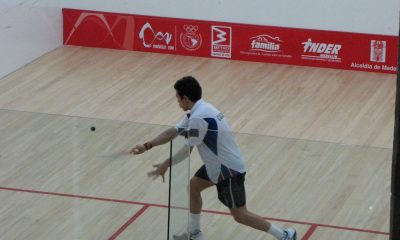
Bishop’s Stortford Squash & Racket Ball Club – CC CC BY-SA 2.0 (Wikimedia Commons)
What the weight actually does
Weight is about trade-offs, not “heavier = better”.
Lighter rackets (<125 g): swing fastest, generate racket-head speed easily, and are kind to the arm. Downside: less mass means less plow-through, so beginners lose length on off-center shots and feel more vibration.
Mid-range (130–140 g): the balance most pros and high-level players settle on. Quick enough for the modern power game, substantial enough for control. This is the default recommendation for the widest range of playing levels.
Heavier (140–170 g): more punch and stability, and they absorb shock from fast incoming balls. But they swing slower and demand more wrist, forearm, and timing. On mishits they can send more jarring feel into the elbow.
Balance and head size matter as much as grams
Two rackets can weigh the same 135 g and feel totally different:
Head-light balance: weight sits toward the grip. The head is easier to whip → more racket speed, less arm fatigue. The overwhelming modern preference.
Head-heavy balance: weight sits toward the frame. More power into the ball on short swings, but sluggish to change direction and harder on the wrist. Mostly found in older recreational frames.
Head size (mid-#### for squash): typically 70–75 sq in (400–480 cm²). Larger heads = more power and forgiveness; smaller heads = more control for skilled hitters. Beginners should lean toward the bigger end (mid-plus to oversize ~75 in²).
Grip, strings, and the “unstrung vs strung” trap
Grips: a heavier replacement grip or an extra overgrip adds roughly 5–10 g — a real difference at this weight class. If a racket feels too light, adding a thicker grip is the cheapest tuning trick.
Strings: strung weight is 15–20 g above the bare frame. Always compare rackets using the strung number.
Tension on the chart: this weight guide assumes a normal 26–30 lb string tension. Cranking to 32+ lb makes the frame feel stiffer and the ball pocket less, which fights the “forgiving” feel a beginner bought.*
A 130–140 g head-light racket at a friendly tension is the safest buying guide for a first squash racket.
Weight vs the rest of the racket family
Squash rackets are the featherweights:
Tennis: 255–320 g strung.
Pickleball paddles: usually 7.5–8.6 oz (about 213–244 g), converted loosely.
Padel rackets: 350–390 g.
Badminton rackets: 80–110 g (the only lighter family).
Squash: 110–170 g.
The reason squash frames run so light is the sport’s speed — the ball is tiny, the rallies are rapid, and the swing has to be repeatable for 45 minutes without the arm turning to jelly.
What weight for a beginner? Start at 130–140 g strung, head-light, bigger head size.
Should juniors get the same frame as adults? No — 110–125 g and a shorter handle if you can find one.
Does weight cause tennis elbow? Heavier, flexier rackets generally feel kinder than very light stiff ones. Do not drop below ~125 g if you already have elbow trouble.
Is 150 g right for a casual player? Only if you want the extra stability, are happy to swing slower, and don’t have wrist complaints. Start at 135 g and adjust up.
Weight ranges follow current manufacturer strung-weight figures for 2025–2026 model lines. Beginners intending to play seriously should see a racket specialist for a demo session before buying — feel beats spec sheets.
Racquet sports player and writer covering pickleball, padel, tennis, badminton, and squash. Former collegiate tennis player turned recreational pickleball enthusiast. Jackson writes beginner-friendly guides to help new players get on court faster.











Recent Comments