Tennis has a reputation for being mysterious — partly because of the scoring, which is genuinely weird, and partly because it’s a sport full of unwritten etiquette. But the actual rules are simpler than people assume. The court is a rectangle, the ball bounces once per side, and the net is the enemy. The rest is vocabulary.
Here’s the rulebook in the order you’ll meet it on your first afternoon.
August 24, 2017
Court 15
Flushing, NY
Polona Hercog.
www.stevenpisano.photo – CC CC BY 2.0 (Wikimedia Commons)
The court, in one paragraph
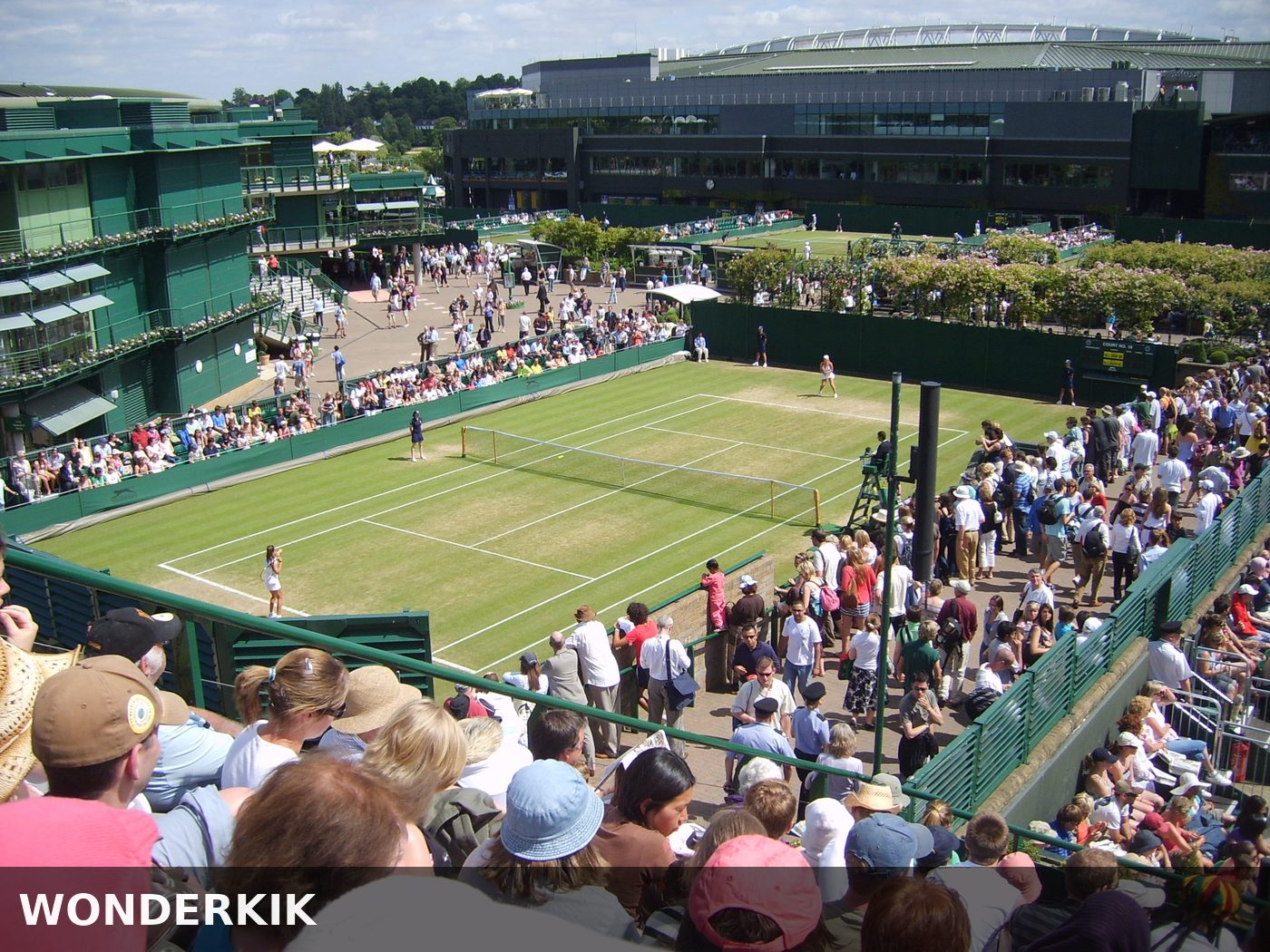
A tennis court is 23.77 metres long and 8.23 metres wide for singles, wider for doubles (add 1.37 metres total). A net, 0.914 metres high in the center, divides it. The back area is divided into two service boxes on each side by a center service line and the service lines that run parallel to the net. That’s it. Ball lands on the line? Inside. Lines are part of the court — that catches beginners every single time.
Maltipoo and cavapoo running to return a tennis ball – CC CC BY-SA 4.0 (Wikimedia Commons)
The serve: the only part with real form
You serve from behind the baseline, standing to the right of center to start. The rules:
One foot stays on the ground — no jumping up into the serve (well, your back foot can leave, but you can’t run or walk while serving).
No stepping on the baseline until you’ve hit the ball.
The serve goes diagonally into the opposite service box.
Two attempts. Miss both (double fault) and you lose the point.
If the ball clips the net but still lands in the correct box, it’s a let — a replay with one serve allowed. Net, over, in = let. Net, over, out = fault.
Aside from the serve, the rest of the game has only one real restriction: the ball can bounce once on each side before you hit it back. After the serve and return, you can also volley — hit it out of the air — as long as you’re not standing on the serve’s flight path absurdly. Volleys are legal everywhere except never touch the net, and never reach over it.
First point = 15, second = 30, third = 40, fourth = game.
If both players are at 40, it’s deuce.
From deuce, you need two clean points in a row: first one gives you advantage (ad-in or ad-out), the next one wins the game.
A game = four points (more with deuce). A set = six games, win by two. A match = best of three sets (or five at grand slams, men’s singles).
At 6–6 in a set, you play a tiebreak: first to 7 points, win by two.
That’s the full scoring system. It’s archaic and it’s entirely learnable in one match — which is exactly why it’s a paste on your phone’s notes app for the first couple of weeks.
What’s out? What’s in?
The whole line is in. If the ball lands on the back line, it’s in. On the sideline, in. Only past the line, out. If you’re not sure, it’s your opponent’s call to make — the buddy rule of tennis is the player closest to the ball calls it. If you’re both unsure, and the ball landed close, call it in. That’s sportsmanship, and it’s also the etiquette that keeps friendly matches friendly.
The common beginner faults
Hitting the ball into the net (obviously).
Hitting it long or wide (aim for the lines, lands short — the eternal beginner trap).
Double-faulting on serve (relax; everyone does it for a month).
Losing focus between points — you have 20 seconds, use them to breathe, not to argue with yourself.
Not calling the score before you serve. The server announces “15-love” (or whatever) before each point. Start that habit early.
The one rule everyone forgets: changeovers and rest
Here’s the sneaky one in a 90-minute match: you switch ends when the total games in the set is an odd number, and you get a break to do it. It’s supposed to be roughly even rest for both players. First changeover after the first game, then every two games.
You also can’t just stop the point because a stray ball rolls in — you can call a let and replay if a ball from another court rolls across yours, but you have to do it before you hit. After the point, it’s too late and the point stands.
Serve diagonally from the baseline, two attempts, one foot on the ground. Lines are in, everything past them is out. Bounce once per side; volleying is fine after the serve is returned. Count 15-30-40-game, six games a set with a tiebreak at 6–6, and call the score before every serve.
Good news: you now know more than about half of the recreational players you’ll face. Go white-ball it up — you’ve got this.
Racquet sports player and writer covering pickleball, padel, tennis, badminton, and squash. Former collegiate tennis player turned recreational pickleball enthusiast. Jackson writes beginner-friendly guides to help new players get on court faster.


















Recent Comments