Tennis has a reputation for being mysterious — partly because of the scoring, which is genuinely weird, and partly because it’s a sport full of unwritten etiquette. But the actual rules are simpler than people assume. The court is a rectangle, the ball bounces once per side, and the net is the enemy. The rest is vocabulary.
Here’s the rulebook in the order you’ll meet it on your first afternoon.
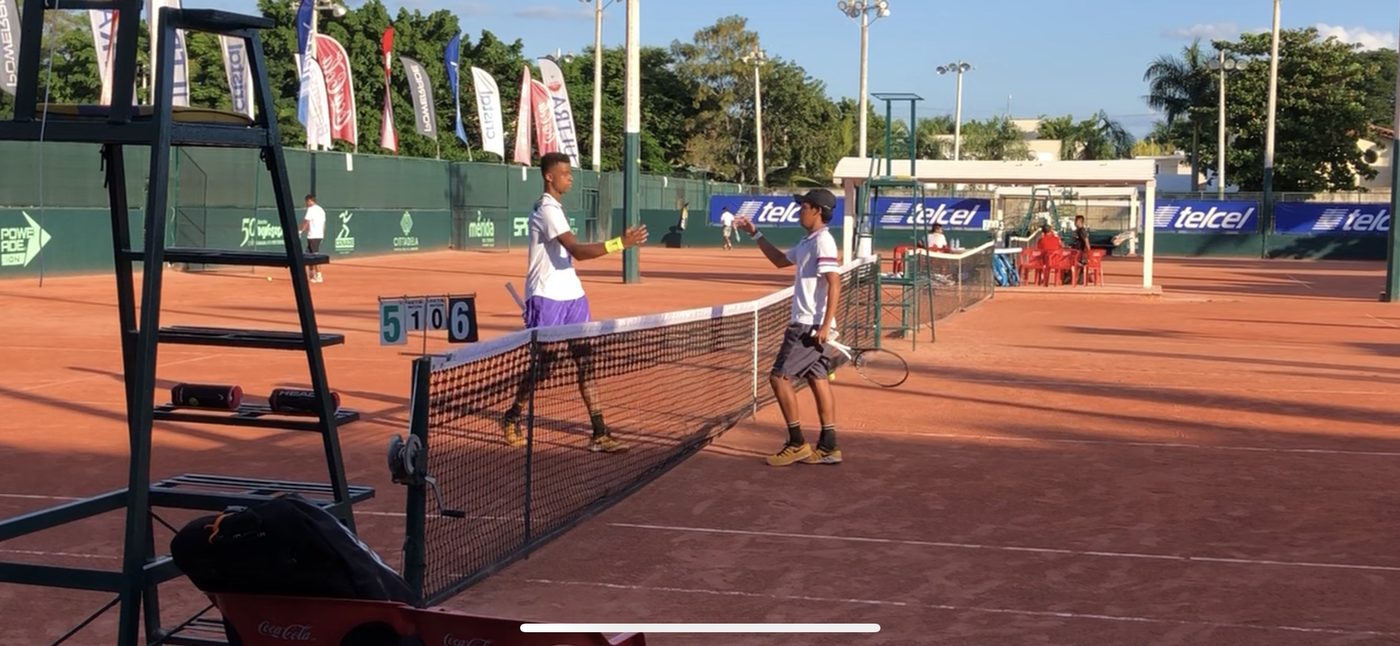
August 24, 2017
Court 15
Flushing, NY
Polona Hercog.
www.stevenpisano.photo – CC CC BY 2.0 (Wikimedia Commons)
The court, in one paragraph
A tennis court is 23.77 metres long and 8.23 metres wide for singles, wider for doubles (add 1.37 metres total). A net, 0.914 metres high in the center, divides it. The back area is divided into two service boxes on each side by a center service line and the service lines that run parallel to the net. That’s it. Ball lands on the line? Inside. Lines are part of the court — that catches beginners every single time.
Maltipoo and cavapoo running to return a tennis ball – CC CC BY-SA 4.0 (Wikimedia Commons)
The serve: the only part with real form
You serve from behind the baseline, standing to the right of center to start. The rules:
One foot stays on the ground — no jumping up into the serve (well, your back foot can leave, but you can’t run or walk while serving).
No stepping on the baseline until you’ve hit the ball.
The serve goes diagonally into the opposite service box.
Two attempts. Miss both (double fault) and you lose the point.
If the ball clips the net but still lands in the correct box, it’s a let — a replay with one serve allowed. Net, over, in = let. Net, over, out = fault.
Aside from the serve, the rest of the game has only one real restriction: the ball can bounce once on each side before you hit it back. After the serve and return, you can also volley — hit it out of the air — as long as you’re not standing on the serve’s flight path absurdly. Volleys are legal everywhere except never touch the net, and never reach over it.
First point = 15, second = 30, third = 40, fourth = game.
If both players are at 40, it’s deuce.
From deuce, you need two clean points in a row: first one gives you advantage (ad-in or ad-out), the next one wins the game.
A game = four points (more with deuce). A set = six games, win by two. A match = best of three sets (or five at grand slams, men’s singles).
At 6–6 in a set, you play a tiebreak: first to 7 points, win by two.
That’s the full scoring system. It’s archaic and it’s entirely learnable in one match — which is exactly why it’s a paste on your phone’s notes app for the first couple of weeks.
What’s out? What’s in?
The whole line is in. If the ball lands on the back line, it’s in. On the sideline, in. Only past the line, out. If you’re not sure, it’s your opponent’s call to make — the buddy rule of tennis is the player closest to the ball calls it. If you’re both unsure, and the ball landed close, call it in. That’s sportsmanship, and it’s also the etiquette that keeps friendly matches friendly.
The common beginner faults
Hitting the ball into the net (obviously).
Hitting it long or wide (aim for the lines, lands short — the eternal beginner trap).
Double-faulting on serve (relax; everyone does it for a month).
Losing focus between points — you have 20 seconds, use them to breathe, not to argue with yourself.
Not calling the score before you serve. The server announces “15-love” (or whatever) before each point. Start that habit early.
The one rule everyone forgets: changeovers and rest
Here’s the sneaky one in a 90-minute match: you switch ends when the total games in the set is an odd number, and you get a break to do it. It’s supposed to be roughly even rest for both players. First changeover after the first game, then every two games.
You also can’t just stop the point because a stray ball rolls in — you can call a let and replay if a ball from another court rolls across yours, but you have to do it before you hit. After the point, it’s too late and the point stands.
Your first match in four lines
Serve diagonally from the baseline, two attempts, one foot on the ground. Lines are in, everything past them is out. Bounce once per side; volleying is fine after the serve is returned. Count 15-30-40-game, six games a set with a tiebreak at 6–6, and call the score before every serve.
Good news: you now know more than about half of the recreational players you’ll face. Go white-ball it up — you’ve got this.
Reading Next
Related guides from the WonderKik racket-sport series:
Tennis is the only major sport where a beginner can know the rules perfectly and still be lost at 15-30, because the scoring system stopped making obvious sense sometime in the 16th century and nobody ever replaced it. We’re going to fix that properly.
No vague gestures at “like normal counting.” Exact numbers, exact flow, and a mock match so you can hear it before you play it.
This is an image with the theme “Health and Wellness in Africa” from: – CC CC BY-SA 4.0 (Wikimedia Commons)
Why love means zero
“Love” — zero — comes from the French word l’œuf, the egg, meaning a zero-shaped object. A century ago a scorebook with nothing written in it looked like a row of eggs. That stuck. So when someone says “30-love,” they mean thirty-zero, which is why the server normally says the server’s score first: the server announces their own number, then the receiver’s.
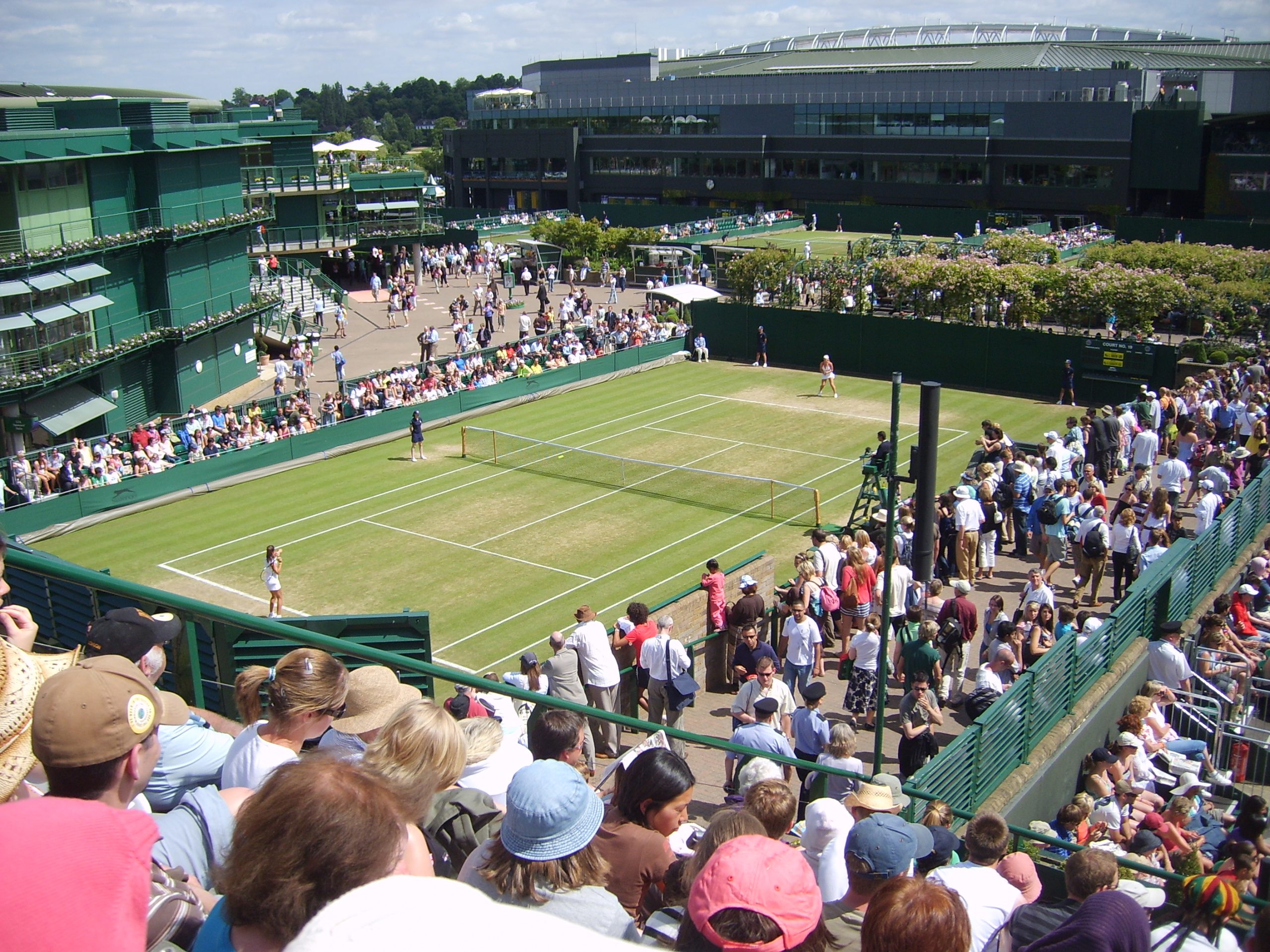
Laura Robson (nearest to the camera) in action on court 19 during the en:2008 Wi – CC CC BY-SA 3.0 (Wikimedia Commons)
How a single point becomes a game
The ladder, memorized once, forever:
Points won
Score word
0
Love
1
15
2
30
3
40
4
Game
Across the net it’s a conversation. After one point each, the server calls “15-15.” After 3:0 it’s “40-love.” When both players reach 40, it stops counting up and enters the movie’s final act:
Deuce and advantage
At 40-40 it’s deuce. From there, the winner of the next point holds advantage (“ad-in” if the server won, “ad-out” if the receiver did). Win that next point too, and you win two clean points in a row, game over.
The pattern loops:
Advantage → lose point → back to deuce.
Deuce → win → advantage → win → game.
That’s why a single game can crawl on for ten minutes when both players are holding serve nervy. You need that two-point cushion, and neither player can force it.
Fun variant, modern tennis: no-ad scoring (Fast4, many doubles events, and more clinics) — at deuce, just one point decides it, and the receiver chooses which side to receive from. If a club says “we play no-ad,” that’s what they mean. Ask at the desk; half the places around the world play it now.
From game to set: the win-by-2 rule
A set is six games, win by two. No-set (okay, no) — if it reaches 5–5, you keep playing until someone gets a two-game lead (7–5, 8–6…). If it reaches 6–6, modern tennis doesn’t let it run forever: you play a tiebreak, and suddenly scoring looks normal again.
The tiebreak, exactly
The player whose turn it is to serve serves one point from the deuce side (right).
Then the opponent serves two points (left, then right).
Then they alternate two serves each until the end.
First to 7 points, win by 2 takes the set (score: 7-6).
Change ends after every 6 points (after points 6, 12, 18…).
If the tiebreak hits 6–6, it keeps going until someone gets that two-point cushion — 8-6, 9-7, however long it takes. A final-set tiebreak to 10 points (the “champions tiebreak”) is common in doubles and mixed matches, and some tournaments use it in the decider.
Ladder to match: what “best of” means
Best of three sets: win two sets, match over. Standard for WTA and most ATP events.
Best of five sets: win three sets. The grand slams (men’s singles) roll with this — a five-set final can run five hours.
Match formats are getting shorter deliberately: some ATP events play best-of-three with a match tiebreak in the third, and the WTA uses a 7-2 third-set tiebreak at the warm-up events. Same scoring skeleton, smaller canvas.
A mock game, you’ll hear it, not read it
Server starts, wins point: “15–love.” Receiver wins the next: “15–15.” Server wins two more: “40–15.” Server misses a first serve, nets the second — double fault — “40–30.” Server wins the point: “Game, [name].“
New game, still close, scores climb to “deuce” … “ad-out” … “deuce” again, “ad-in,” then a winner down the line: “Game.
Match ends 6-3, 3-6, 7-6(4) — that little (4) in the third set is the tiebreak score, so 7-6(4) means “won the tiebreak 7 points to 4.” You’ll see that notation on every app and leaderboard on earth. Now you can read it.
The fifteen seconds you’ll actually use
Before every serve: call “server score, receiver score” — “30-40,” “love-30,” whatever it is, out loud. It settles the point before it starts, it settles any argument instantly, and it’s the habit every single beginner should build in week one.
Because deep down, everyone even slightly lost at tennis is really just lost at the scoreboard. You’re not anymore.
Reading Next
Related guides from the WonderKik racket-sport series:
Every tennis pro shop has a wall of rackets that look identical and cost from $35 to $400. The difference between these two price points for someone who has played for three months is close to zero — which is both the good news and the reason this guide exists.
You do not need the $250 Pro Staff matrix racket. You need a racket that fits your height, your grip, and your level — and the $120 racket does that just as well until your forehand is a known quantity.
Guillaume Rufin serves to Tomas Berdych at Rod Laver Arena in the 2nd round of t – CC CC BY-SA 3.0 (Wikimedia Commons)
The three specs that matter
1. Head size: 100–110 square inches, that’s it
Beginner rackets come with oversized heads (up to 115 sq in) or mid-plus (around 100). Oversized gives you a bigger sweet spot — more forgiving when your contact point is a generous interpretation of “in front.” Midsize rewards the advanced player with control.
For your first racket: 100–108 square inches spend. On that window, frame choice matters far less than weight. If you’re picking purely by spec, mid-plus (100–102) tends to age the best — you won’t need to “grow out of it” the way the 115-inch rackets make you.
2. Weight: lighter than you think, heavier than you fear
First-racket weight ranges 255–300 grams (about 9–10.6 oz). The rule:
Under 270g: junior-fast, arm-risk low, great for kids, seniors, or recovering players.
270–290g: the adult beginner sweet spot. Light enough to swing all afternoon, heavy enough to actually hit a ball.
290g+: beginner “tour surplus” — heavier and stiffer, guaranteed to fatigue you before it teaches you anything.
The beginner trap is buying a heavy racket “to grow into.” Don’t. A racket you’re fighting in match three doesn’t make you better; it makes you injured. Keep it under 290g.
3. Grip size (the one people forget)
Grip size 0 to 4 (American sizing, 4 1/8 to 4 5/8 inches). The self-test: hold the racket in your non-playing setup — wait, the proper test — comfortable grip in the palm, and your ring finger’s pad should just touch your palm base. If your fingers dig into your palm, too small. If you can’t make the pad touch, too big.
Bigger grip = more wrist protection (less lever for force) but less spin flexibility. Smaller grip = spin-friendlier but risk of “white knuckle syndrome.” For most adults: 4 1/4 (size 2) or 4 3/8 (size 3), with 4 3/8 comfortable for most women and slimmer men.
Maltipoo and cavapoo running to return a tennis ball – CC CC BY-SA 4.0 (Wikimedia Commons)
Pre-strung: buy it pre-strung
For a first racket, buy pre-strung. The string world — tension, gauge, “poly vs synthetic” — is a second research project that doesn’t matter yet. Synthetic string at mid tension is right for 100% of true beginners. Re-string when the strings fray, not out of fashion anxiety.
How much should you actually spend?
Budget
What you get
Verdict
$30–60
Aluminum/plastic, heavy, dead feel
Fine for one summer, then not
$60–120
Graphite, pre-strung, light, forgiving
The sweet spot for your first racket
$120+
Tour-grade tech you won’t feel yet
Overbuying until you’re intermediate
A quality hand-me-down or a $80–100 graphite racket is the honest best-buy for a beginner. “Best” here means: you can swing it for 90 minutes, it forgives off-center hits, and you didn’t pay for a logo.
Famous first picks (why they’re first picks)
Two names you’ll hear a lot:
Babolat Pure Drive (mid-plus) — the most-played racket in amateur tennis, and it’s not close. Good power-to-control ratio, fine for beginners in the lighter versions.
Head Ti.S6 (oversize, ~115 sq in) — the classic forgiving oversized racket, ultra-light. The “barrier to entry” racket that keeps people playing.
Notice neither is top-of-the-line. They’re famous for being the boring reliable one — exactly the energy you want.
One paragraph: your buying flow
Decide $60–120. Choose mid-plus head (100–108) and 270–290g, pre-strung, grip 2 or 3 (test in a shop if you can). Ignore “pro,” “tour,” and “power” claims. Buy the racket you’re comfortable swinging, not the one that matches your idol’s sponsorship deal.
Then go play your first lesson with it. Once the racket stops being the variable, you’ll find out how fast you actually improve.
Reading Next
Related guides from the WonderKik racket-sport series: