“Tennis elbow” sounds like a sport you should quit. It’s not. Lateral epicondylitis — the medical name — is an overuse injury of the forearm tendons where they attach to the outer elbow. It’s common, it’s usually fixable, and — fun fact — pickleball and padel players get it just as often as tennis players.
Here’s tennis elbow treatment in the order that actually works, based on what the evidence and physical therapists agree on.
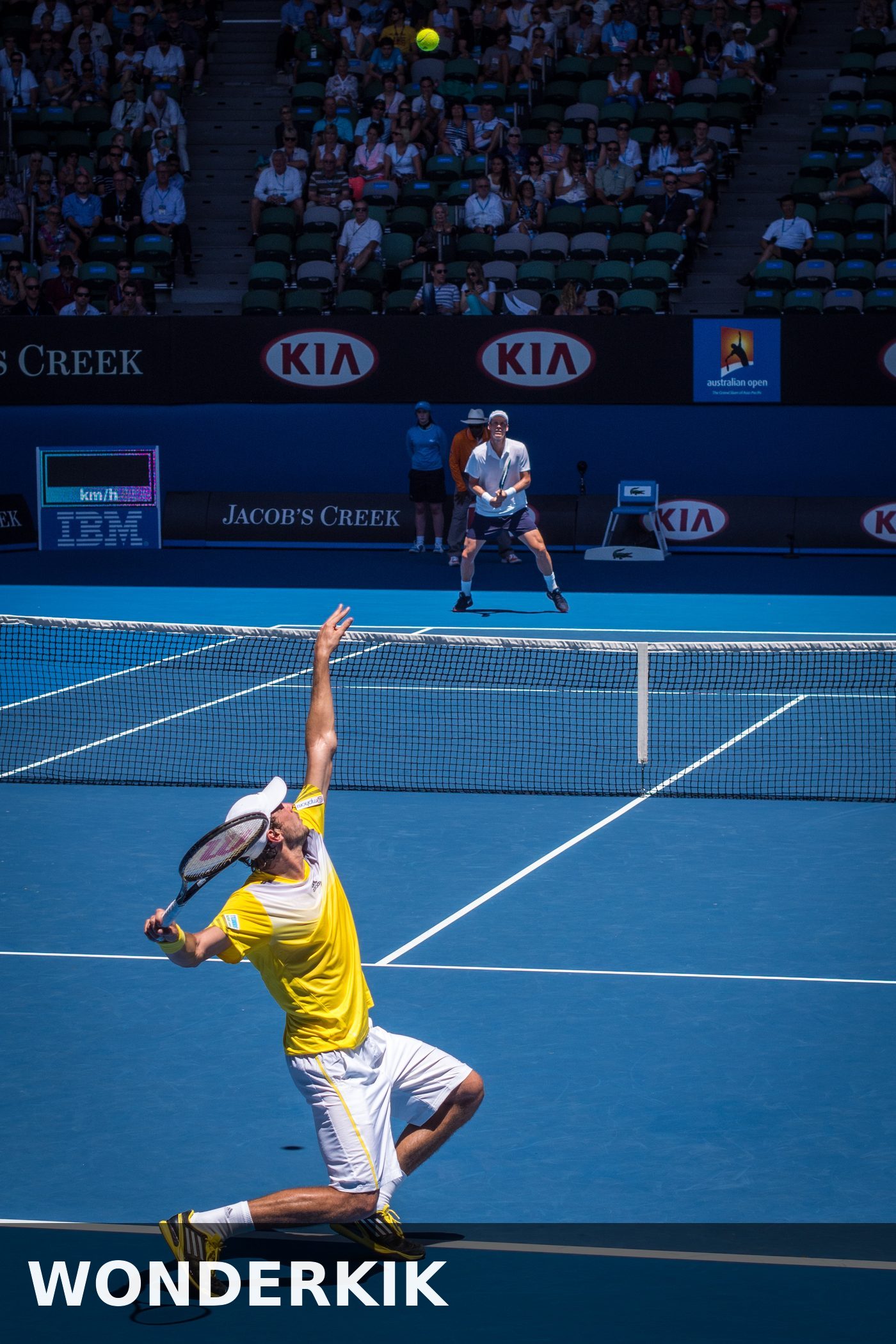
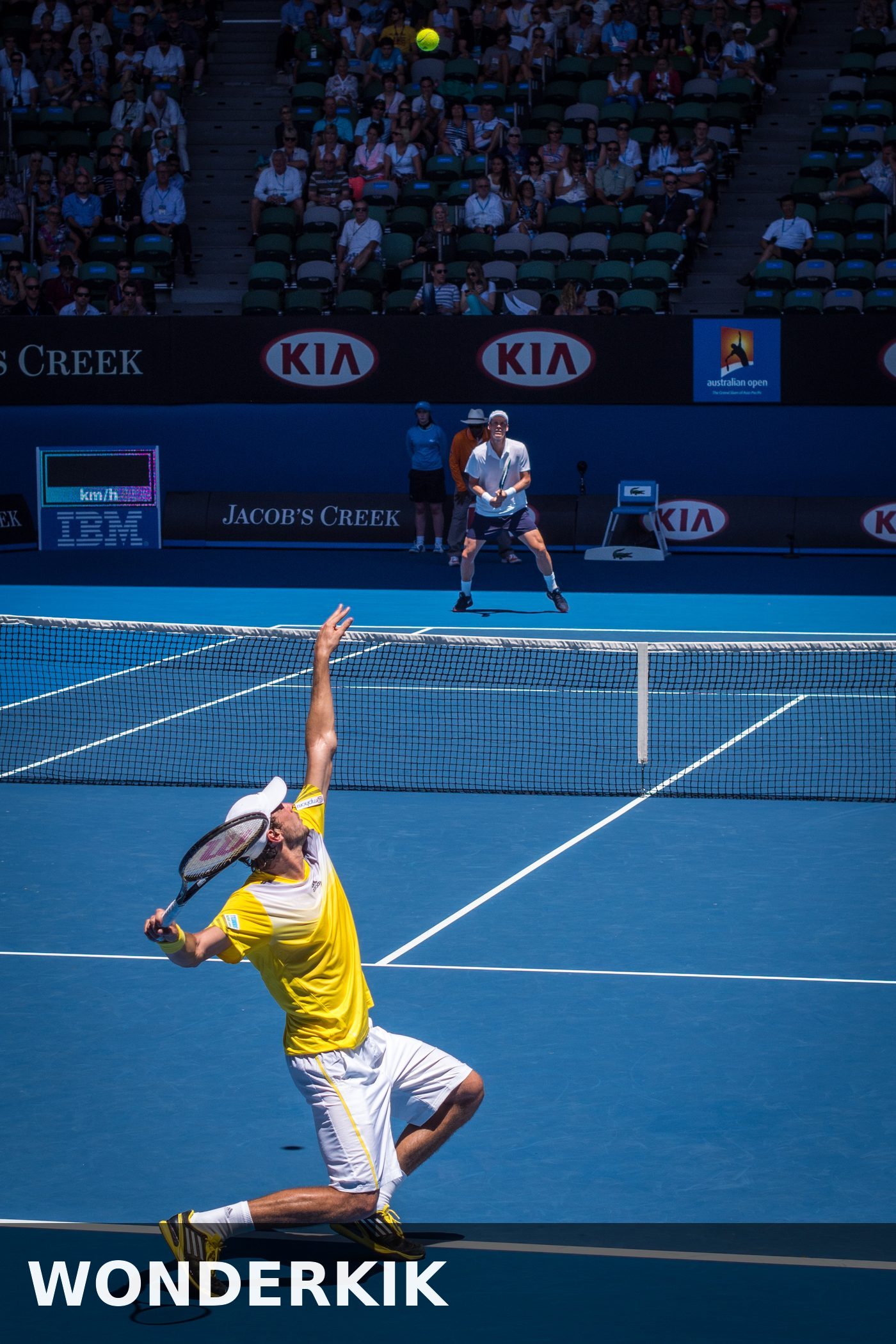
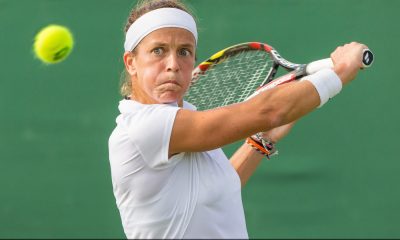
Guillaume Rufin serves to Tomas Berdych at Rod Laver Arena in the 2nd round of t – CC CC BY-SA 3.0 (Wikimedia Commons)
First, the honest reality check
Tennis elbow is a tendon issue, not an inflammation issue. That matters because the classic advice — rest, ice, anti-inflammatories — works on the inflammation model, which is now thought to be wrong (or at least incomplete) for most cases. Modern consensus: it’s a load-management problem. The tendon got too much stress before it adapted, and it’s now grumpy about being loaded.
So the treatment isn’t “do nothing for six weeks.” It’s manage the load and build the tendon back up. That changes everything downstream.
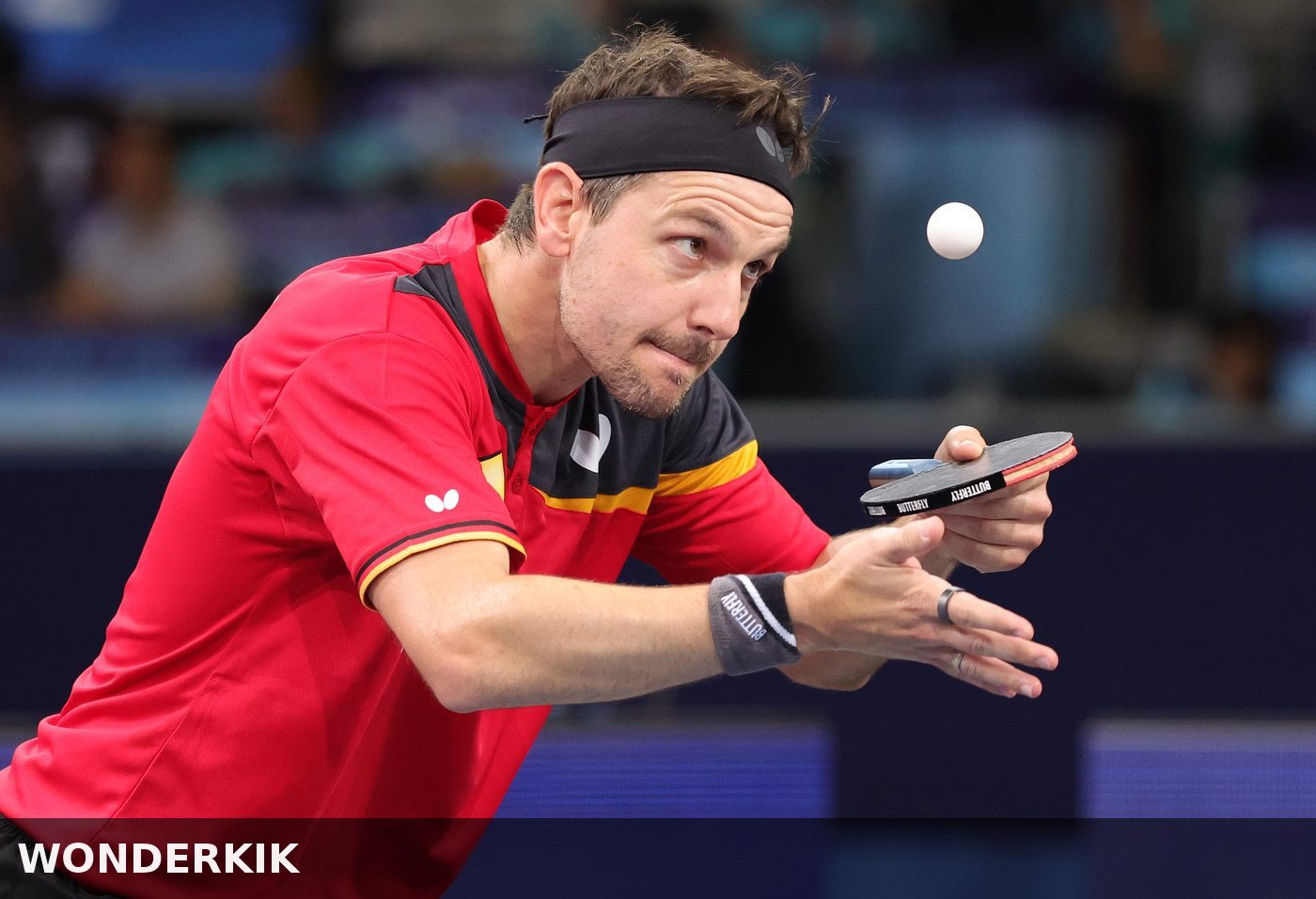
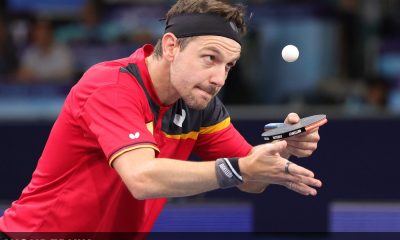
European Table Tennis Championships in the Rudi-Sedlmayer-Halle as part of the E – CC CC BY-SA 4.0 (Wikimedia Commons)
Step 1: Stop the loading, keep the blood
The fastest mistake is full immobilization with a sling for weeks. You need to reduce the aggravating loads — for racket players, time away from the racket or a major downgrade in sessions — but you don’t need to stop living. Use your hurt arm for light daily tasks. Total inactivity makes recovery slower, not faster.
What to cut first as a racket player:
The racket or paddle, for 1–2 full weeks once it’s painful during play.
Gripping hard on anything — door handles, kitchen pans, your phone.
Lifting with a straight elbow and wrist extended (the worst position for this tendon).
Step 2: The exercises that actually work
The evidence base for tennis elbow recovery centers on one thing: progressive, slow, eccentric loading of the forearm extensors. That’s a fancy way of saying “you strengthen the muscle while it lengthens.” The most-cited protocol is very simple:
The eccentric wrist-extension drop:
1. Sit with your forearm on a table, wrist hanging off the edge, palm down (or up — both variants exist).
2. Hold a light dumbbell or a resistance band, and use your other hand to lift your wrist up.
3. Now slowly, over 3–5 seconds, let the injured forearm lower the weight down.
4. That’s one rep. Do 3 sets of 10–15, a couple times daily, every other day. Progress weight slowly — never to the point of sharp pain.
Other genuinely useful exercises:
Wrist flexion and extension with a light band — general forearm rehab.
Finger extensor exercises — squeeze and release a rubber band over the fingertips.
Grip strengthening — squeeze a gel ball with a towel, but start easy; over-gripping during this phase is the #1 way people re-injure themselves.
A physical therapist can prescribe the exact progression. If you’re doing it solo, the rule is: dull muscle burn = progress; sharp tendon pain = back the weight down.
Step 3: The gear and posture fixes (so it doesn’t come back)
Tennis elbow that heals and returns is usually caused by the same habits. Find yours:
Overgrip size: if your racket or paddle grip is too small, your forearm does more stabilizing work. Add an overgrip. (Grip matters in paddles too — our pickleball paddle guide covers fit.)
Racket weight and stiffness: lighter rackets don’t always protect your arm; they force you to generate more power, shifting load to the forearm. A better fix is a slightly heavier, flexible-frame racket and looser string tension. Our beginner racket guide explains the balancing act.
Swing style: players who “spray” the ball with wrist snap injure elbows. Let the legs and shoulder drive the shot; the wrist is a lie connector, not the power source.
Two hands: switching your backhand to two-handed for a season is a classic, effective change.
Step 4: Compression and the brace that mostly works
The classic forearm strap (the band you wear below the elbow) doesn’t cure the tendon — it changes where the load lands, sometimes by enough to let you keep playing pain-free. It’s symptom management, not treatment, but it’s legitimate symptom management. A counterforce brace worn mid-forearm before you start activities often helps more than wrist compression bands.
Step 5: When to see a doctor
Get professional help when:
Pain lasts more than ~6–8 weeks despite sensible load management and exercises.
Pain is sharp or burning at rest, or wakes you at night.
You have numbness in the hand or fingers (that points beyond the tendon, toward nerve involvement).
You’ve had two-plus recurrences in a year.
Doctors will usually run you through imaging and, if it’s stubborn, injections (corticosteroid slows re-injury rates short-term but is now treated cautiously; PRP — platelet-rich plasma — is the newer hot option with mixed but promising evidence), and only rarely surgery. The vast majority — 80–95% depending on the source — resolve with time and the exercise approach above.
The recovery timeline, honestly
1–4 weeks: pain drops as you cut aggravating load and start light exercises.
4–12 weeks: tendon builds strength; you can often return to light play with the brace.
3–6 months: full return for most, if you keep strengthening and fix the gear/form issues.
Racket sports’ version of “full return” means the elbow can tolerate match load again. If you rush back at week three because it “feels fine,” it will feel not-fine by week six.
Tennis elbow in pickleball and padel
Don’t skip this if you’re a paddle player: heavier paddles and hard swings put elbow stress into pickleball and padel too. Two of the biggest gear red flags are a too-light paddle (you swing faster, tendon does more) and a too-stiff one. Same rehab applies, and the same rule — treat the cause, not just the pain.
Typically 4–12 weeks of proper rehab for most people; a minority need longer (3–6 months) and very stubborn cases go to injections or surgery. It depends mostly on how early you start the right load management.
Should I play through tennis elbow pain?
No. Playing through sharp elbow pain makes healing slower. If pain appears during play, stop the session and give the tendon rest days. Mild discomfort during rehab exercises is fine; sharp pain is not.
Will ice help tennis elbow?
It can ease acute aching early on, but it’s not the main treatment. The tendon problem needs strengthening, not just cooling. Use ice pragmatically after painful sessions, not as the centerpiece of recovery.
Do I need surgery for tennis elbow?
Rarely. Surgery is generally considered after months of failed conservative care. The overwhelming majority of cases get better without it.
Can I prevent tennis elbow from coming back?
Mostly yes — keep the forearm exercised regularly, use correctly sized overgrips and appropriate racket stiffness/tension, and change your swing to use your whole body instead of just your wrist and forearm.
Racquet sports player and writer covering pickleball, padel, tennis, badminton, and squash. Former collegiate tennis player turned recreational pickleball enthusiast. Jackson writes beginner-friendly guides to help new players get on court faster.












Recent Comments