They share the same name and the same tendon — lateral epicondylitis, inflammation on the outer elbow. But pickleball elbow and tennis elbow are triggered by different physics, and it changes how you should treat them.
If you’re choosing between the sports, or switching between them, this comparison will tell you which one is more likely to hurt you — and what to do about it.
Health note: performance advice, not a diagnosis. Persistent pain needs a professional.
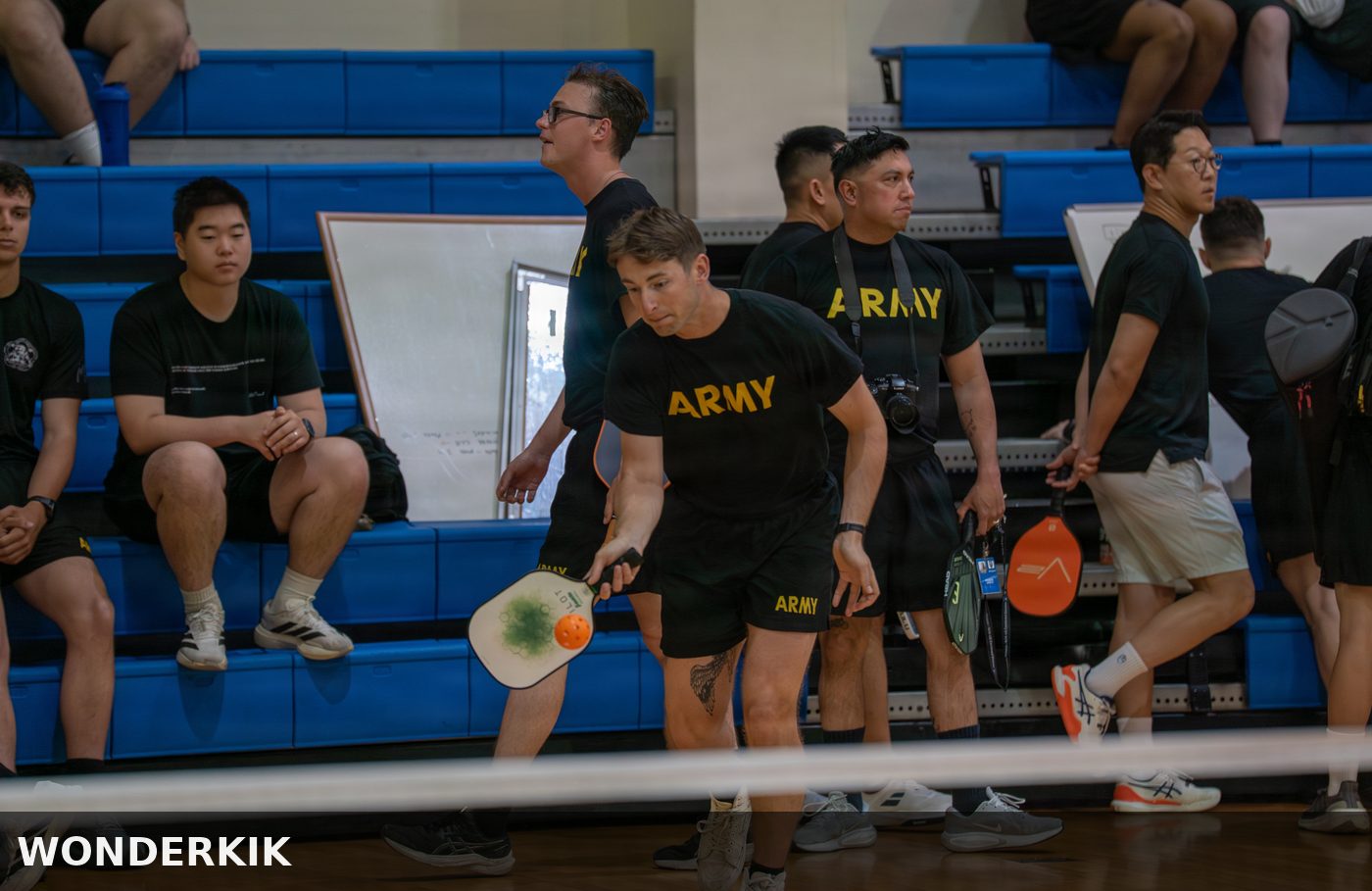
A U.S. Army Soldier returns a volley in a preliminary match during the KATUSA Fr – CC Public domain (Wikimedia Commons)
Same tendon, different causes
Tennis elbow
Pickleball elbow
Pain location
Outer elbow (lateral)
Outer elbow (lateral)
Main trigger
Power: serve, heavy forehand
Volume: hundreds of soft strokes
Typical sufferer
Competitors, former players
Newer adults, high-frequency social players
Stroke profile
Fewer, harder hits
Many, lighter hits (dinks, resets)
Equipment factor
Racket stiffness, string tension
Paddle stiffness, weight
Which hurts more?
For frequency: pickleball. It reaches more people faster. Beginners go three times a week, paddle dozens of times a set, and hit a stiffer surface than most realize. The injury shows up at a lower intensity because the volume is the problem — not the power.
For severity: tennis produces the sharper flares. A serve or a hard forehand can acutely overload a tired tendon, giving the sharpest single-event pain. But it usually happens after years of play, not weeks.
Net answer: pickleball hurts more people sooner; tennis hurts more per hit.
Why switching sports doesn’t cure it
The gospel idea — “give up tennis, play pickleball instead” — works right up until it doesn’t. Pickleball is gentler per shot but heavier per hour (more swings). Switchers load the same outer-elbow tendon with a new movement pattern before it’s recovered, and the pain follows.
The fix that works for both
Rest until functional — you should grip a mug without flinching.
Change the implement — softer-core paddle or a more flexible, looser-strung racket.
Loosen the grip — grip pressure is the #1 aggravator in both sports.
Rebuild slowly — cut session count by half for three weeks, then return to normal.
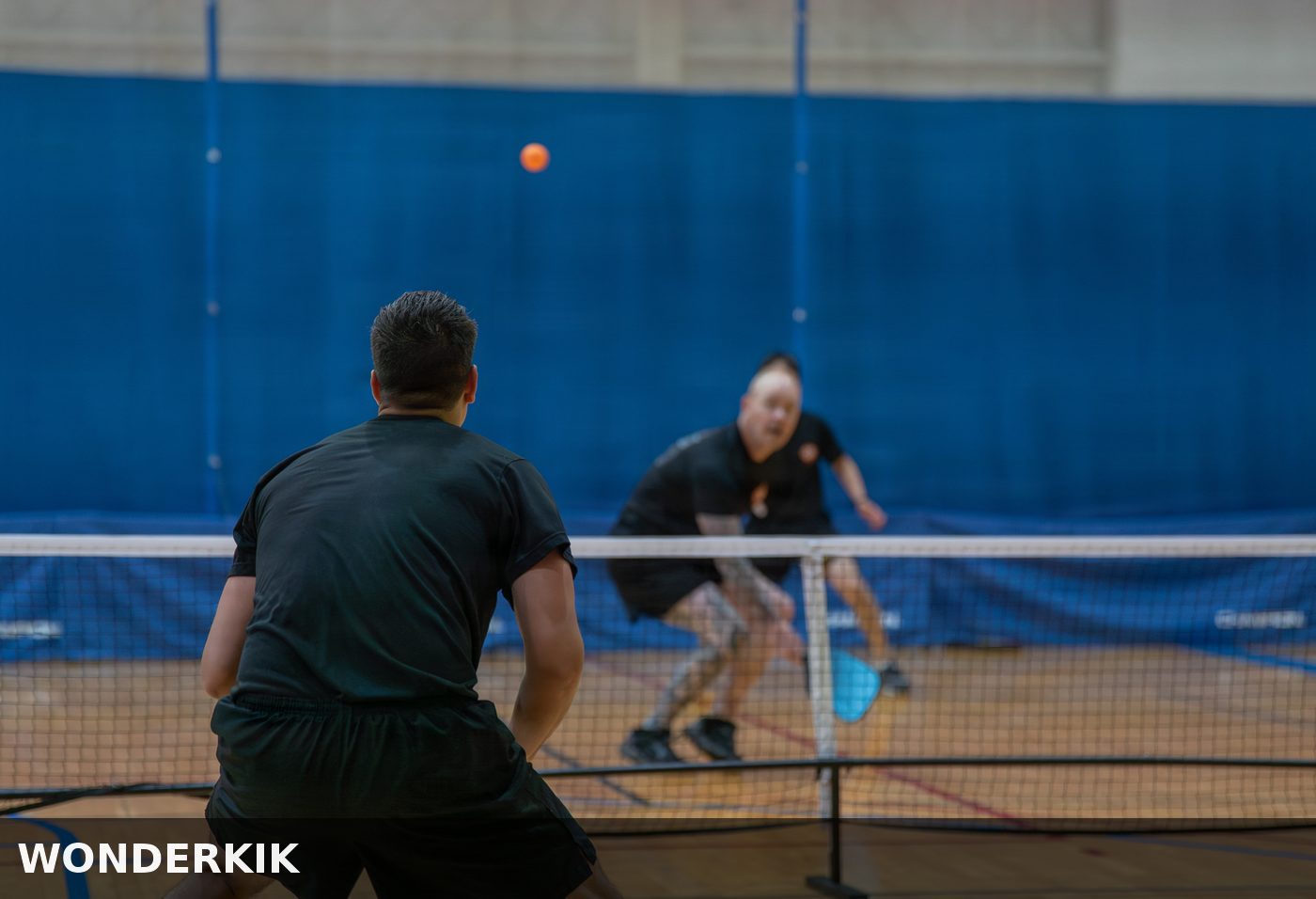
A U.S. Army Soldier strikes the ball during a preliminary match of the KATUSA Fr – CC Public domain (Wikimedia Commons)
Frequently asked questions
Is pickleball elbow worse than tennis elbow?
It’s the same tendons, but pickleball triggers it faster for beginners — shorter, more frequent strokes and stiffer paddles both add up. Tennis elbow comes from intense, power-heavy play; pickleball elbow from volume.
Do pickleball and tennis elbow feel different?
Mildly. Both ache on the outer elbow, but pickleball players often feel it during long rallies (volume-driven) while tennis players feel it on serve and big forehands (power-driven).
Can I switch from tennis to pickleball with elbow pain?
Carefully. The smaller court and paddle are gentler, but the stroke count is higher. Start with shorter sessions, a soft-core paddle, and treat it as load management — not a free pass.
What heals both the fastest?
Load control + a softer implement. Rest until pain settles, then return with a low-vibration paddle/racket and loose grip. Both conditions outgrow most players who fix the gear and the over-hitting.
The bottom line
Pickleball and tennis elbow are the same tendon with different arrest warrants. If you’re new to pickleball, expect the pain needle to move with volume; in tennis, with power. Either way, rest, softer gear, and a looser grip outrank every brace you can buy.
Racquet sports player and writer covering pickleball, padel, tennis, badminton, and squash. Former collegiate tennis player turned recreational pickleball enthusiast. Jackson writes beginner-friendly guides to help new players get on court faster.












Recent Comments