Ask a squash player which racquet sport is the hardest workout and they won’t hesitate. The data agrees: squash consistently tops the racquet-sport charts for heart rate, oxygen uptake, and calories burned. It’s not close.
A casual hour of squash pushes heart rates to 85-95% of maximum during rallies — numbers pickleball players rarely reach on their sport’s best days. Here’s the physiology, the numbers, and what it means for you.
Health note: performance info, not medical advice. Squash is that demanding — be sensible about checkups.
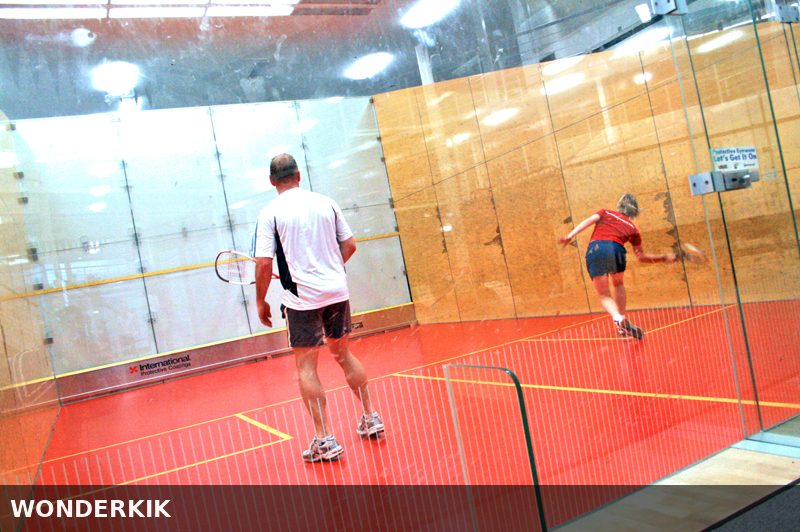
Glass Squash Court – CC CC BY-SA 3.0 (Wikimedia Commons)
The cardio numbers, sport by sport
Sport
Approx. calories/hour (amateur)
Peak heart rate during play
Effort pattern
Squash
650-850
85-95% max
Sprint-rest, dense
Tennis
450-600 (singles)
75-85% max
Intervals + downtime
Badminton
400-600
75-85% max
Explosive bursts
Padel
350-500
65-80% max
Steady, lower intensity
Pickleball
250-400
60-75% max
Gentle, social
Table Tennis
150-250
55-65% max
Short, frequent
Why squash is hard on the heart
Three physics facts explain it:
Pace. The squash ball keeps moving; rallies average 50-70% longer than tennis and the ball stays in play because the walls keep it alive.
No coasting. Every rally is near-sprint effort with escape room-style intervals — 20-40 seconds of work, brief rest, repeat. This repeated-spike pattern is the most cardiovascular-demanding one in racquet sports.
Court craft. Players cover 360° of movement — lunges and sprints in every direction, which drives oxygen demand harder than linear play.
What the cardio means for you
For fitness goals: squash is the fastest conditioning tool in the sport-family. It’s the natural choice if your goal is heart health and fat burn.
For newbies: start with 20-25 minute sessions. Full-hour squash is a brutal debut that spikes heart rate more than most beginners expect — ease in, respect recovery.
For seasoned players: this is why squash professionals train like runners. The heart, not the shots, is the ceiling.
Yes. Studies consistently rank squash among the highest-VO2 sports — rally heart rates routinely spike to 85-95% of max. It converts calories and drives the cardiovascular system harder than tennis, padel, or pickleball.
How many calories does an hour of squash burn?
Roughly 650-850 calories per hour for an amateur — about 50% more than tennis and double a casual pickleball hour. The exact figure depends on rally length and skill level.
Why is squash so demanding on the heart?
The rally stops and starts are short and frequent — near-sprint effort with barely enough rest to recover. That repeated spike pattern trains the heart fast but asks a lot of the cardiovascular system.
Should I get heart checked before playing squash?
If you’re new to intensive sport, over 40, or have a family history of heart conditions, a checkup before starting squash is the safest move — it’s that demanding on the cardiovascular system.
Front glass wall with door handle of a squash pong court – CC CC BY-SA 3.0 (Wikimedia Commons)
The bottom line
If your goal is maximum fitness per hour, squash is the undisputed king of the six racquet sports. Enter it with respect — short sessions first, a checkup if you qualify — and it will hand you the most efficient workout in the sport-family.
Racquet sports player and writer covering pickleball, padel, tennis, badminton, and squash. Former collegiate tennis player turned recreational pickleball enthusiast. Jackson writes beginner-friendly guides to help new players get on court faster.












Recent Comments