Every squash club has a story: a ball pinging off the front wall, a player turning too late, a black eye that took three weeks to fade. Eye injuries are squash’s dirty secret — the sport consistently ranks near the top of any eye-injury list, and the reason is geometric: the ball is almost exactly the size of an eye socket, and it’s hard.
The astonishing part is how few adults wear protection. This guide covers the real risk, the simple fix, and which goggles actually do the job.
Health note: this isn’t medical advice. If you get a squash ball or racket to the eye, see a professional — do not “wait and see.”
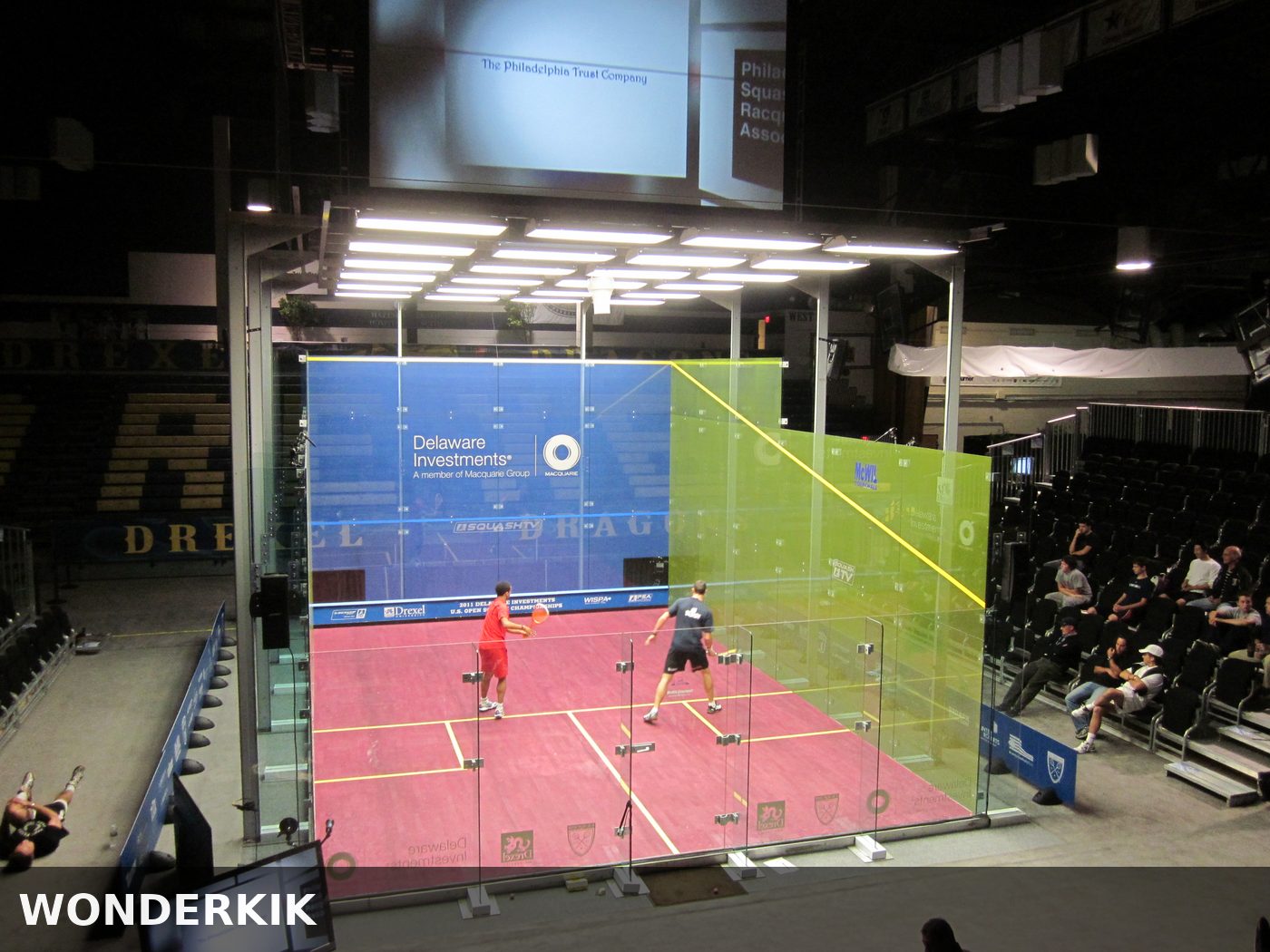
Hang Jebat Squash Center, Hang Jebat Sports Complex, Krubong, Malacca, Malaysia – CC CC BY-SA 4.0 (Wikimedia Commons)
Why squash is an eye-injury magnet
Three factors make squash the worst of the racquet sports for eye injuries:
The ball fits the socket. A squash ball is 40mm across; the human eye socket is ~35-40mm. The ball can wedge itself against the eyeball — far worse than a tennis ball, which is too big to enter the socket.
Rebounds blindside players. The ball flies off the walls; players turn into the path of a rebound. Doubles doubles the racket risk.
Racket swings in close quarters. In doubles, rackets travel inches from faces at full speed.
The statistics behind the sportshake: squash accounts for a significant share of sports-related eye injuries each year — and the vast majority happen to players not wearing protection.
The fix costs less than a new racket
Polycarbonate goggles (rated ASTM F803 for racquet sports) reduce the risk of serious eye injury to near zero. They cost $20-$60 — the same as a single physio visit, and a fraction of what a corneal injury costs in care alone.
More common than most players think — squash consistently ranks among the top sports for eye injuries, usually from the ball rebounding around mid-court or a racket swing in doubles. The small, hard ball fits the eye socket almost perfectly.
Do serious players wear goggles?
Yes. Plastic (lens) goggles are mandatory at most regional associations and many clubs for juniors and doubles. They block eye injury almost completely.
What kind of eye protection is best for squash?
Use squash-specific polycarbonate goggles (ASTM F803 rated), not open racquetball-style visors. Single-lens designs give better vision than over-glasses frames.
Can I play squash with glasses?
Yes, but sports glasses are better — ordinary prescription frames shatter on impact. Prescription insert goggles are available and tournament-legal.
Squash – CC CC0 (Wikimedia Commons)
The bottom line
There is no skill argument, comfort argument, or tradition argument that survives the numbers. A $40 pair of certified goggles sits in the same bag category as a decent pair of shoes: non-negotiable equipment. Wear them, and the sport’s worst-case scenario stops being on the table.
Racquet sports player and writer covering pickleball, padel, tennis, badminton, and squash. Former collegiate tennis player turned recreational pickleball enthusiast. Jackson writes beginner-friendly guides to help new players get on court faster.












Recent Comments