Everybody who watches squash for thirty seconds asks the same thing: “isn’t this just tennis in a box?” Close, but no. One sport is played across 39 feet of court with a net and a felt ball; the other is played inside a four-walled room with a tiny rubber ball and no net at all.
If you’re picking one to start, the honest answer is that squash is easier to learn on day one, and tennis is easier to keep playing casually — and each is harder than the other in a different department. This guide untangles it.
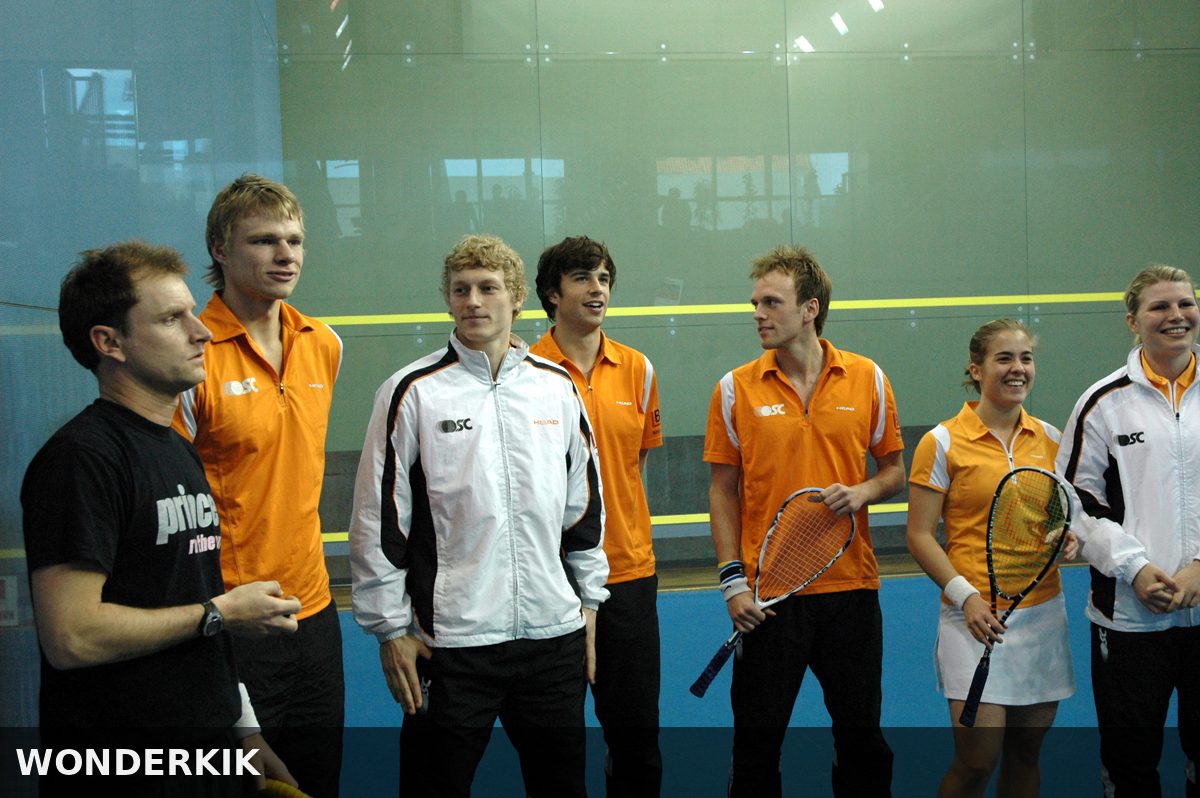
Odense Squash Klubs finalehold medaljeslutspil 2008 – CC CC BY-SA 4.0 (Wikimedia Commons)
The one-paragraph answer
Tennis has a reputation as one of the hardest racket sports to learn as an adult, mostly because of two things: the serve, and the sheer size of the court. Squash removes both — the serve is a simple underhand push off the front wall, and the walls keep the ball in play so you never spend a session shagging balls. For a brand-new player, squash is genuinely more forgiving. The flip side: squash asks for constant, high-intensity movement for every single point, so the workout is harder. If “harder” means “more physically demanding”, squash wins; if it means “harder to get the basics working”, tennis wins.
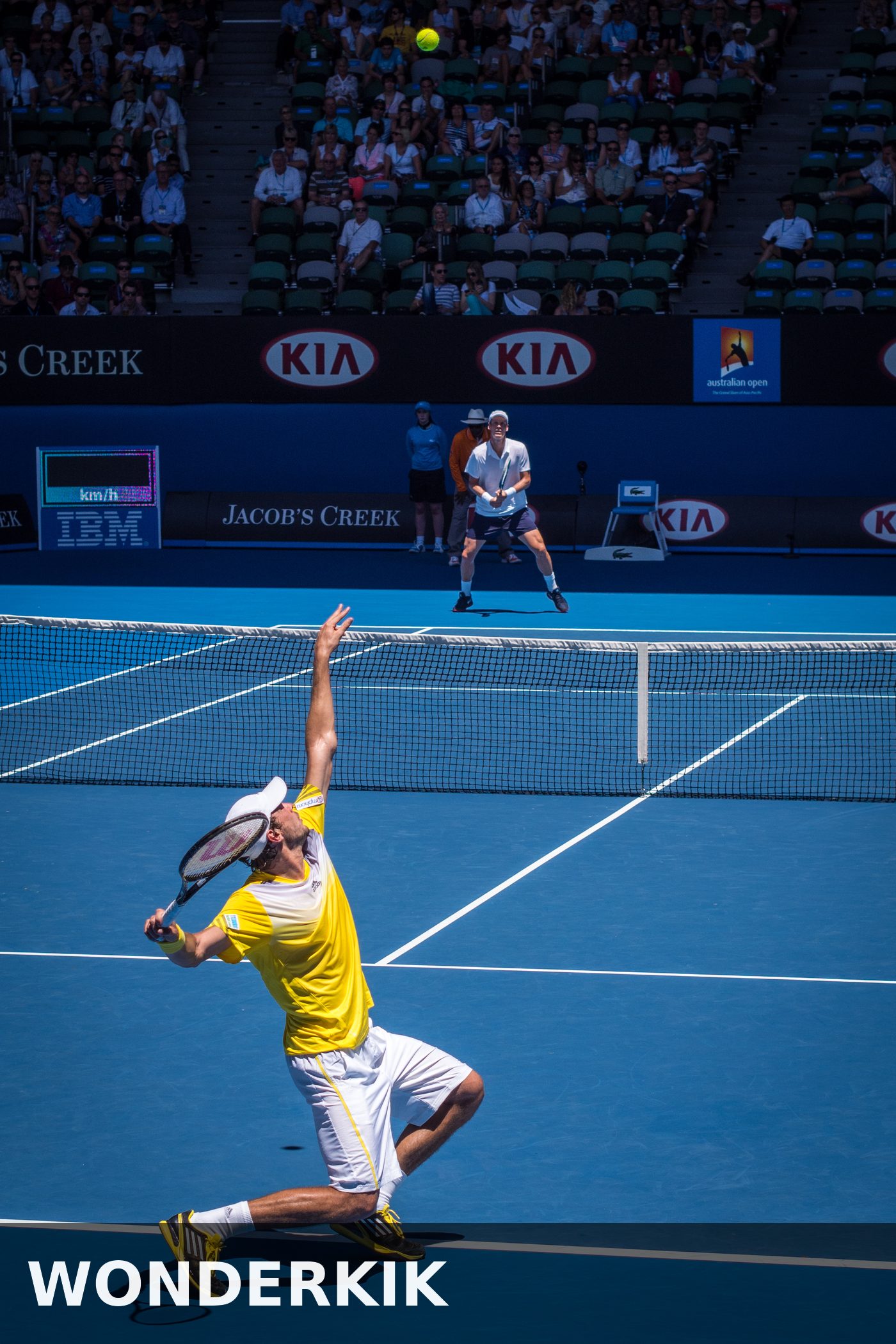
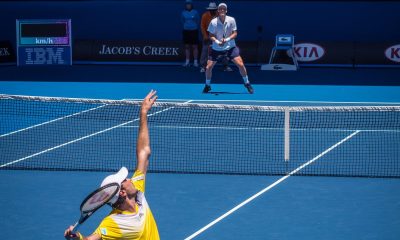
Guillaume Rufin serves to Tomas Berdych at Rod Laver Arena in the 2nd round of t – CC CC BY-SA 3.0 (Wikimedia Commons)
Court and the single biggest difference: the walls
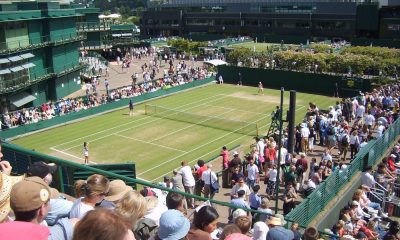
Tennis — open court, 78 × 27 feet (singles), a net down the middle. The ball must clear the net and land inside the lines. Miss, and you chase it.
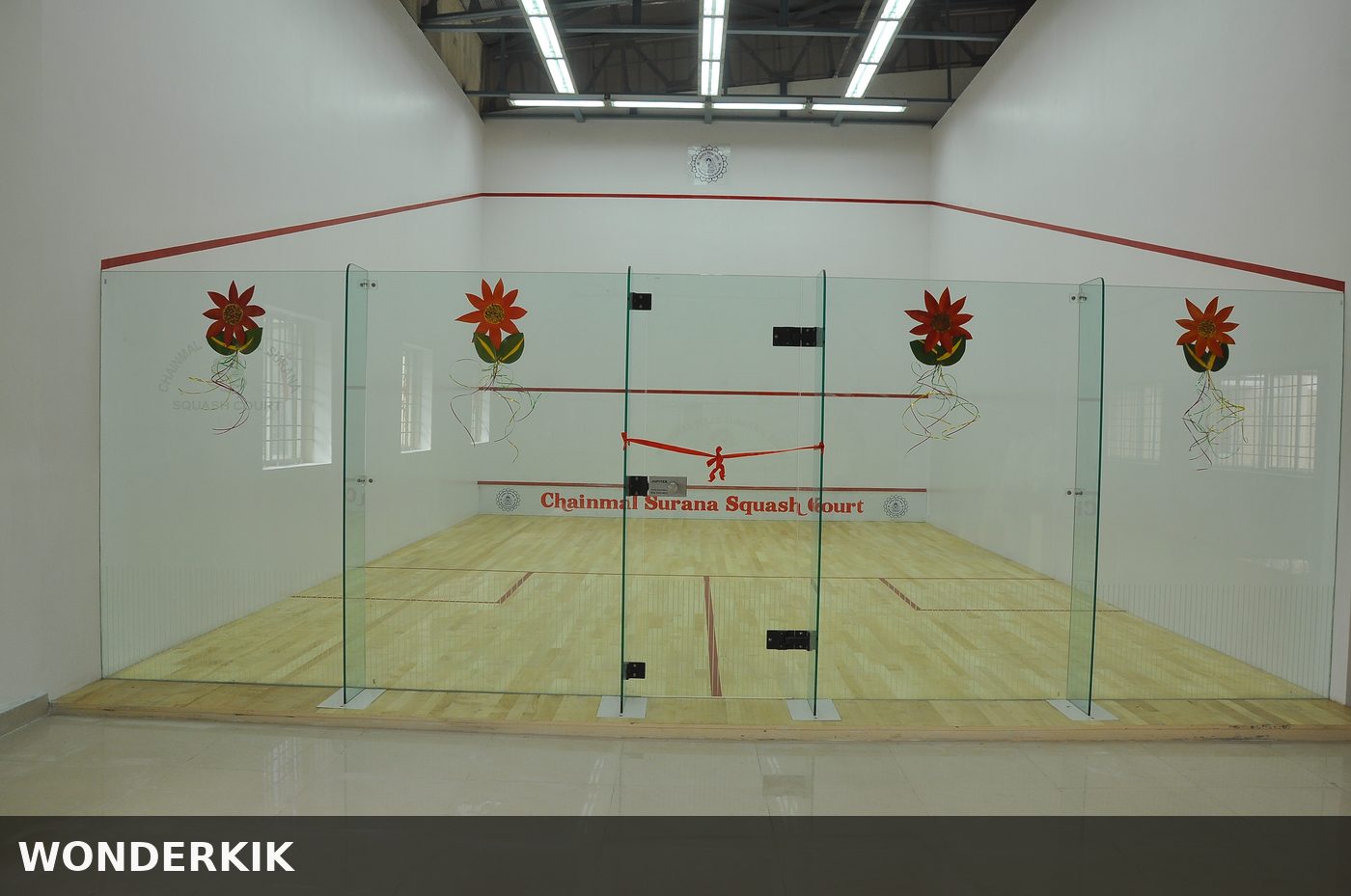
Squash — enclosed room, 32 × 21 feet, no net. You hit the ball against the front wall, above the tin and below the out line, and it can rebound off all four walls.
The walls change everything. In squash the rally never dies from a bad bounce out of bounds — the room contains the game, so rallies are fast, tactical, and physically relentless. In tennis the strategy is shaped by the net and the 39 feet you have to cover from side to side.
The serve
Tennis serve: the most technically demanding serve in racket sport. It’s a full-body throw that has to land in a small box, and it wins points on its own.
Squash serve: one foot in the service box, ball hit underhand off the front wall above the service line, lands in the opposite quarter. That’s it — and there’s only one, so it’s quick to get right.
If you hate the idea of learning to serve, squash is genuinely the friendlier door into racket sport.
Scoring
Completely different systems:
Tennis: 15-30-40, deuce, advantage, games and sets.
Squash: rally scoring (PAR) first to 11, win by two at 10-10, best of five games.
Our scoring guide breaks squash’s PAR system down, but if you already play pickleball you’ll find squash scoring nearly identical — which makes the tennis-to-squash transition a scoring-culture shock in the other direction.
Equipment and cost
Rackets: a squash racket (110–170 g) is lighter than a tennis racket (255–320 g) and shorter. Tennis balls are felt-covered rubber; squash balls are solid rubber and much smaller.
Shoes: both need court shoes; squash requires non-marking ones.
Cost: tennis is cheaper to try — public courts and a few dollars of balls. Squash needs a club or gym membership because the court is an indoor room. Long-term, tennis court booking and equipment pressure can exceed squash club fees, so it evens out depending on where you live.
Which is harder? The honest breakdown
Tennis is harder for:
The serve — a skill you need years to master.
Court coverage — 78 feet of court means more ground to defend and less margin for a weak shot.
Getting a rally going as a beginner (open court, feels like a lot of chasing).
Squash is harder for:
Physical intensity — short, explosive, continuous rallies with little rest.
Reading the ball — the fast small rubber ball and wall angles take time.
Sport etiquette — you share a tiny room, and lets/strokes require awareness of your opponent’s position and safety.
For most beginners, the net result is that squash rewards you faster at the start, and tennis punishes you more at the end of a long rally.
Pick tennis if you want an outdoor, seasonal sport with a rich social scene, and you’re willing to grind on the serve. Your shots will feel great when they go in.
Pick squash if you have access to a court and want the fastest, most athletic racket workout — the sport is effectively a 45-minute interval session with a scoring system.
Pick both if you can — the hand-eye coordination and racket feel transfer; tennis players pick up squash volleys almost instantly, and squash players rarely struggle to swing a tennis racket.
For the rules behind the game, start with our squash rules guide or the tennis rules for beginners.
Racquet sports player and writer covering pickleball, padel, tennis, badminton, and squash. Former collegiate tennis player turned recreational pickleball enthusiast. Jackson writes beginner-friendly guides to help new players get on court faster.














Recent Comments