Squash players talk about knees. They should talk about ankles. Deep lunges into the corners, sudden hard stops, and 360° movement make the squash ankle a roll waiting to happen — and it’s sneakier than the knee: it heals, you forget, and it rolls again three months later.
The sport’s #1 footwear rule is the same as its #1 prevention rule: control the landing. Here’s the injury, the recovery reality, and the work that keeps you upright.
Health note: performance advice, not a diagnosis. Severe swelling, instability, or inability to weight-bear needs professional review.
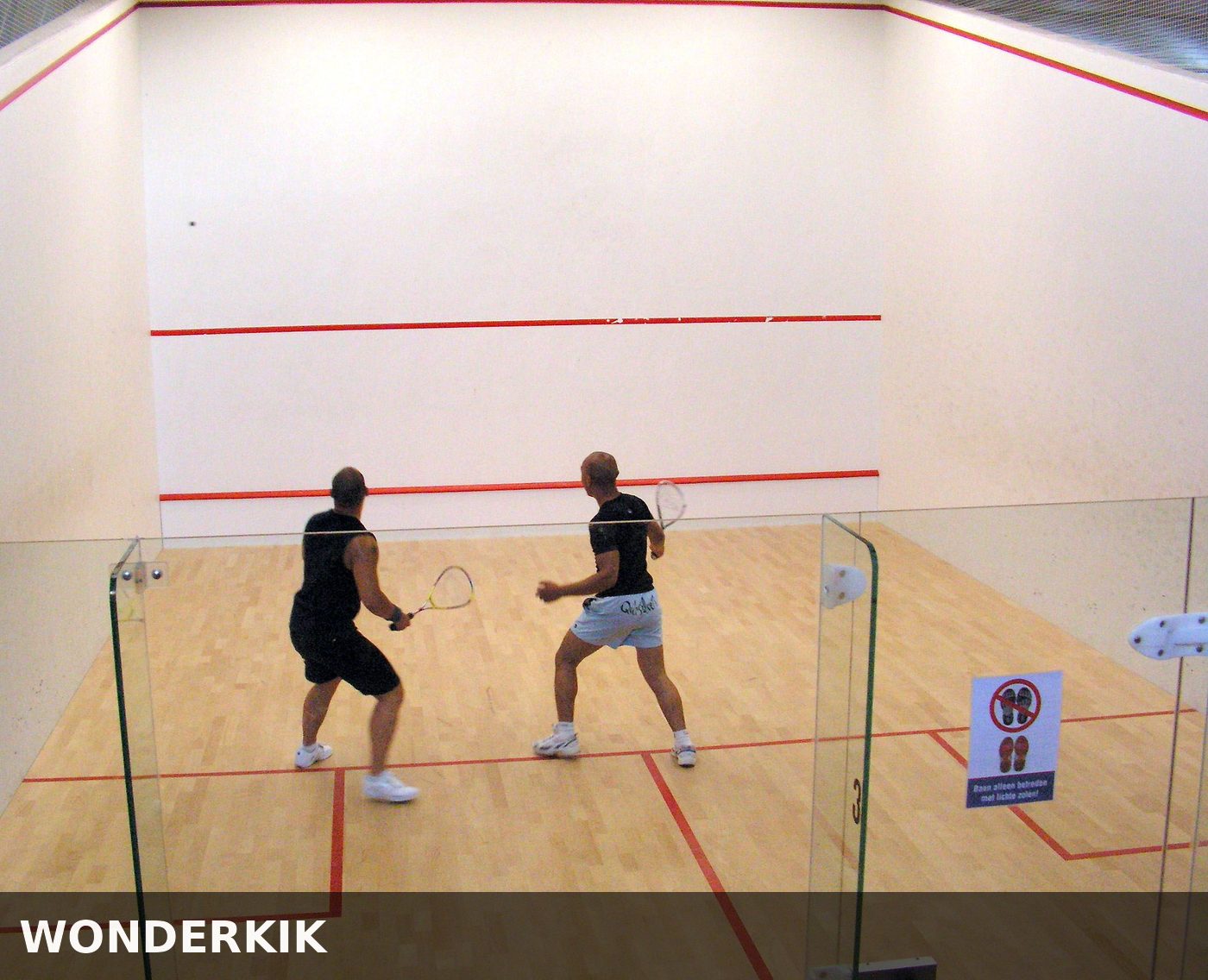
A court for playing squash. Photo taken in The Hague and with permission from th – CC CC BY-SA 3.0 (Wikimedia Commons)
The movement that causes it
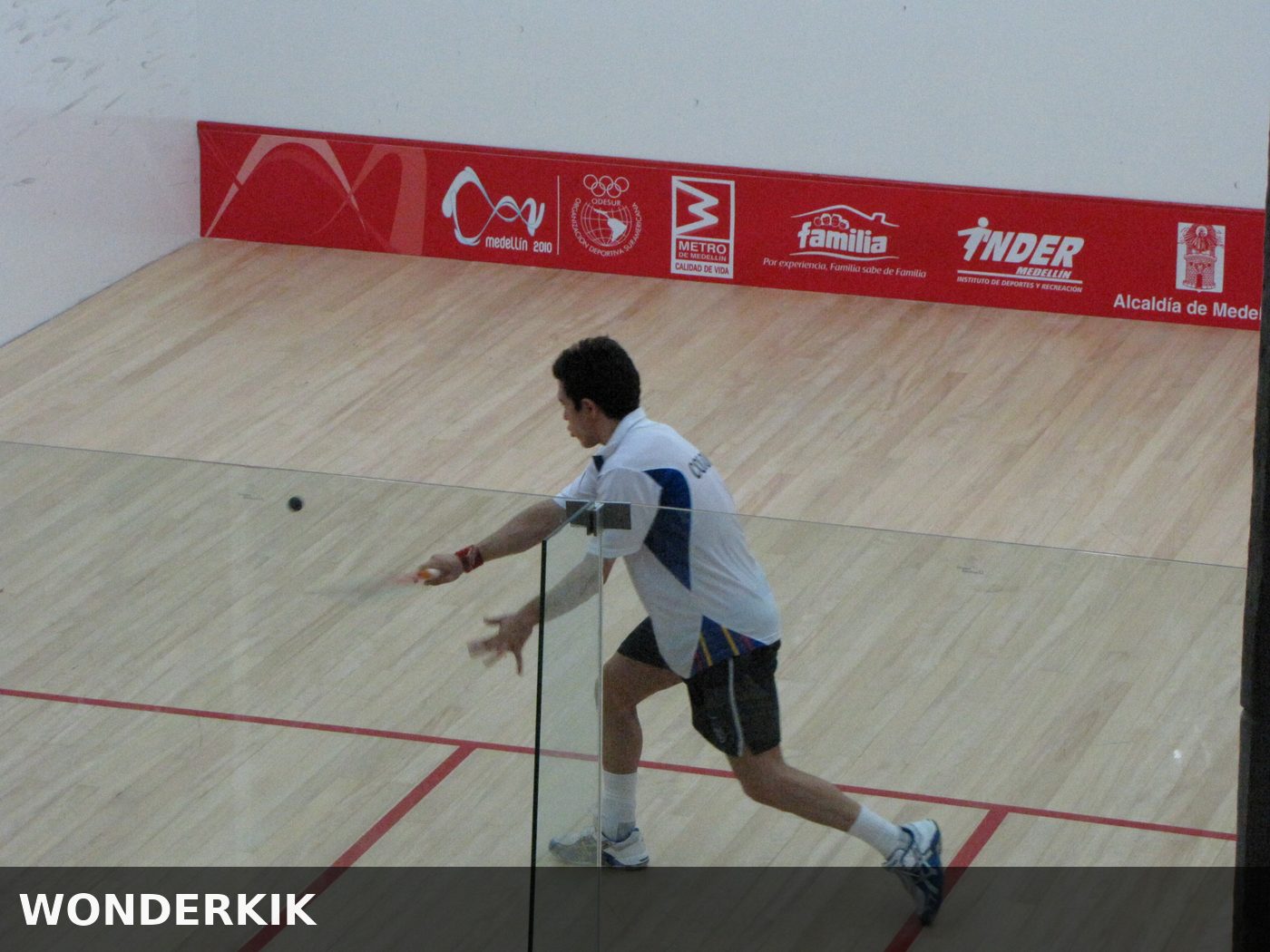
The squash lunge is the perfect sprain setup:
You lunge deep to the front corner.
The heel plants, weight travels forward.
The muscle fatigue that late in a rally tips the ankle edge onto the floor.
Add court shoes with worn lateral support and a “played through it” mentality, and the roll becomes routine rather than rare.
Recovery reality: the re-sprain trap
Grade
Typical timeline
The trap
1 (stretch)
1-2 weeks
Restarting too early
2 (partial tear)
3-6 weeks
Skipping ankle rehab
3 (tear)
3+ months
Unstable ankle for life if untreated
The pattern that produces chronic squash ankles: hurt it → rest → return fast → no strength rebuild → roll again. Rebuilding strength is not optional; it’s the whole cure.
The prevention stack (15 min, 2x/week)
Balance work — 3 × 45s single-leg balance (eyes open then closed).
Calf raises with slow lowering — 3 × 15. The achilles and the landing control.
Lateral band walks — 3 × 10 each direction. Shields the rolling edge.
Court shoes with structure — never running shoes; the squash court needs a flat, wide, lateral base.
Ankle sprains are among the most common injuries in squash, rivaling knee problems. The sport’s 360° movement and hard stops are ideal conditions for rolling the ankle past its range.
Why do squash players roll their ankles?
Deep lunges to the corners and hard braking put the foot at the edge of its range mid-rally. A tired ankle landing on its outside edge is the classic squash sprain scenario.
How do I prevent squash ankle rolls?
Ankle-strength work 2x/week, proper court shoes with lateral support, and footwork that finishes lunges under control. Landing with the heel first and foot turned out is the cleanest prevention.
How long does a squash ankle sprain take to heal?
Grade 1: 1-2 weeks. Grade 2: 3-6 weeks with proper rehab. Grade 3 (ligament tear): several months. Returning before strength returns is how sprains become chronic.
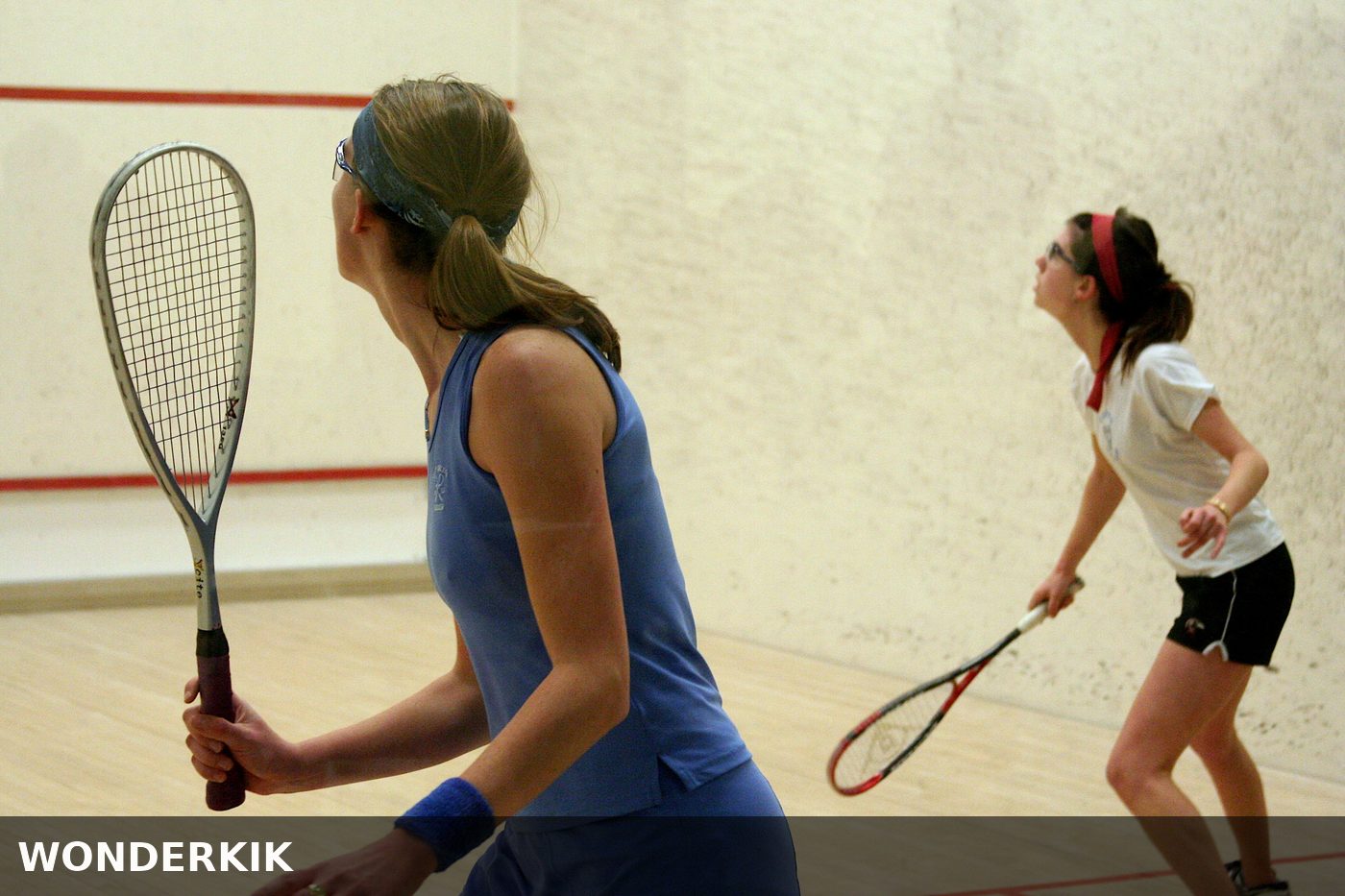
People playing squash – CC CC BY-SA 2.0 (Wikimedia Commons)
The bottom line
Squash ankles are a landing-control sport. Protect the roll with structure (court shoes), timing (recover fully), and strength (balance and calf work before you return). Do that, and the sport’s sneakiest injury stops circling you.
Racquet sports player and writer covering pickleball, padel, tennis, badminton, and squash. Former collegiate tennis player turned recreational pickleball enthusiast. Jackson writes beginner-friendly guides to help new players get on court faster.









Recent Comments