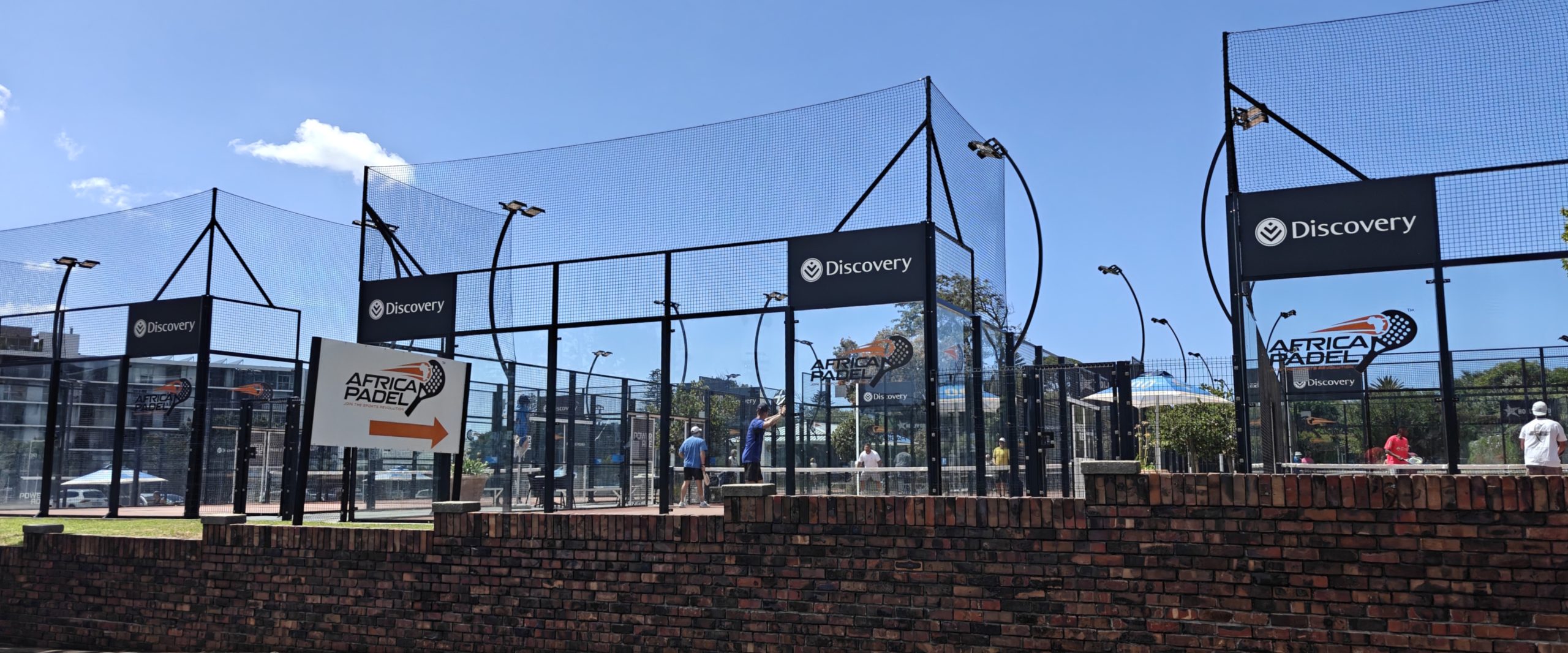
Padel looks like tennis played in a birdcage. You’ve probably seen it on social media — a small court surrounded by glass and mesh, two people on each side, and rallies that refuse to end. That last part isn’t a coincidence. The whole point of padel is keeping the ball in play, and the rules are built around exactly that.
If you’re booking your first padel match, here’s everything you need to know on one page. No history lesson, no warning about injuries — just the rules, and they’re easier than tennis.
Cancha de pádel en el centro deportivo “El Tucán” – CC CC BY 4.0 (Wikimedia Commons)
The court is the fourth player
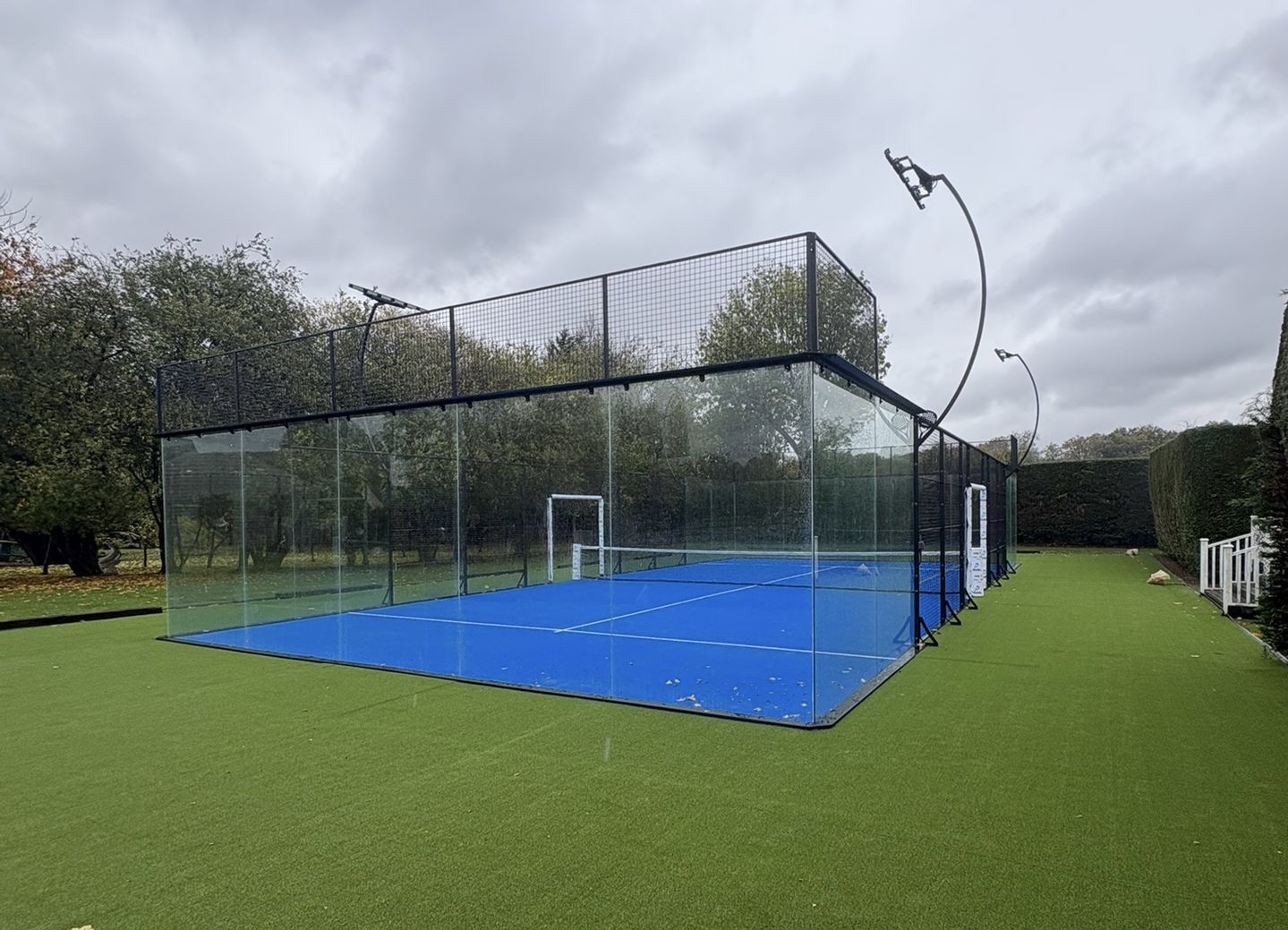
A padel court is 20 metres long and 10 metres wide — noticeably smaller than a tennis court. Four walls close it in: glass at the back and part of the sides, wire mesh above, and the net splits it down the middle.
This matters more than any other rule: the walls are in play. A ball that bounces on your side and then touches the glass is still live — you can let it come back off the glass and play it. Hitting your own back glass intentionally is a legitimate defensive shot. It’s why points go on forever: you have a whole extra wall to rescue a ball you have no business reaching.
One crucial exception: the ball has to bounce on the court first before touching a wall. On the opponent’s side, a shot that hits the glass or fence before bouncing is out. Fence, by the way, is different from glass — a ball that hits the fence after touching the court can produce a weird kick and is still live, but most beginners should aim for glass and let fence be the referee.
Club Kingswood Padel Courts – CC CC BY-SA 4.0 (Wikimedia Commons)
The serve is underhand. Non-negotiable.
There’s no overhead serve in padel. Trying to crank a flat bomb at the box will get called out faster than your pride recovers.
The legal serve:
You stand behind the service line, between the center line and a side wall.
Drop the ball, let it bounce once, and hit it below waist level.
It goes diagonally into the opponent’s service box.
Two attempts per point, like tennis.
The wall rule applies: after it lands in the box, the serve may touch the side glass and still be good. If it hits the fence first, it’s a fault. And if it clips the net and lands properly? That’s a let — replay.
Why underhand? Because the sport was designed to go easy on the arms and keep rallies alive. The serve starts the point; it doesn’t end it.
Scoring: if you know tennis, you’re fine
Padel uses tennis scoring: 15, 30, 40, game. Win a point, game — well, you know the drill. Sets go to six games with a two-game lead, at 6–6 you play a 7-point tiebreak, matches are best of three sets.
One modern twist: the Golden Point. In many pro and club games, at deuce the next point wins the game instead of playing advantage. The receiving team gets to choose which side the serve comes to. It’s not universal though — some places still play deuce and advantage — so ask before the match. Recreationally, most people just want rallies, so golden point tends to win.
One note: padel is doubles-only in official play. The rulebook doesn’t even list a court for singles. You’ll see casual singles on social, but real clubs book padel as four people.
The five rules that end a point
These are the padel-breakers. Almost every beginner rally ends with one of these:
Second bounce — the ball can only bounce once on the floor per side. Two bounces, point over.
Hitting the net — with your body, the racket, anything. Instant loss.
Wall before bounce — striking the opponent’s glass or fence before the ball lands on their side: out.
Ball out of the court — over the walls entirely. Out.
Touching the ball twice or carrying it. One clean contact.
Also — you can’t volley the serve return. Like pickleball’s double-bounce rule, the return has to bounce first.
What returning feels like (the fun part)
Once the return’s in, you can volley, smash, and use the walls. The courtside ledge is in bounds, and if there’s an open door at the back, walking out of the court — with the ball — is legal in most amateur matches if the ball still bounces back in before a second bounce on the floor. This is where padel matches suddenly look like parkour, and yes, it’s ridiculous, and yes, it’s the best part.
Communication with your partner is half the sport. Points end less often on brilliant winners than on two players looking at each other and letting the ball drop between them. Call the ball. Pick a side. Move together.
Your first match in four lines
Serve underhand from behind the line, bounce the ball first, hit below the waist, diagonally. Let the return bounce. Play everything else off the glass as much as you like, as long as the ball hit the floor first. Score like tennis, play best of three sets, and remember: the wall is your teammate, not your enemy.
Bring a partner, leave your ego at the door, and get ready for the longest, most entertaining rally of your racket-sport life.
Reading Next
Related guides from the WonderKik racket-sport series:
If you’ve played tennis, you already know half of padel — the scoring, the general shape of a rally, even the word “love.” The other half will surprise you, because padel deliberately flipped the tennis rulebook around in its own weird, wonderful way.
Here are the seven differences that actually change how you play, ranked from “you’ll notice immediately” to “you’ll notice in week three.”
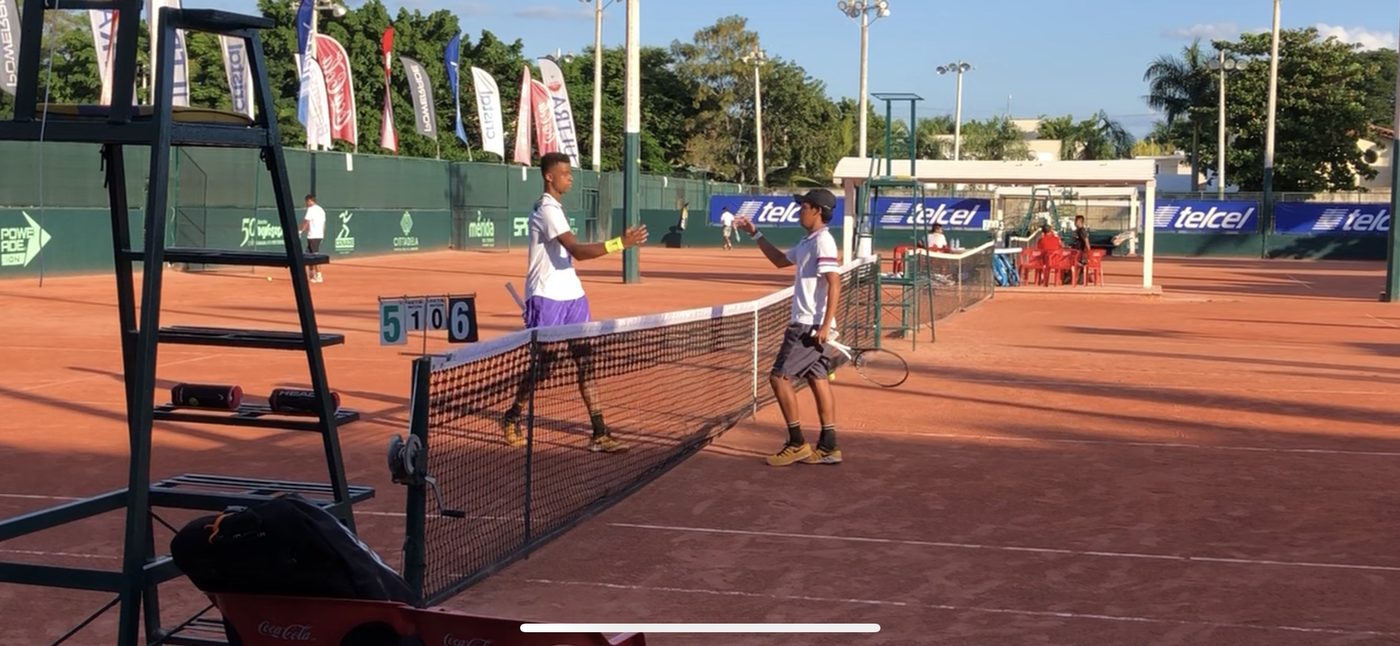
“French tennis player vs. Mexican tennis player in a international pro tournamen – CC CC BY-SA 4.0 (Wikimedia Commons)
1. The court is half the size and has walls
A tennis court is 23.77 metres long and 8.23 wide with endless open space around it. A padel court is 20×10 metres with glass and mesh walls closing you in. Every smash that would be a winner in tennis comes screaming back at you off the glass in padel. That’s not a bug — it’s the sport’s entire personality. Placement beats power because there’s nowhere for power to hide.
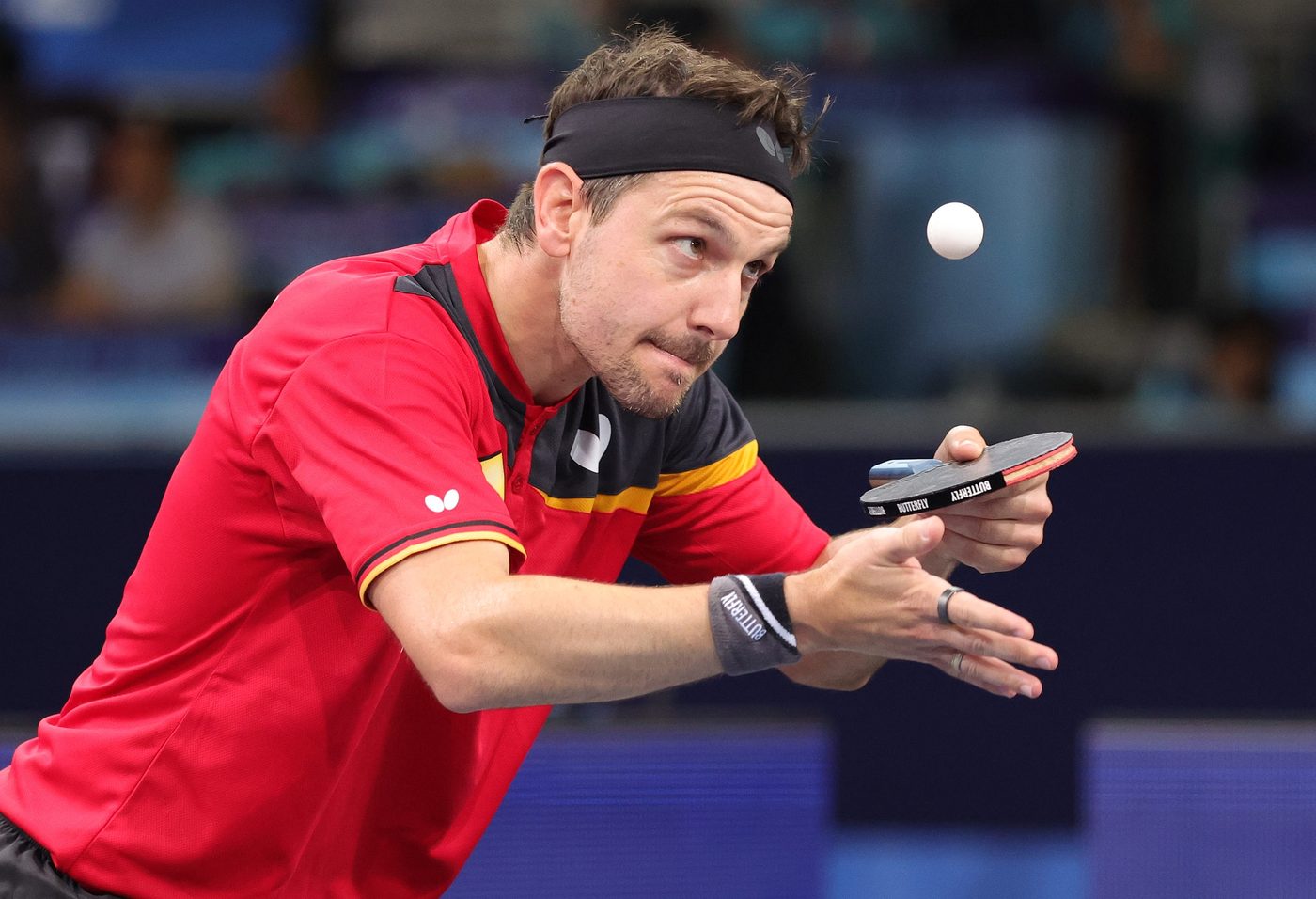
Guillaume Rufin serves to Tomas Berdych at Rod Laver Arena in the 2nd round of t – CC CC BY-SA 3.0 (Wikimedia Commons)
2. Padel is doubles-only
Tennis has singles and doubles. Padel is basically always 2v2. Officially doubles only — no singles format in the rulebook. That makes it a social sport by default: you’re never alone, you’re never the clear villain, and your partner’s mistakes are as much your problem as yours. For a beginner hooking on, that’s usually a feature.
3. The serve is underhand
This is the tradition-health bit. A tennis serve is a full overhead explosion — one of the hardest techniques in any sport, and the biggest honest advantage of a tall player. The padel serve is underhand, under the belt, with a bounce — designed flat-out to prevent an overpowering serve. A serve that ends the point is basically a bug in padel. So the serve stops being an athletic event and starts being a formality, which levels the playing field between weekend warriors and 6-foot-tennis-refugees.
4. Walls are in play; the ball bounces on floor first
In tennis, a ball that hits a wall is dead — it’s just scenery. In padel, the glass is legal. Let the ball bounce once in your court, and you can play it straight off your own back glass. On the opponent’s side, the ball has to hit the floor before touching a wall, or it’s out. This one rule is the whole strategic revolution: it adds an extra bounce worth of time to every defensive shot, which means rallies survive, angles multiply, and the game’s pacing changes completely.
5. Rackets, not rackets-with-strings
A tennis racket has strings, weighs roughly 300 grams, and a big head that generates spin through string snap. A padel racket is solid, drilled with holes, and weighs 360–390 grams. No strings, no giant sweet spot, less power — but more control. Because the walls keep the ball in play, you don’t need a weapon; you need an instrument. That’s also why tennis players will tell you padel “feels dead” until they adjust. It does, for about a week.
6. The pace is slower, the points are longer
Average rally time in tennis: a handful of seconds, often ended by a big serve or a baseline winner. Average padel rally: considerably longer, because the walls extend every point. This is physical in a different way — less explosive sprint, more constant shuffling and positioning. You’ll sweat, but you won’t spend a set watching aces fly by.
7. Learning curve and entry cost
Tennis has a notorious early phase: hours of balls bouncing off your frame before you can rally. Padel gets you rallying on day one because the court is small, the walls rescue you, and the serve is easy. Gear is cheaper (a decent padel racket is cheaper than a comparable tennis racket), court time is the cost that adds up, and the doubles format means you’re learning with three other people instead of staring across a huge empty court.
Who is each game for?
Choose tennis if: you love singles, you want an athletic challenge with a deep skill ceiling, you’re young and ambitious about the sport, or you already play tennis and just want padel as a change-up.
Choose padel if: you want to start playing this weekend, you prefer doubles and social play, your shoulder dislikes overhead serves, or you’ve outgrown “keep the ball from hitting the net” and want a game with more brains than brawn.
Both are addictive. Padel just made the onboarding friendlier — and then hid a genuinely deep game behind those friendly walls.
The one difference that decides it for most people
Be honest with yourself: half of you is looking for a game you can actually play next week. Padel hands that to you. The other half is looking for the eternal challenge — singles, power, ranking the ladder. That’s tennis.
You can also do what most smart players do: play both. Padel on Tuesday with the office crew, tennis on Saturday against your friend who still thinks their serve counts.
Reading Next
Related guides from the WonderKik racket-sport series:
I have bad news if you’re a tennis player: the padel racket market looks like a car salesman convention that got high on its own supply. “Control,” “power,” “aerodynamic,” “carbon pro,” “elite,” — every racket promises everything, and they all cost roughly the same as a small-town parking fine for the privilege.
Good news: choosing a padel racket comes down to four details, and none of them are listed first in the marketing blurbs. Learn these four and you’ll waltz past the pricing trap.
Jorge Macri during a padel exhibition at the Buenos Aires obelisk before the sta – CC CC BY 2.5 ar (Wikimedia Commons)
Shape: the decision you actually make
Padel rackets come in three shapes, and this is the single most important choice of the whole process:
Tear (drop) shape — the all-rounder. Head is narrower than round but wider than diamond. Balanced control and power, forgiving. Almost every beginner and intermediate should buy this.
Round shape — wide head, maximum sweet spot, maximum control. Less power. The “I just want rallies” option; great for defensive players and for people starting out.
Diamond shape — narrow head, tiny sweet spot, huge power. The point is the smash. Also the most unforgiving on the market. If you’re under level “I win my local tournament,” do not buy this.
Rule of thumb: wait for the day someone on court tells you your racket is holding back your power. Then consider diamond. Until then, round or tear.
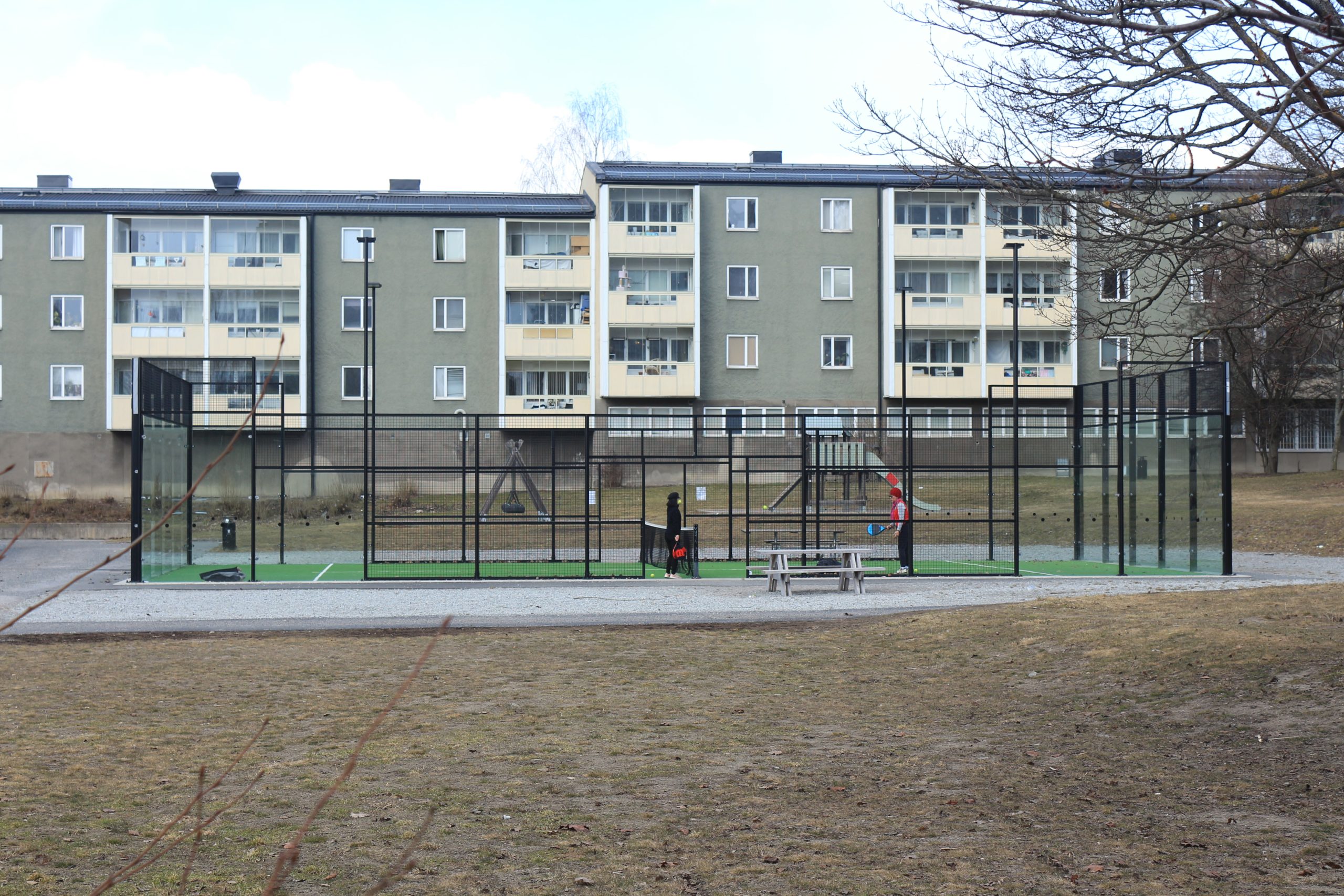
Mobile padel courts were launched in Sweden in 2021. During the summer 2021 a ba – CC CC BY-SA 4.0 (Wikimedia Commons)
Weight: the arm question again
Padel rackets run 340–390 grams — they feel heavier than tennis rackets because they are, and the weight is balanced differently.
340–360g — light and maneuverable. Easier on the shoulder and elbow (very relevant to any former tennis player). Fast at the net, needs more work to generate pop.
360–380g — the standard sweet spot for most adults. Power and control meet.
380g+ — stump-like authority on smashes, but your forearm files a lawsuit by set three.
Your level decides more than your strength: if you’re new or any part of your arm complains regularly, stay under 365g. If you’re fit, hitting hard, and fine after an hour of play, feel free mid-360s.
Material: carbon vs fiberglass, honestly
Fiberglass (often “fiber” in the copy) — $60–120. Softer, more control-friendly feel, more forgiving. The common-sense pick for your first racket.
Carbon fiber (often “carbon”) — $120–250. Stiffer, more power and spin, harder to bend into shape for beginners. The “upgrade later” material.
The honest version: if you’re reading a racket guide because you’ve never bought one, buy fiberglass. Carbon is a second-racket purchase, the moment your technique actually drives the material’s benefits. Paying $220 for carbon now buys marketing, not speed.
Grip and the hole pattern nobody checks
Grip size runs 3.5 to 5 (roughly). Wrap your hand: you want a finger-width of space between your palm and fingertips — and a slightly larger grip if you have any elbow history. Cheap to change later with an overgrip, so don’t overthink.
Hole pattern: every padel racket is drilled with holes, and the pattern shapes the feel. More holes = more dampening and control. Theoretically. In practice, average players don’t perceive the difference between hole patterns on the same price ladder — so don’t let a “unique drill pattern” barrel you into a more expensive model. It’s spec-sheet theater at your budget.
The beginner’s buying flowchart
Budget: $70–120 gets you a genuine, decent racket. I’d be skeptical of $40, and of $300.
Shape: round or tear (tear if you’d like a little more broadcast power for the same money).
Weight: under 365g unless you’re sure you want more pop.
Material: fiberglass first.
Grip: 4 (or larger if elbow issues), plus one overgrip in your bag.
Toss the rest of the catalog.
Do that and you’ll hit the correct 85% of the market, which is more than most people achieve after two hours of YouTube reviews.
The pro secret: don’t buy a racket to look the part
Every padel court has a player with a $280 diamond carbon racket who can’t stop drilling the back glass with his own volleys. The racket that makes you progress is the one that’s easy to play, not the one on the pro’s wrist strap.
Buy the boring tear-shaped fiberglass, play thirty matches, and let your game — not the catalog — tell you when it’s time to spend more.
Reading Next
Related guides from the WonderKik racket-sport series: