If you’re about to mark out a pickleball court in a driveway, a park, or a community hall, you need the numbers exact — not “roughly.” A net an inch low, a kitchen line a foot deep, and suddenly every serve and every dink argument has a wrong answer written into the floor.
Good news: pickleball is the smallest of the racket sports, which makes it the easiest to mark. Here are the exact official dimensions, plus a walkthrough for doing it yourself.
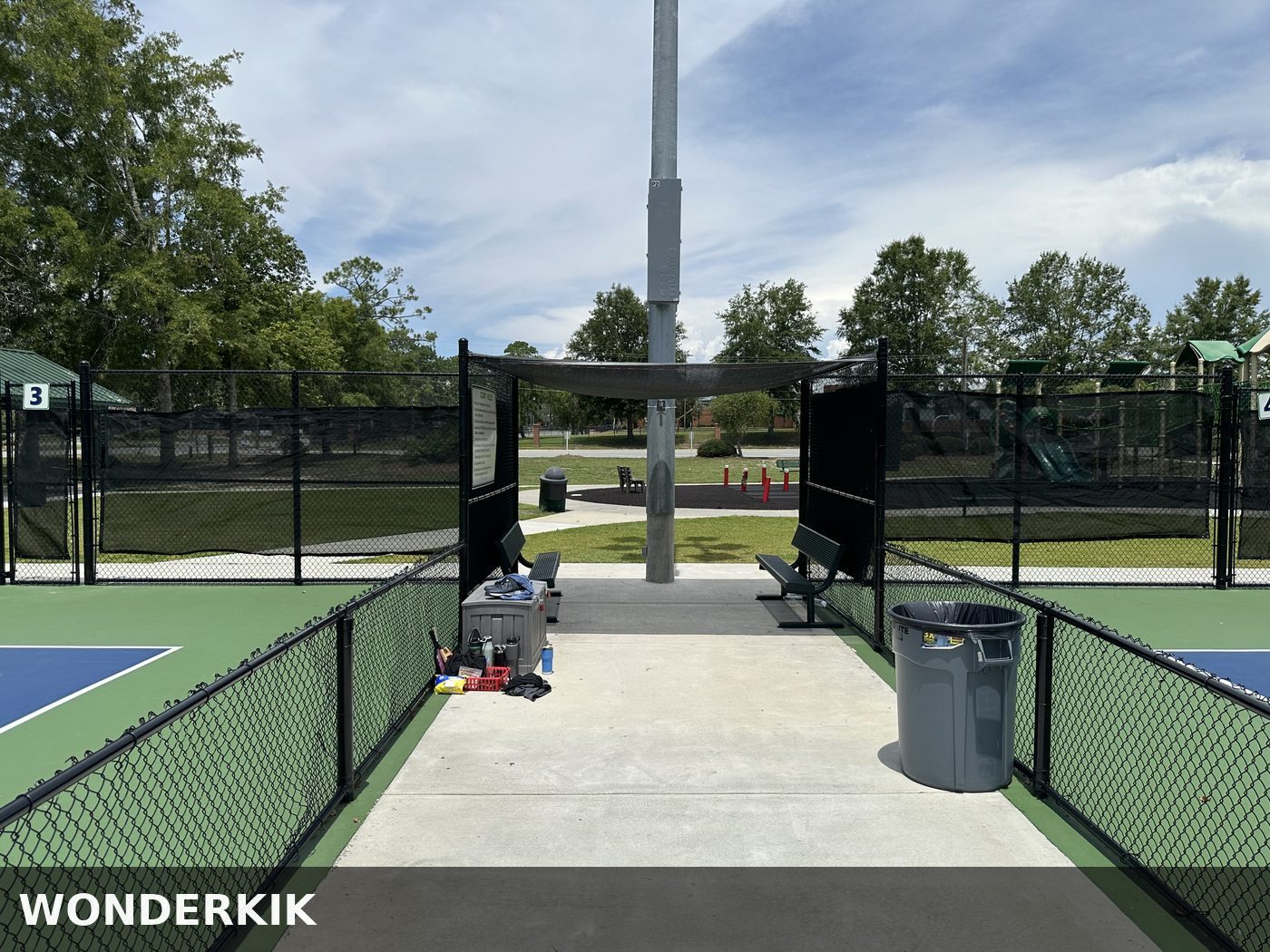
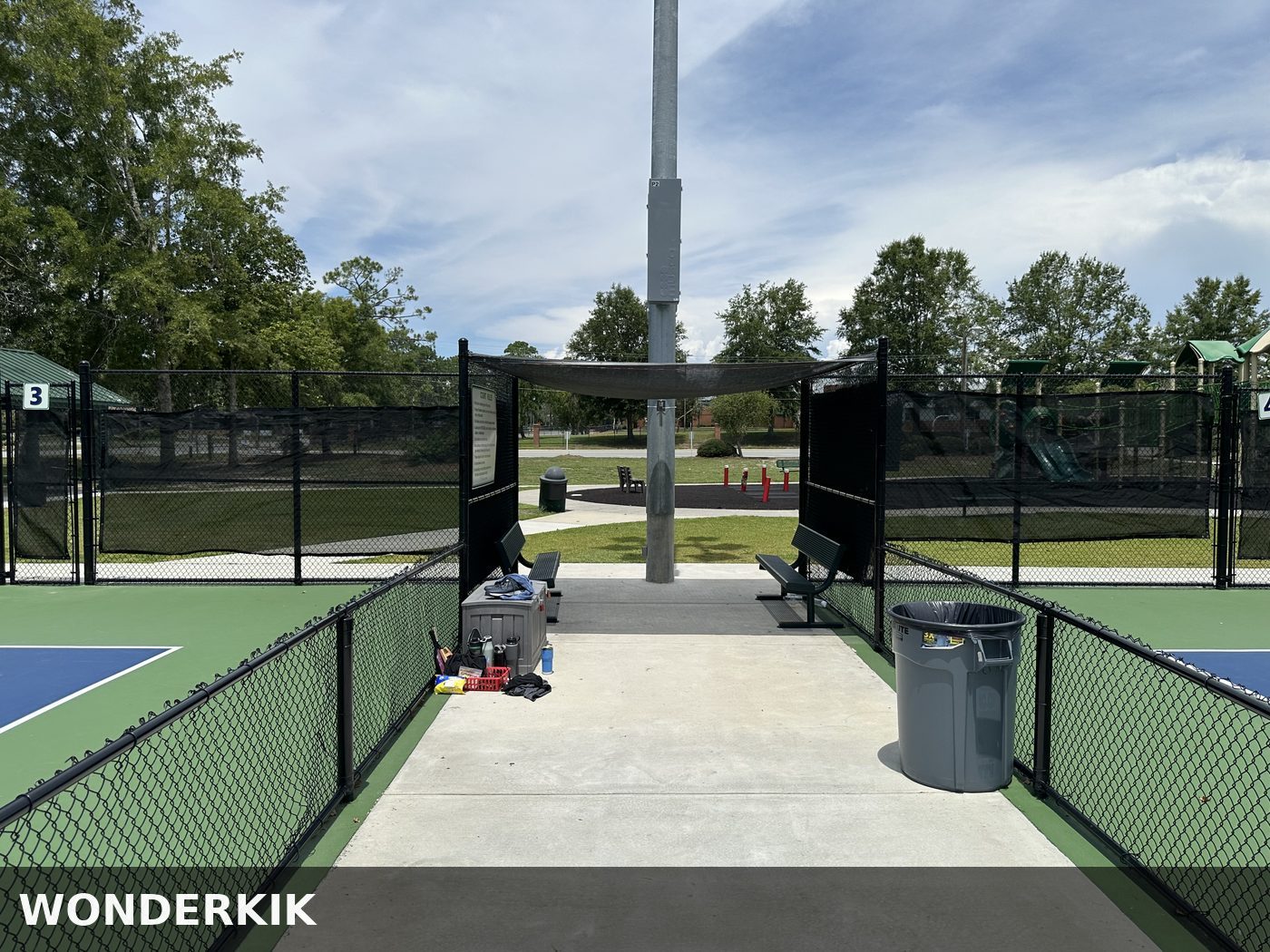
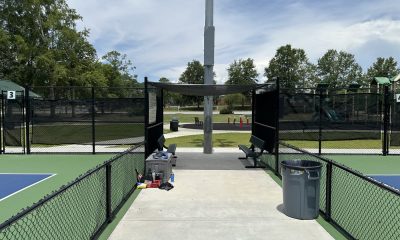
Located in between pickleball courts 3 and 4 at Harry B. Anderson Tennis Center – CC CC0 (Wikimedia Commons)
The non-negotiables at a glance
Element
Official measurement
Court length
44 feet
Court width
20 feet
Non-volley zone (the “kitchen”)
7 feet deep on each side of the net
Net height at posts
36 inches (at the sidelines)
Net height at center
34 inches
Service line distance
15 feet from the net (i.e., lines run 10 feet from the kitchen boundary)
Center line
10 feet long, from kitchen line to baseline, splitting each service area
Equal court on both sides of the net — always 22 feet each half. Exact, every time.
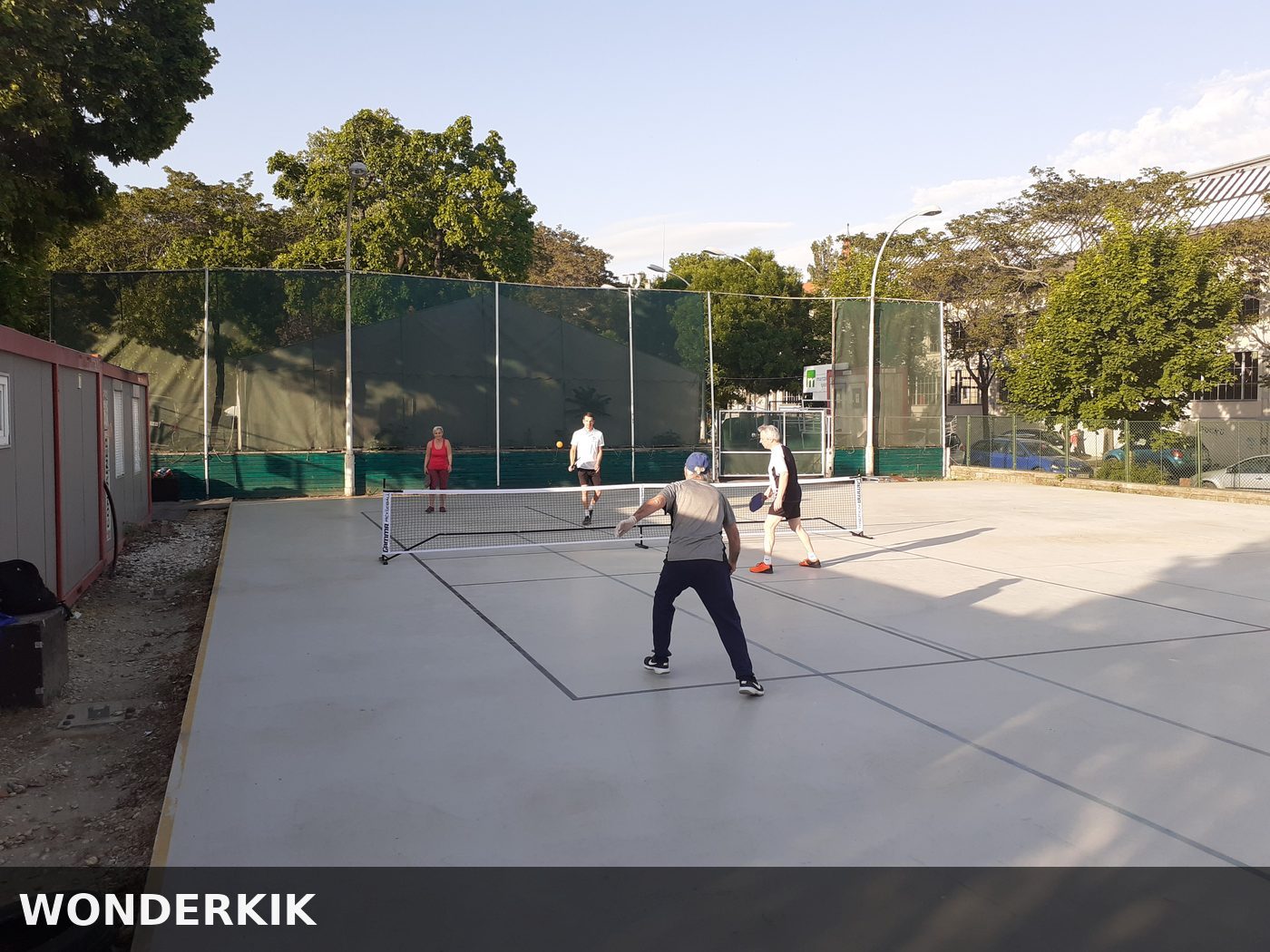
A Fair-way SE versenyzői edzést tartanak. – CC CC BY-SA 4.0 (Wikimedia Commons)
Breaking the court down
Starting from the net and moving back:
The kitchen (non-volley zone) — 7 feet deep, running the full 20-foot width, on both sides. A serving ball can’t touch it. A player standing in it can’t volley. When you mark it, include the line as part of the kitchen: the kitchen line is in, and it’s the number-one source of beginner confusion.
Service boxes — from the kitchen line back to the baseline, the court splits into two 10×10-foot service boxes, divided by a center line down the middle. Serves land diagonally into these.
Baselines — the back lines, 22 feet from the net. Serves happen behind these.
Sidelines — 20 feet apart, running the full 44 feet.
Every line except the center line’s extra markings is the standard 2-inch width, and all lines are measured to their outside edge — which is the technical way of saying “a ball touching any part of the line is in.”
What you need to mark a court yourself
Court surface: 44×20 feet of flat, hard surface. Driveways, parking lots, community courts, gym floors. With four-plus centimeters of padding if you’re doing it indoors. If you don’t have 44 feet, you have a driveway version — more on that below.
Tools for a temporary court:
– Chalk or removable tape for parking-lot marking (cheap, temporary, works fine for learning).
– Water-based paint if it’s a permanent driveway court. Use a 2-inch roller to keep lines even.
– Four corner stakes + a long tape measure to get the corners square.
– A portable net that goes to 34 inches at center and 36 at the posts.
The squareness trick: measure both diagonals. A perfect rectangle has equal diagonals; if yours differ, nudge your stakes until they match. (44² + 20² = diagonal², so the diagonal is exactly 48.33 feet — measure 48 feet 4 inches corner to corner.)
The two-of-them trick for the net
Set the net height at 36 inches at the posts and 34 inches at center. The sag matters. A tight, over-taut net sits high at center, bounces judgy; a saggy net drops under 34 and every dink suddenly clears it by miles. Use the two rules: measure at the posts, then check center. Adjust the center strap slowly — tiny turns change the bounce more than you’d think.
What about a “half court” or small space?
No official half-court exists for singles — pickleball has no sanctioned singles court. But if you’re adapting:
Smaller court (20×40): standard width, remove 2 feet from each end of the kitchen-to-baseline area for casual play. Optional, nobody’s coming to measure you at the barbecue.
Driveway court: If you have 20 feet of width but not 44 of depth, mark a tight 36–40 foot court for drills — serve from behind whatever becomes your line. It teaches aiming, which is court dimension standard anyway.
The difference between a frozen-lake-ice game and a driveway game is mostly the surface, not the numbers.
44×20 keeps it half a tennis court. The 7-foot kitchen keeps the volley zone honest. The 34-inch center net makes dinks the sport — a 40-inch net would turn every bounce into a skyball. The sport was invented in 1965* by a dad with a badminton court, a ping-pong paddle and a whiffle ball; the dimensions have aged into a regulation standard precisely because they’re small enough to fit anywhere and math-hard to get wrong.
Enjoy marking it, even the arguing-about-the-diagonal part. Every centimeter of correct line is a serve dispute you never have.
Racquet sports player and writer covering pickleball, padel, tennis, badminton, and squash. Former collegiate tennis player turned recreational pickleball enthusiast. Jackson writes beginner-friendly guides to help new players get on court faster.















Recent Comments