There are 400 “best pickleball paddle” lists on the internet, and most of them read like ads. Let me be blunt: as a beginner, 93% of the difference between paddles won’t matter to you yet. What matters is three spec numbers, one price range, and your own body.
Here’s how to buy your first paddle without wasting money — and the exact specs worth looking for.
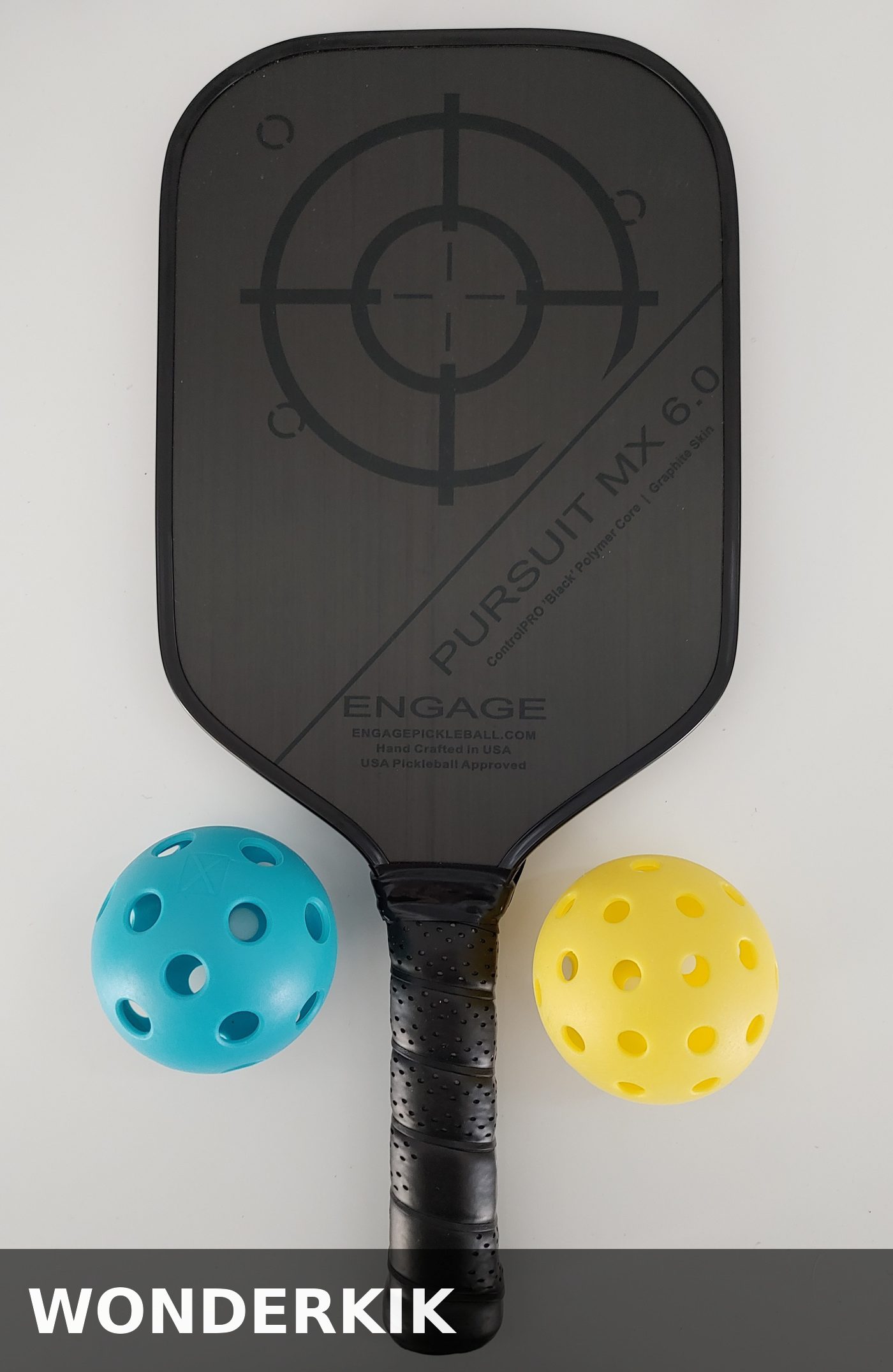
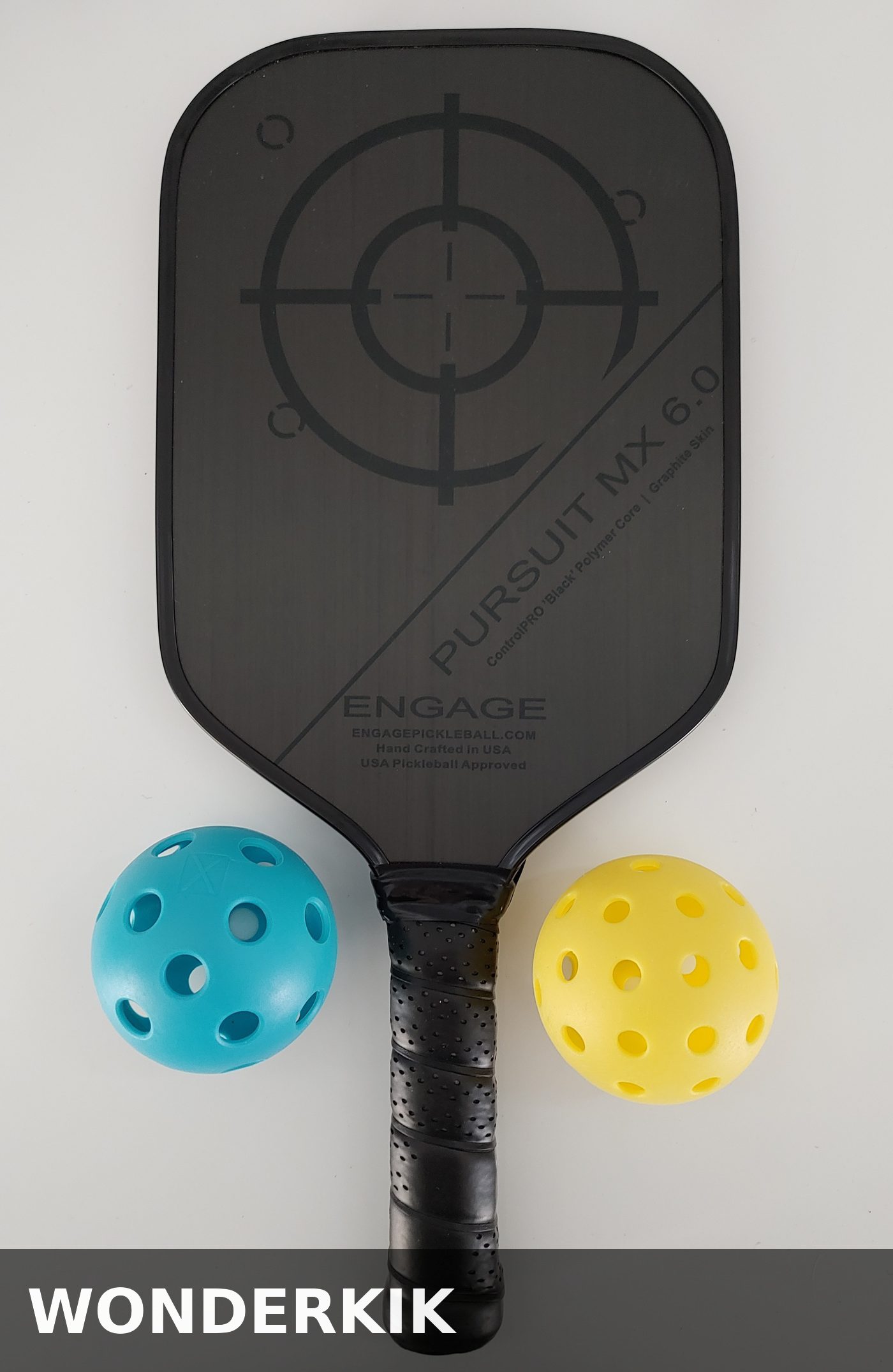
A Pursuit MX 6.0 pickleball paddle by Engage with one blue indoor pickleball and – CC CC BY-SA 4.0 (Wikimedia Commons)
The golden rule for a first paddle
Buy a balanced, mid-weight paddle in the $50–110 range, and spend your first two months playing with it. The single biggest beginner mistake isn’t buying the wrong paddle — it’s buying three of them in nine weeks chasing whatever a YouTube guy hyped.
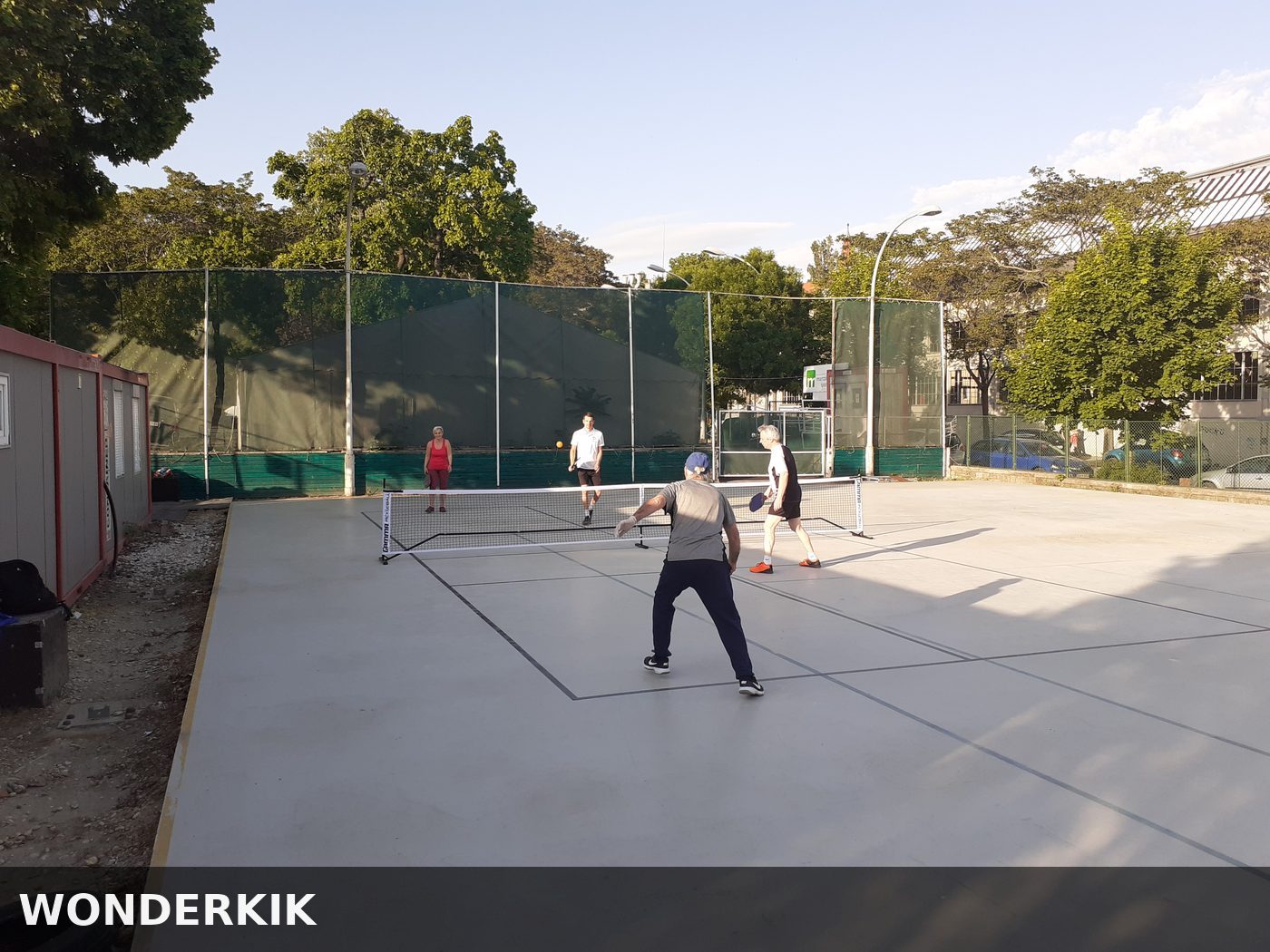
A Fair-way SE versenyzői edzést tartanak. – CC CC BY-SA 4.0 (Wikimedia Commons)
The three specs that actually matter
1. Weight (the one beginners feel most)
Light paddles (under 7.3 oz / ~207g) swing fast but send less power, and they can actually get knocked around by hard returns. Heavy paddles (8 oz+ / ~227g) hit harder but tire your arm faster, which risks sloppy form and elbow pain — same story we cover in tennis elbow treatment for the racket version.
Start mid-weight: 7.3–8.0 oz (207–227g). If you have a light build or wrist issues, lean lighter. If you’re stronger, try heavier.
2. Face material (composite beats wood, graphite wins later)
Wood: cheap, heavy, dead. Fine for a $15 yard paddle; frustrating anywhere else.
Composite (fiberglass or polymer over a core): the sweet spot for beginners. Offers spin, longer touch, and better forgiveness at a fair price. Most $60–110 paddles are composite.
Graphite: lighter and faster-feeling, with more spin — but less power, and pricier. A better second paddle once you know your game.
Raw carbon fiber: the tournament tech. The premium stuff. Not necessary for year one.
3. Grip size
If the paddle’s grip is too small, you’ll over-squeeze and wreck your arm. Wrap the handle in your fingers with the handshake grip: your middle finger should just brush your palm. Standard grips run 4″ to 4.5″, and you can always thicken one with an extra overgrip. This is the spec most new players get wrong because they buy sight-unseen.
What about shape?
Standard paddles are the safe call. Elongated paddles (longer handle, smaller face) add reach and pop but demand better center-hitting and control. For a beginner, standard shape is more forgiving.
The price bands, honestly
$30–50: usable recreational paddles. Heavier, less spin, but perfectly fine for casual play. Good for kids and absolute first-timers testing the waters.
$50–110: the real beginner sweet spot. Composite faces, mid-weight, good control. This is where you buy your first serious paddle.
$110–200: graphite and raw-carbon options. Felt better, sometimes played better — worth it once you’ve got a consistent game and an opinion.
$200+: tournament paddles. Skip unless you’re entering competitions or you’ve earned your preferences.
Our shortlist for beginners in 2026
Instead of tying you to a specific brand name (they change yearly and everyone pays for “best-of” ink), these are the spec profiles worth matching:
The community-court favorite (~$70–90): composite face, 7.6 oz, standard shape, 4.25″ grip. Power and control balanced. The default first paddle.
The forearm-friendly pick (~$90–110): graphite face, 7.2 oz. Lighter swing, gentler on the arm on long weekends of play.
The slow-and-steady value (~$45): polymer composite, slightly heavier at 7.9 oz for easy power. The best bang for a casual, park-only player.
The spin starter (~$120): textured composite face for early feel of topspin and slice — only if you already know you want spin in your game.
What brand to buy
Any of the established names (Selkirk, Franklin, JOOLA, Head, Wilson, Gamma) are safe purchases at these specs. The risk isn’t brands — it’s the generic no-name listing with a fake review count at $19. Avoid those.
One more tip: buy the ball and a spare
Paddles outlast balls dramatically. Grab 2–3 outdoor balls and an extra overgrip, and you’re set for months.
Common mistakes to skip
Buying the heaviest paddle “for more power.” Heavy sacrifices control and arm health; mid-weight is enough power for anyone learning.
Skipping the grip check. This is the #1 hidden buyers’ remorse — you can adjust weight feel by adding grip, but you can’t un-buy a paddle that never fit your hand.
Reading review counts, not specs. Beginner lists are dominated by affiliates. Trust the three specs.
$50–110. Below that you’re buying repairs in advance; above that you’re paying for tournament tech you won’t use for a year.
Which paddle is best for a woman beginner?
Mid-weight composite (7.2–7.6 oz) is the common recommendation — light enough to swing all night, enough mass for steady power. But grip size and your own strength beat any gender-based rule.
Is a heavier paddle better for power?
Only up to a point, and not for beginners. Heavier paddles transfer more force, but slower swing speed and arm fatigue eat that gain fast. Mid-weight wins for year one.
How long should a first paddle last?
With normal recreational play, a composite paddle lasts multiple seasons. Balls, not paddles, are your ongoing expense.
Do I need a paddle bag?
No. A simple padded cover is enough to protect the face in a gym bag. Bags are a comfort buy, not a requirement.
Racquet sports player and writer covering pickleball, padel, tennis, badminton, and squash. Former collegiate tennis player turned recreational pickleball enthusiast. Jackson writes beginner-friendly guides to help new players get on court faster.
















Recent Comments