Pickleball is the racket sport that went from a backyard afterthought to the fastest-growing sport in America in two decades. If you’re here because a friend, a park, or your local rec center keeps bringing it up, you’re not alone — roughly 8 million people now play it in the US alone.
Here’s what it is, where it came from, and why everyone’s suddenly obsessed.
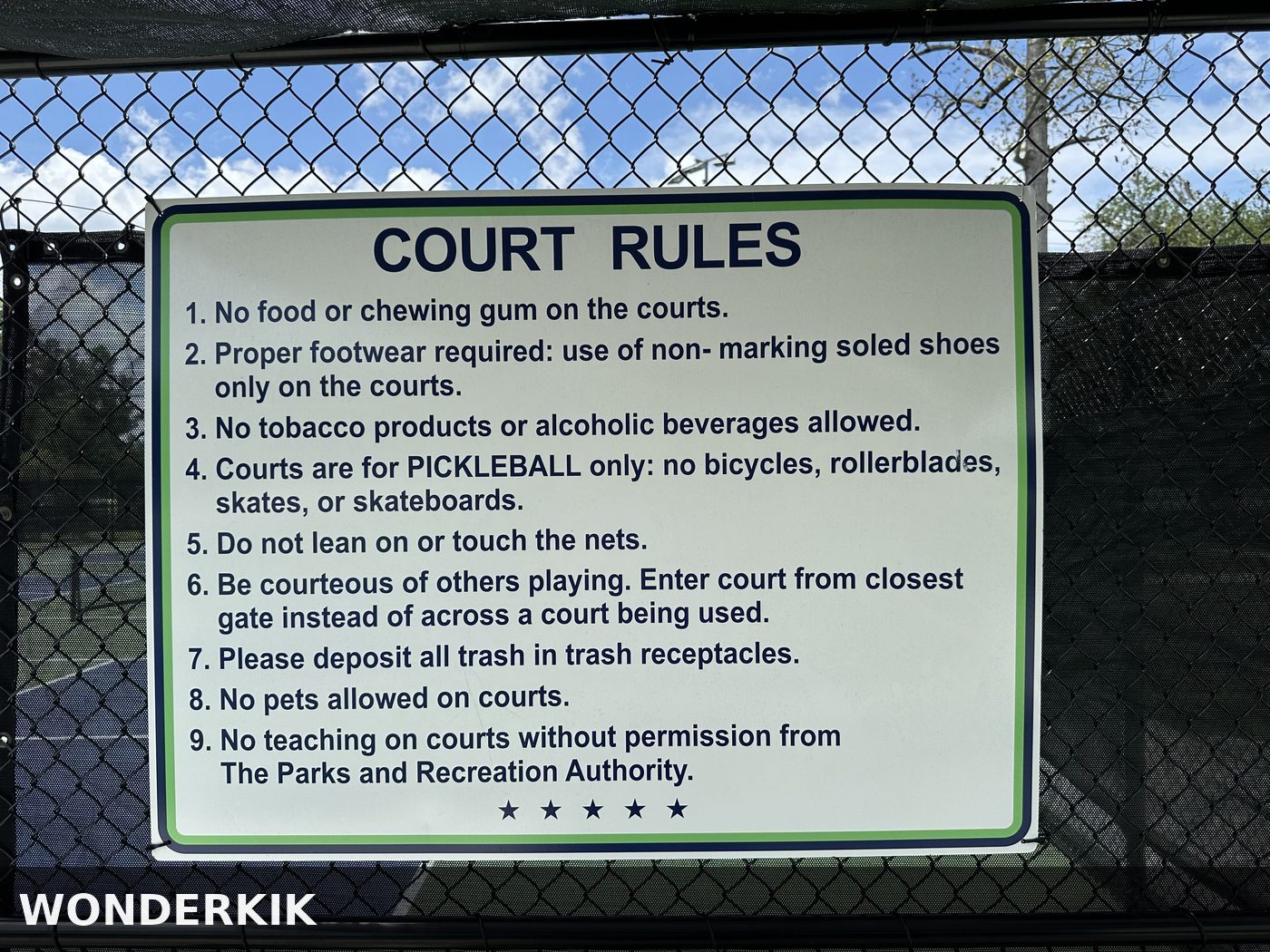
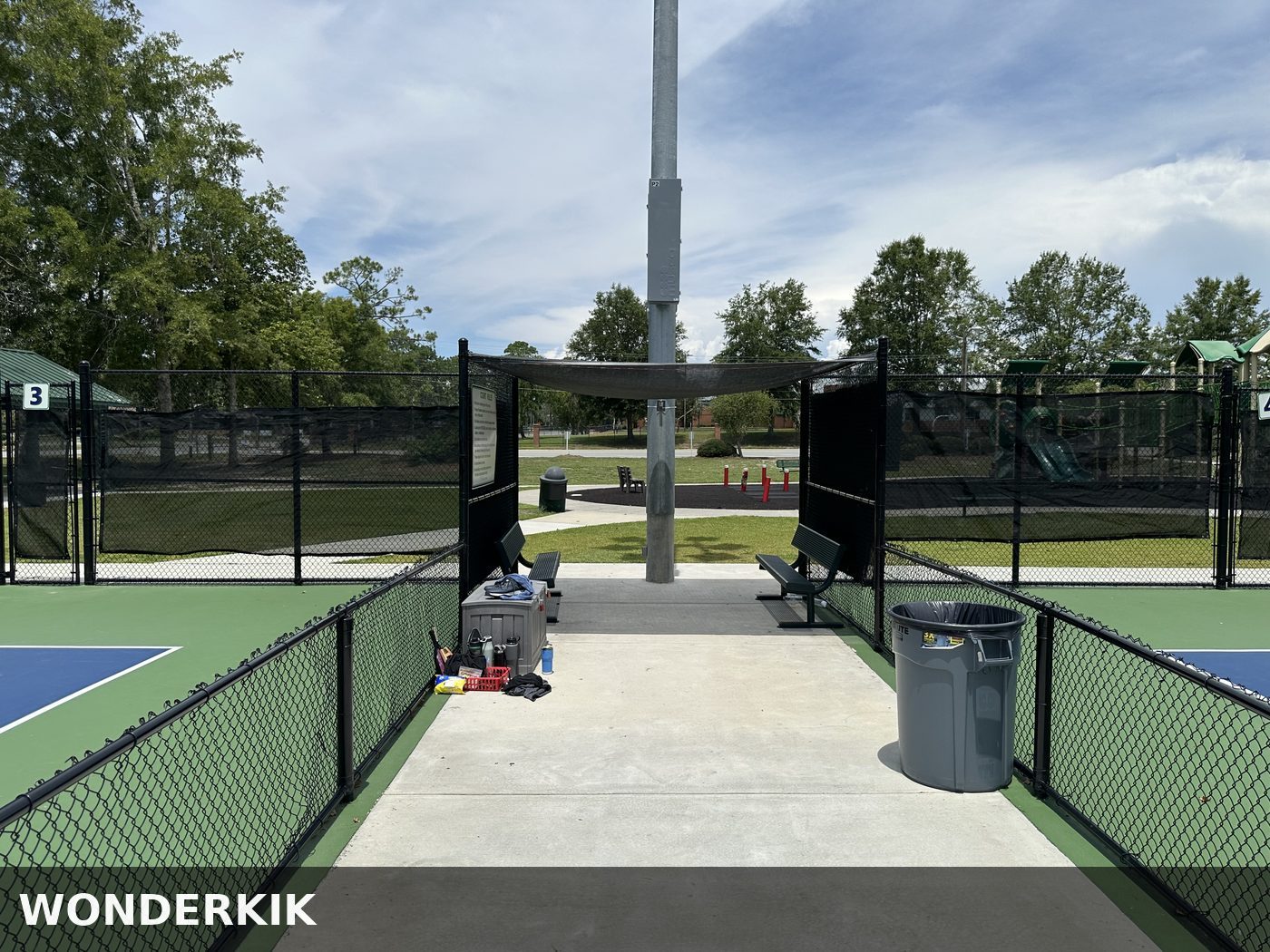
Located in between pickleball courts 3 and 4 at Harry B. Anderson Tennis Center – CC CC0 (Wikimedia Commons)
The 60-second definition
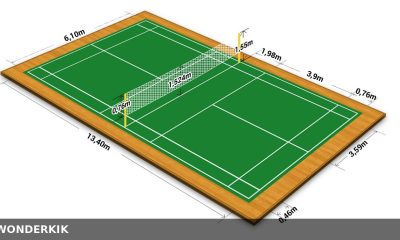
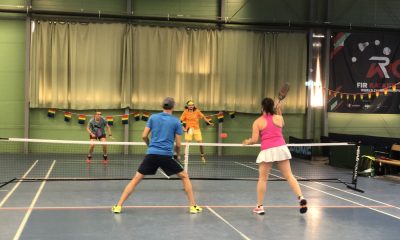
Pickleball is a racket or paddle sport played on a court about the size of a doubles badminton court (20 by 44 feet — exact dimensions are in our court size guide). Players hit a lightweight plastic ball with holes across a net using solid paddles. You can play singles or doubles, though doubles is the community default.
The ball is the giveaway when you watch it: it looks like a whiffle ball, moves slower than a tennis ball through the air, and makes that distinctive hollow pop. It plays fast but feels friendly.
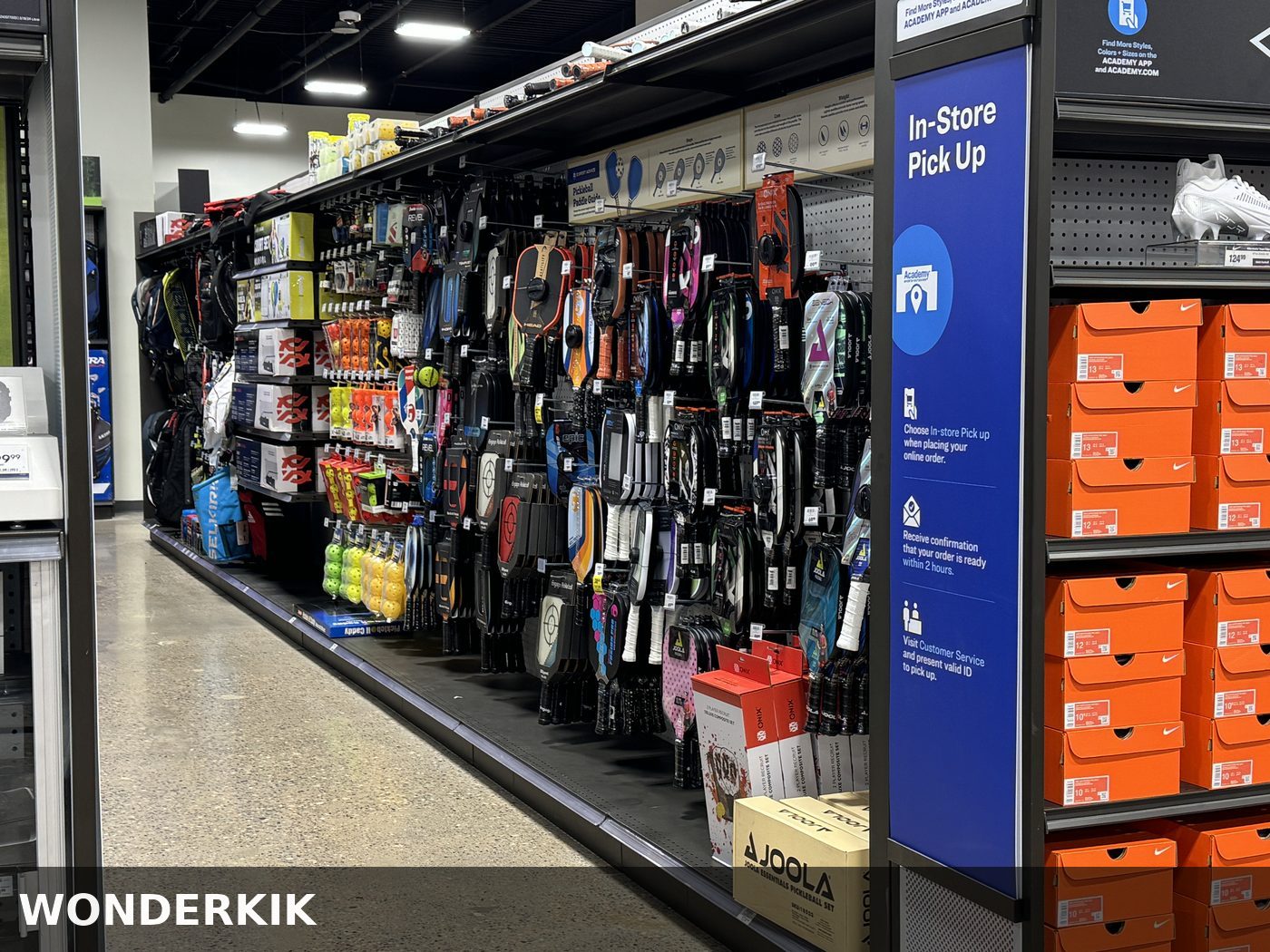
Academy Sports + Outdoors, Indianapolis, Indiana – CC CC BY 4.0 (Wikimedia Commons)
How a game plays out
A point starts with an underhand serve, diagonal over the net. The receiving side must let the ball bounce before returning, and the serving side must let that return bounce too — the famous “double bounce rule.” After that, the ball can be hit in the air or off the bounce.
There’s one forbidden zone: a 7-foot strip on each side of the net called the kitchen, where you can’t volley. The result is a sport that rewards placement and patience over raw power, and rallies that last longer than you’d expect for such a small court.
Pickleball was invented in 1965 on Bainbridge Island, Washington, by three dads — Joel Pritchard, Bill Bell, and Barney McCallum — whose kids were bored one summer. They improvised with ping-pong paddles, a perforated plastic ball, and a badminton court lowered to a kid-friendly height. The name is a bywater story: either it’s named after the family dog Pickles (the tale the founders themselves built into folklore), or it refers to a “pickle boat” in crew, where a boat has missed every crew event — a mismatch of spare parts. Both stories are told; the dog version sticks.
The sport that launched in a driveway grew slowly for decades, then exploded in the 2020s as courts went into parks, towns, and retirement communities.
Why it’s grown so fast
A few honest reasons it took off:
The learning curve is tiny. Most people can have a proper rally (not just hit a ball awkwardly) within their first hour.
It’s genuinely social. Doubles is the default format, courts are busy, and the community culture (players welcoming strangers into games) is part of the draw.
It’s accessible across ages. Kids, seniors, people with joint issues, athletes between seasons — the pace and court size work for all of them.
It’s cheap to start. A paddle, two balls, and court shoes beat the entry cost of almost any other racket sport. Our beginner paddle picks show what a sensible starter kit costs.
Pickleball vs. the sports you already know
People sometimes think pickleball is “tiny tennis.” It’s a cousin, not a copy.
Serve: underhand in pickleball (the textbook tennis overhead serve is illegal on a pickleball court).
Court: roughly a quarter of a tennis court’s area.
Pace: slower and more controlled; think chess with paddles.
Equipment: solid paddles and a whiffle-type ball, not strung rackets and felt balls.
A common myth is that pickleball is “only for retirees.” The loudest surprise of the last few years is just how wrong that is: it’s now the fastest-growing sport among players under 35 in many regions, it hit pro-tour territory with televised events and sponsorships, and high school teams keep popping up. Tournament-level pickleball is a genuinely athletic, fast sport.
But yes — it’s also still wildly popular with older players, and that’s a feature, not a problem. Few sports let a 15-year-old and a 75-year-old play one another evenly. Pickleball does.
How to get started this week
Find a court: search “pickleball courts near me” — most parks now have lines painted on tennis courts, and public courts are free.
Bring gear: one paddle each, two outdoor balls, court shoes (not running shoes if you have them).
Show up: if a court has a queue, toss a paddle on the floor to claim next game. If people are rallying, tell them you’re new — the community will grab you in.
Yes, to start. Smaller court, slower ball, underhand serve, and the double bounce rule buy you time. Easier to play acceptably on day one; still hard to master.
Is pickleball a serious workout?
It can be. Casual play is light, but competitive doubles is genuinely athletic — lateral movement, explosive lunges, quick reaction time. Don’t let the gentle reputation fool you at the tournament level.
Do I need expensive gear as a beginner?
No. A mid-range paddle in the $50–110 range and decent court shoes are enough. Our beginner paddle guide explains exactly what to look for.
Can I play pickleball on a tennis court?
Yes — regulation pickleball courts are often marked directly on tennis courts. Just check the lines: pickleball courts are 20×44 feet, typically four courts fit per tennis court.
How is pickleball scored?
Games are to 11, win by 2, and only the serving team scores points, which is why scores get announced in that confusing three-number format. The full breakdown is in our pickleball scoring guide.
Racquet sports player and writer covering pickleball, padel, tennis, badminton, and squash. Former collegiate tennis player turned recreational pickleball enthusiast. Jackson writes beginner-friendly guides to help new players get on court faster.








Recent Comments