Racquet Sports Weekly Roundup — Zverev & Rybakina Win the US Open, NJ 5s Take the MLP Title
Welcome to the first WonderKik weekly racquet-sports roundup. Every Monday we scan the pickleball, padel, tennis, badminton, squash, and table-tennis news so you get the winners, the headlines, and what to watch next week — in one place.
Here’s the week that was (September 8–14, 2026).
Tennis — Zverev and Rybakina crowned at the US Open
The year’s last major is done, and Flushing Meadows produced two firsts.
Men’s singles: Alexander Zverev (world No.2) beat American Ben Shelton in four sets, 6-3, 7-6(2), 5-7, 6-2, to win the US Open for the first time — his second Grand Slam title of 2026 after Roland-Garros. Shelton was chasing history: the first American man to win the US Open since Andy Roddick in 2003, and the first Black man to win it since Arthur Ashe in 1968. His run included a five-set quarter-final win over defending champion Carlos Alcaraz that finished at 3:33 a.m., the latest finish in tournament history. Zverev arrived as the top seed after world No.1 Jannik Sinner withdrew with a persistent knee injury.
Women’s singles: Elena Rybakina beat two-time defending champion Aryna Sabalenka 6-4, 5-7, 6-2 to win her maiden US Open and third career major — then overtook Sabalenka for the world No.1 ranking on Monday. Sabalenka had come within one match of tying Serena Williams’ three-peat feat.
Next up: the tour shifts to Asia for the autumn swing.
Pickleball — New Jersey 5s win the MLP title
Major League Pickleball crowned a first-time champion. The New Jersey 5s beat the St. Louis Shock in the DreamBreaker 21-9 to capture the 2026 MLP championship — the franchise’s first title. Federico Staksrud was named Finals MVP, and Anna Leigh Waters picked up her first MLP title to complete the set.
Over at the Veolia Pickleball National Championships in Cary, North Carolina, the standout runs were Anna Leigh Waters and Anna Bright, who both left with two golds. Waters beat Kate Fahey 11-1, 11-9 in the women’s singles final, and Ben Johns & Gabe Tardio kept their grip on the men’s doubles crown.
On the world stage, Jessie Irvine and Gabe Tardio each won two golds at the PPA Kuala Lumpur Cup, while teenage prospect Tama Shimabukuro impressed in just her second PPA event.
Watch next: the Veolia Arizona Open runs September 14–20 in Mesa, Arizona.
Padel — Madrid P1 crowns Chingalán; Salazar says goodbye
The Madrid P1 wrapped with Federico Chingotto & Alejandro Galán — the “Chingalán” partnership — taking the men’s title, while Gemma Triay made history twice over on the women’s side in her home event. It was an emotional week for the sport: after a three-decade career, Alejandra Salazar played her farewell at home in Madrid.
The whistle-stop of the week ran at a venue tennis fans will know: the Alpine Paris Major played out its finals at Roland Garros over the weekend, with world No.1 pair Arturo Coello & Agustín Tapia still the pair to beat on the 2026 tour.
Badminton — An Se-young rules the world, India’s pairs keep winning
At the BWF World Championships in New Delhi, An Se-young of South Korea defended her women’s singles world title with a masterclass win over Japan’s Akane Yamaguchi — her second consecutive world crown.
Since then the doubles column has belonged to India: Satwik Rankireddy & Chirag Shetty took their 20th BWF World Tour title at the China Masters, while an older star keeps climbing — Taiwan’s Chou Tien-chen moved up to world No.4. Over at the Vietnam Open, Chinese Taipei’s Chen Zhi-ray & Lin Yu-chieh won the men’s doubles.
Squash — Qatar Classic kicks off the Platinum season
It’s a new season for the PSA Tour, and the first Platinum event is already in Doha.
Before that, the London Squash Classic threw up two of the year’s best stories: English No.1 Georgina Kennedy beat world No.2 Hania El Hammamy to reach her first major-class final, and 18-year-old Indian sensation Anahat Singh knocked out No.4 seed Tinne Gilis — the biggest PSA match win of her career.
This week the QTerminals Qatar Classic runs September 12–18 in Doha, and it has a loaded draw:
Nouran Gohar returns to the PSA Tour after a year away following the birth of her first child in April.
World No.1 Hania El Hammamy (two-time champion) and Mostafa Asal top the women’s and men’s seeds; Asal has finished runner-up in Qatar in each of the last two years.
Defending men’s champion Paul Coll opens against four-time Qatar Classic winner Mohamed ElShorbagy.
Qatari favorite Abdulla Al-Tamimi returns from an Achilles rupture to play on home soil.
Table Tennis — Moregård and Miwa Harimoto win in Macao
Two finals worth the price of admission at WTT Champions Macao (September 8–13):
Sweden’s Truls Moregård beat Brazil’s Hugo Calderano 4-1 to take the men’s title, having survived a 4-3 semi-final against Tomokazu Harimoto.
Japan’s Miwa Harimoto — just 18 — came from 2-3 down to beat China’s Chen Yi 4-3 (12-10 in the decider) for her third WTT Champions trophy of 2026. “I didn’t expect to win it three times at all,” she said after the match.
With the senior stars (Wang Chuqin and Sun Yingsha) adding World Cup titles earlier in the year, China and Japan continue to trade blows heading into the run of WTT Smash events.
Padel: the tour keeps rolling after the Paris Major.
That wraps issue #1. Bookmark the page and check back every Monday — or jump into our guides to brush up on how each game works while the season unfolds.
Reading Next
Related guides from the WonderKik racket-sport series:
Racquet sports player and writer covering pickleball, padel, tennis, badminton, and squash. Former collegiate tennis player turned recreational pickleball enthusiast. Jackson writes beginner-friendly guides to help new players get on court faster.
Best Pickleball Paddles for Beginners in 2026: What to Actually Buy
There are 400 “best pickleball paddle” lists on the internet, and most of them read like ads. Let me be blunt: as a beginner, 93% of the difference between paddles won’t matter to you yet. What matters is three spec numbers, one price range, and your own body.
Here’s how to buy your first paddle without wasting money — and the exact specs worth looking for.
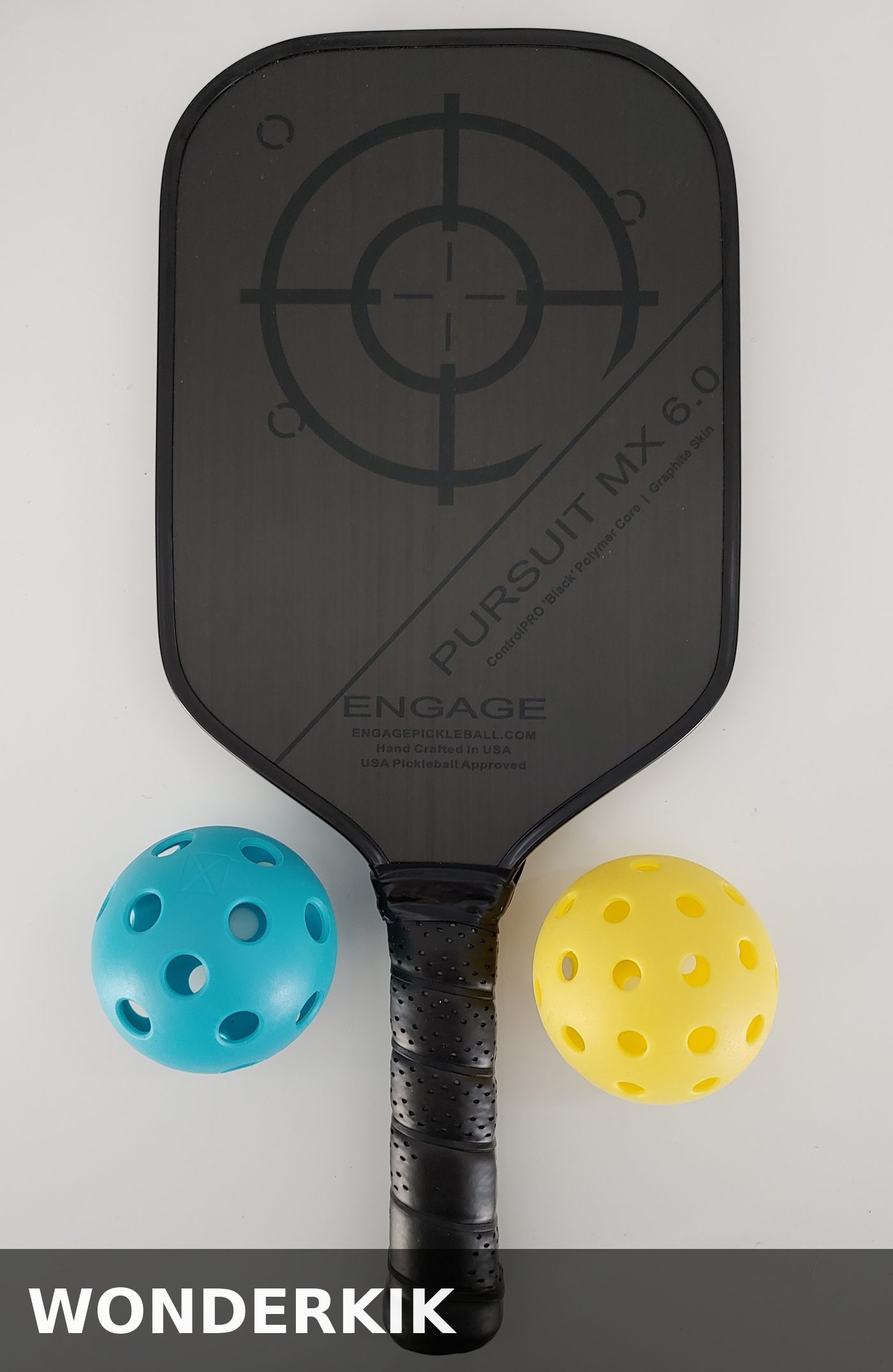
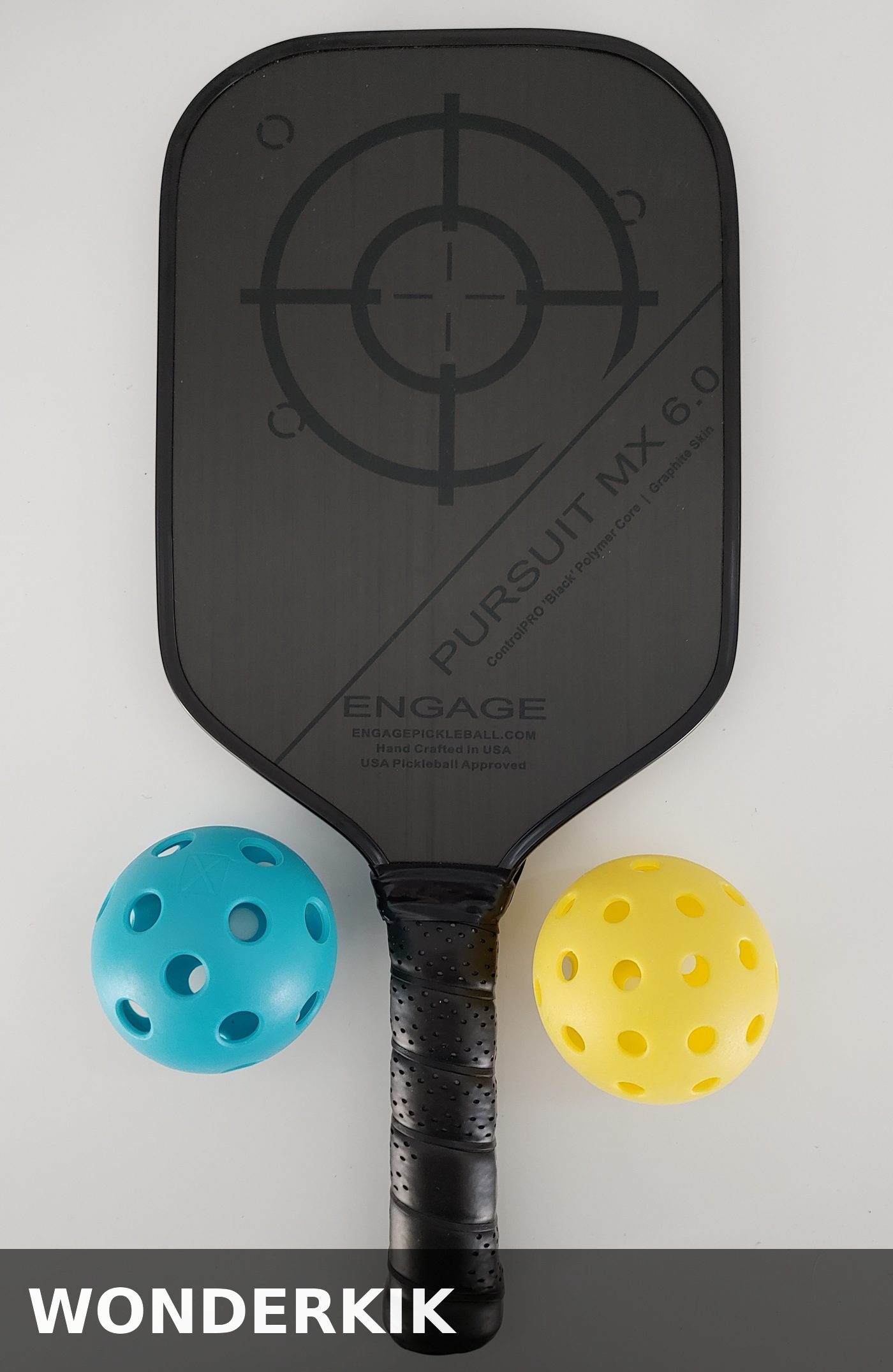
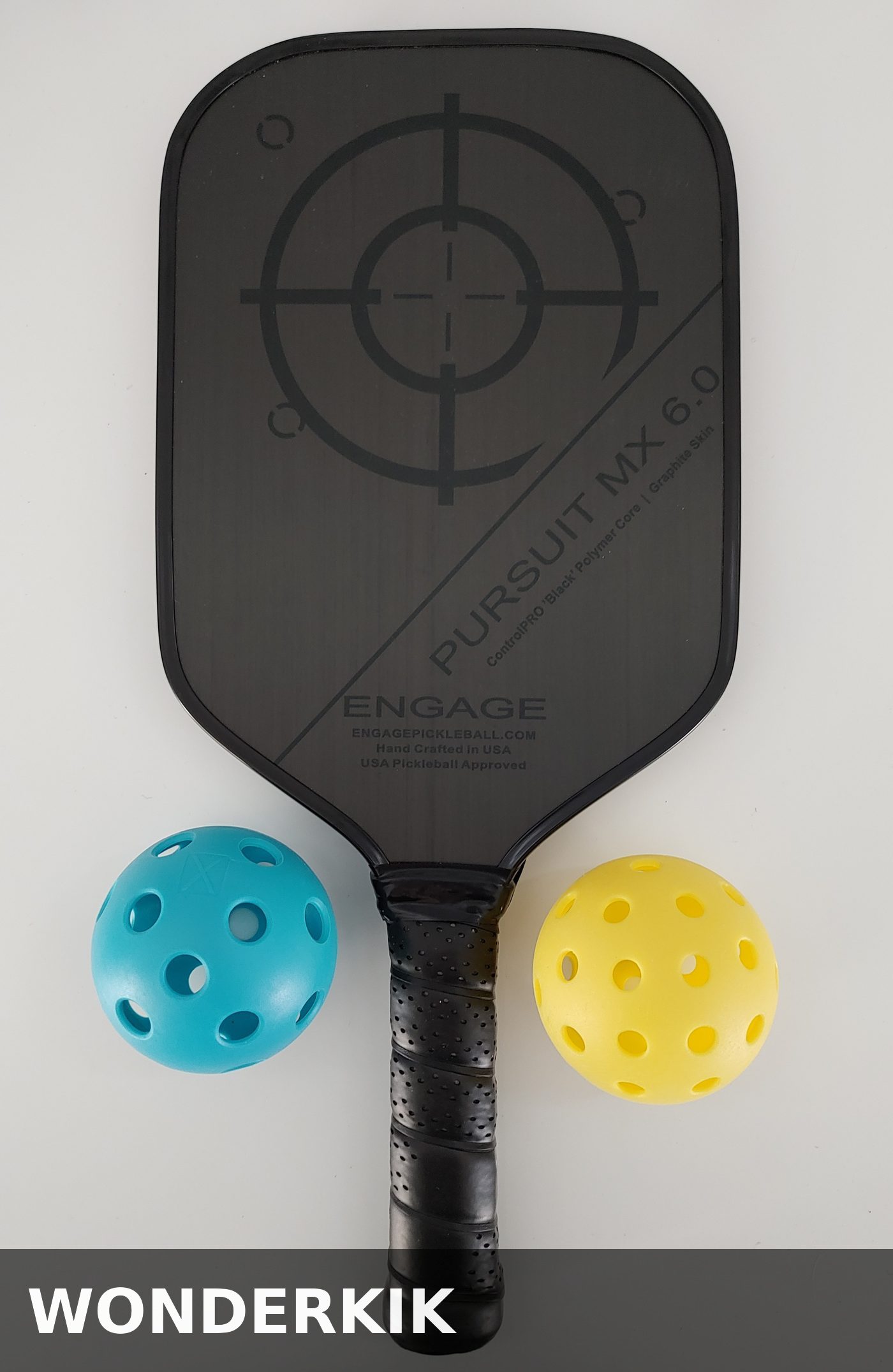
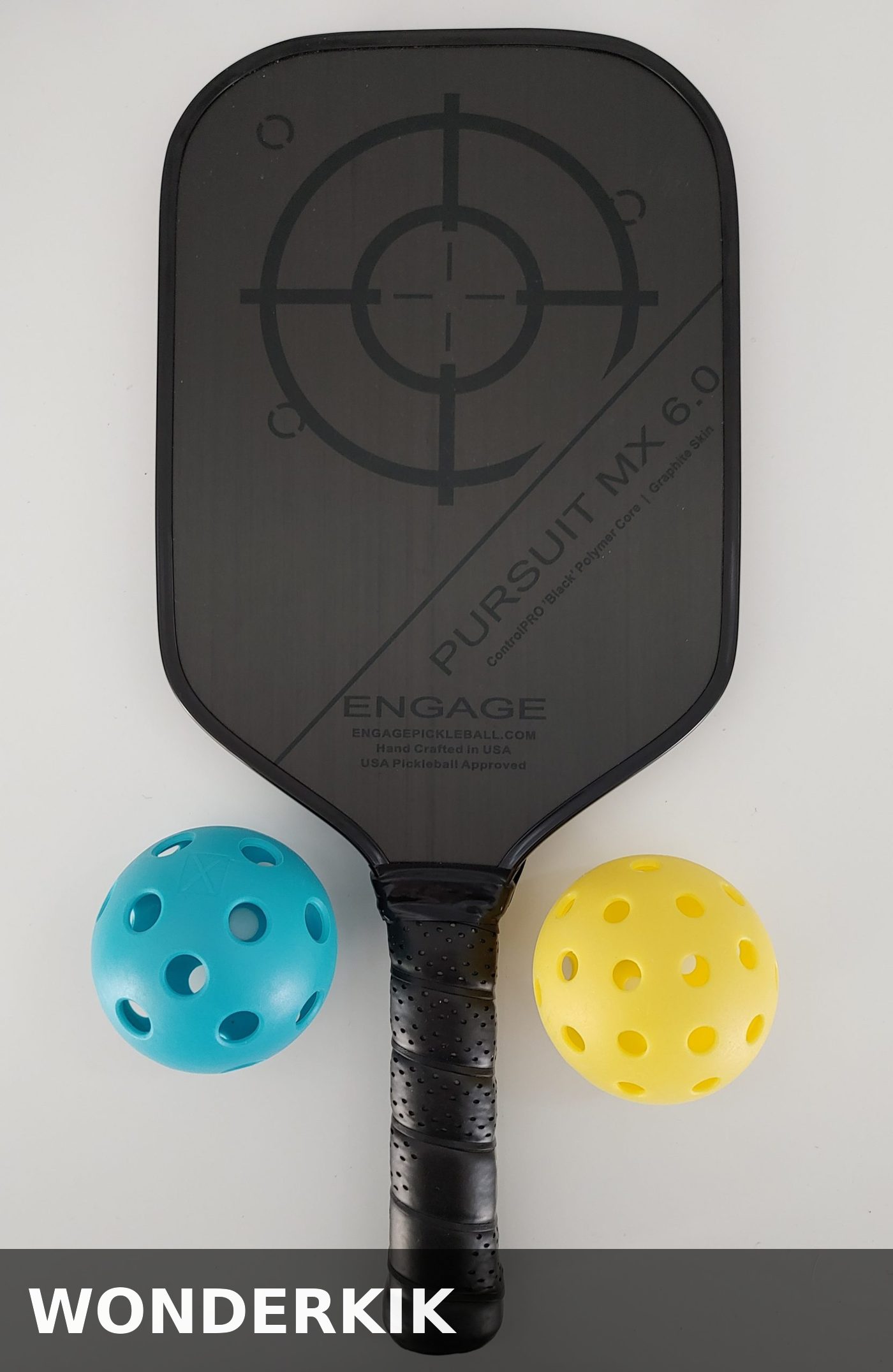
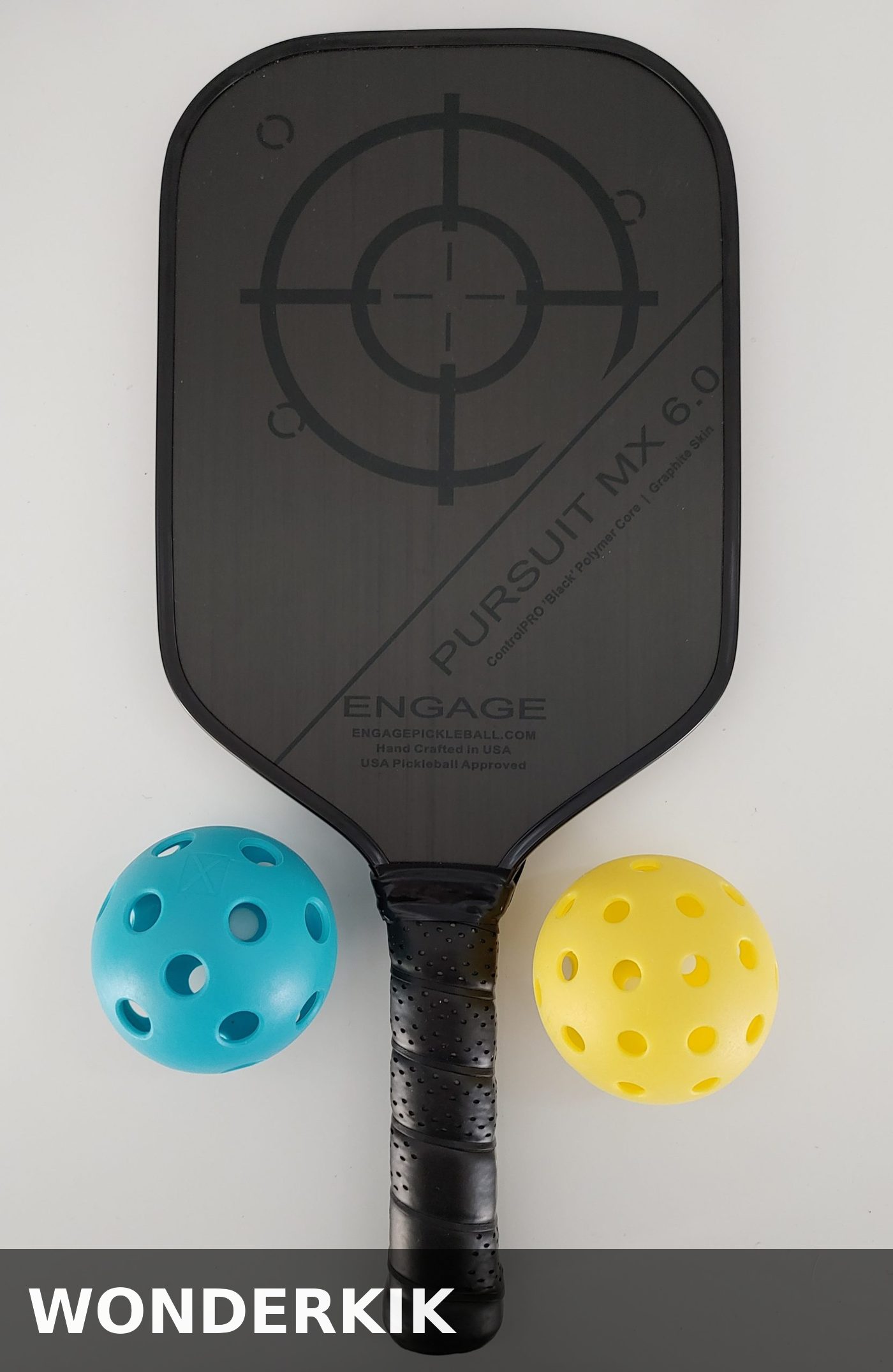
A Pursuit MX 6.0 pickleball paddle by Engage with one blue indoor pickleball and – CC CC BY-SA 4.0 (Wikimedia Commons)
The golden rule for a first paddle
Buy a balanced, mid-weight paddle in the $50–110 range, and spend your first two months playing with it. The single biggest beginner mistake isn’t buying the wrong paddle — it’s buying three of them in nine weeks chasing whatever a YouTube guy hyped.
A Fair-way SE versenyzői edzést tartanak. – CC CC BY-SA 4.0 (Wikimedia Commons)
The three specs that actually matter
1. Weight (the one beginners feel most)
Light paddles (under 7.3 oz / ~207g) swing fast but send less power, and they can actually get knocked around by hard returns. Heavy paddles (8 oz+ / ~227g) hit harder but tire your arm faster, which risks sloppy form and elbow pain — same story we cover in tennis elbow treatment for the racket version.
Start mid-weight: 7.3–8.0 oz (207–227g). If you have a light build or wrist issues, lean lighter. If you’re stronger, try heavier.
2. Face material (composite beats wood, graphite wins later)
Wood: cheap, heavy, dead. Fine for a $15 yard paddle; frustrating anywhere else.
Composite (fiberglass or polymer over a core): the sweet spot for beginners. Offers spin, longer touch, and better forgiveness at a fair price. Most $60–110 paddles are composite.
Graphite: lighter and faster-feeling, with more spin — but less power, and pricier. A better second paddle once you know your game.
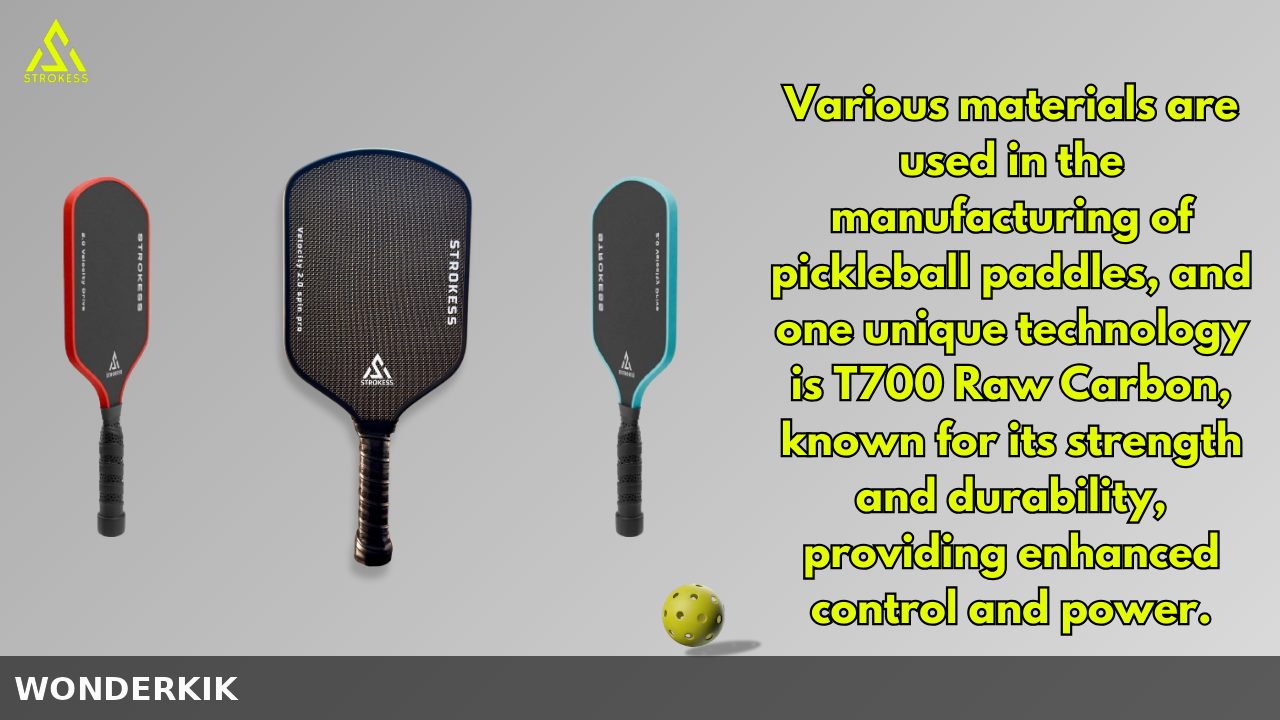
Raw carbon fiber: the tournament tech. The premium stuff. Not necessary for year one.
3. Grip size
If the paddle’s grip is too small, you’ll over-squeeze and wreck your arm. Wrap the handle in your fingers with the handshake grip: your middle finger should just brush your palm. Standard grips run 4″ to 4.5″, and you can always thicken one with an extra overgrip. This is the spec most new players get wrong because they buy sight-unseen.
What about shape?
Standard paddles are the safe call. Elongated paddles (longer handle, smaller face) add reach and pop but demand better center-hitting and control. For a beginner, standard shape is more forgiving.
The price bands, honestly
$30–50: usable recreational paddles. Heavier, less spin, but perfectly fine for casual play. Good for kids and absolute first-timers testing the waters.
$50–110: the real beginner sweet spot. Composite faces, mid-weight, good control. This is where you buy your first serious paddle.
$110–200: graphite and raw-carbon options. Felt better, sometimes played better — worth it once you’ve got a consistent game and an opinion.
$200+: tournament paddles. Skip unless you’re entering competitions or you’ve earned your preferences.
Our shortlist for beginners in 2026
Instead of tying you to a specific brand name (they change yearly and everyone pays for “best-of” ink), these are the spec profiles worth matching:
The community-court favorite (~$70–90): composite face, 7.6 oz, standard shape, 4.25″ grip. Power and control balanced. The default first paddle.
The forearm-friendly pick (~$90–110): graphite face, 7.2 oz. Lighter swing, gentler on the arm on long weekends of play.
The slow-and-steady value (~$45): polymer composite, slightly heavier at 7.9 oz for easy power. The best bang for a casual, park-only player.
The spin starter (~$120): textured composite face for early feel of topspin and slice — only if you already know you want spin in your game.
What brand to buy
Any of the established names (Selkirk, Franklin, JOOLA, Head, Wilson, Gamma) are safe purchases at these specs. The risk isn’t brands — it’s the generic no-name listing with a fake review count at $19. Avoid those.
One more tip: buy the ball and a spare
Paddles outlast balls dramatically. Grab 2–3 outdoor balls and an extra overgrip, and you’re set for months.
Common mistakes to skip
Buying the heaviest paddle “for more power.” Heavy sacrifices control and arm health; mid-weight is enough power for anyone learning.
Skipping the grip check. This is the #1 hidden buyers’ remorse — you can adjust weight feel by adding grip, but you can’t un-buy a paddle that never fit your hand.
Reading review counts, not specs. Beginner lists are dominated by affiliates. Trust the three specs.
New to the game entirely? Start with how to play pickleball and come back to specs once you’ve hit your first hundred balls.
The FAQs everyone asks
What’s a good beginner paddle price?
$50–110. Below that you’re buying repairs in advance; above that you’re paying for tournament tech you won’t use for a year.
Which paddle is best for a woman beginner?
Mid-weight composite (7.2–7.6 oz) is the common recommendation — light enough to swing all night, enough mass for steady power. But grip size and your own strength beat any gender-based rule.
Is a heavier paddle better for power?
Only up to a point, and not for beginners. Heavier paddles transfer more force, but slower swing speed and arm fatigue eat that gain fast. Mid-weight wins for year one.
How long should a first paddle last?
With normal recreational play, a composite paddle lasts multiple seasons. Balls, not paddles, are your ongoing expense.
Do I need a paddle bag?
No. A simple padded cover is enough to protect the face in a gym bag. Bags are a comfort buy, not a requirement.
Reading Next
Related guides from the WonderKik racket-sport series:
How to Play Pickleball: The Complete Beginner’s Guide
Pickleball looks like tennis and ping-pong had a baby that moved to the community center. Two (or four) players, a whiffle-style plastic ball, and a court about half the size of a tennis court. You can learn the flow in one afternoon — most people do.
Here’s how to play pickleball from that first serve to the last point, without the jargon.
A Pursuit MX 6.0 pickleball paddle by Engage with one blue indoor pickleball and – CC CC BY-SA 4.0 (Wikimedia Commons)
The short version
You serve underhand from behind the baseline.
The ball must bounce once on each side before anyone can volley it.
The kitchen (the 7-foot zone by the net) can’t be volleyed from.
Play to 11, win by 2.
The ball is out of bounds if it lands outside the lines or hits the net on your side.
That’s the whole game. Everything else is skill.
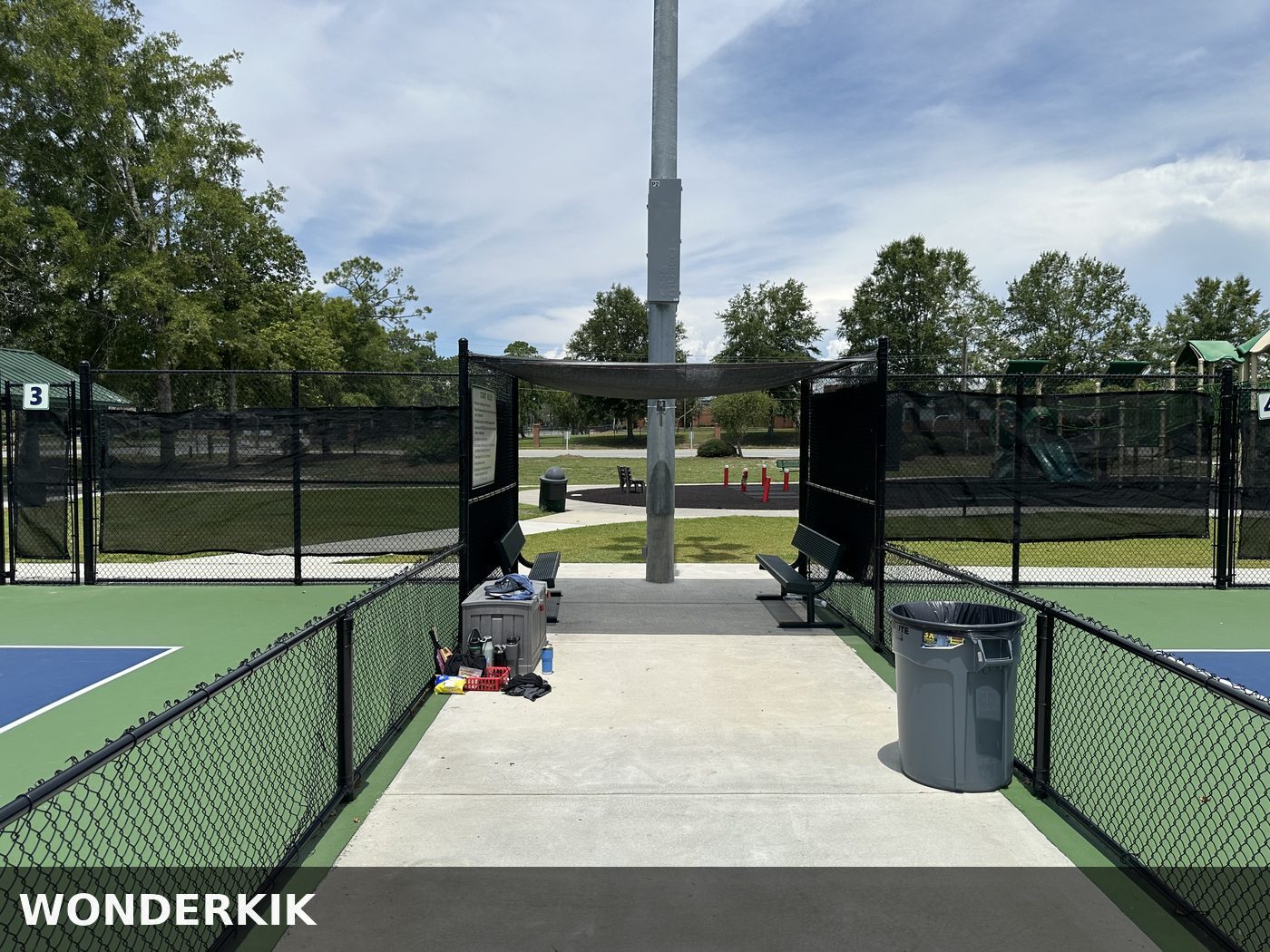
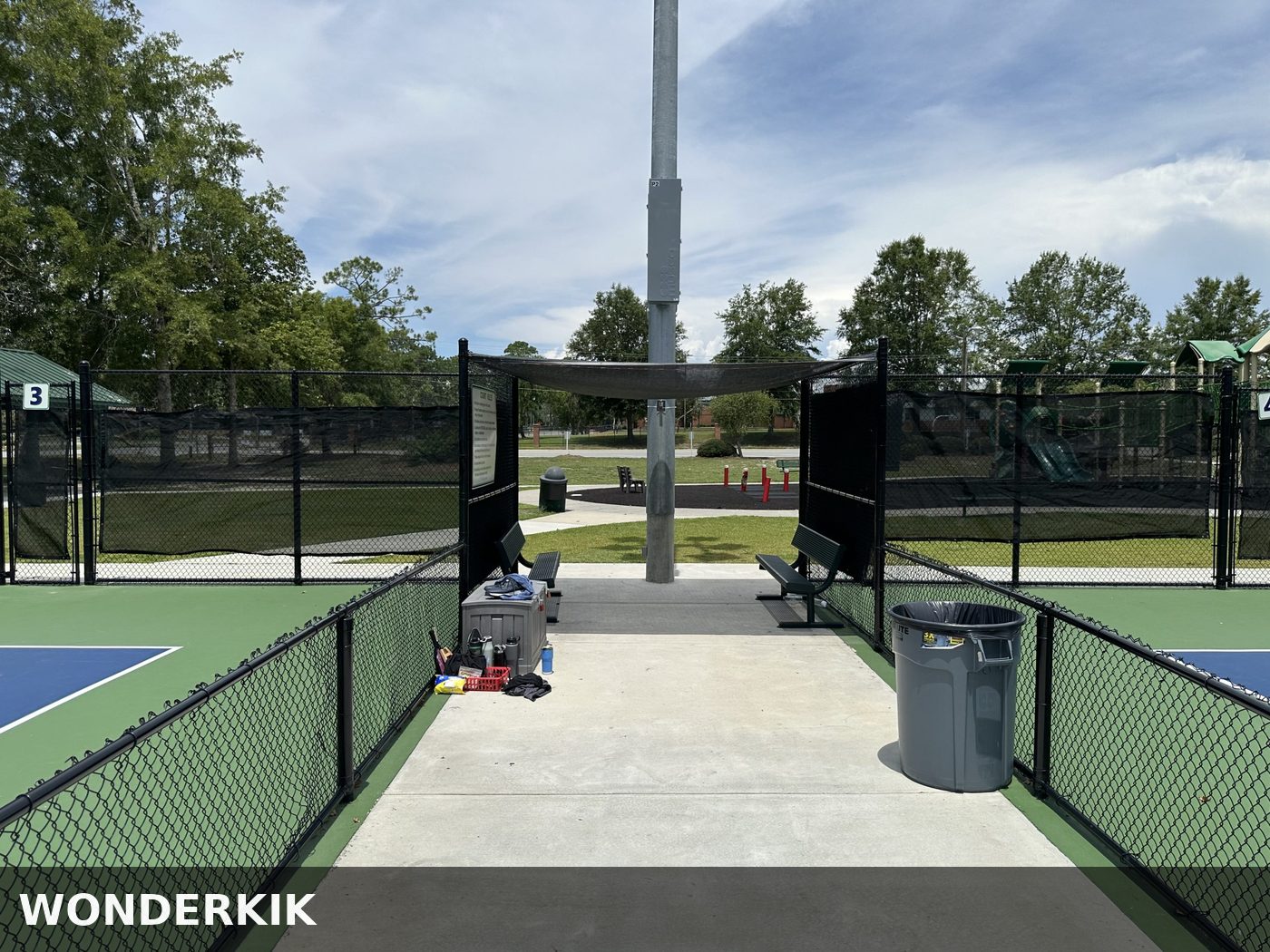
Located in between pickleball courts 3 and 4 at Harry B. Anderson Tennis Center – CC CC0 (Wikimedia Commons)
The serve: the only overhead rule is “no overhead”
Pickleball serves are underhand, period. The paddle has to swing below your waist, and the ball has to come off the paddle face below the waist too. You serve diagonally (like tennis) to the opposite service court, and the serve must clear the kitchen and land beyond it — otherwise it’s a fault.
Big practical tip: you’re serving into the receiving court behind the kitchen line. A ball that lands in the kitchen on the serve is out, even if it’s inside the baseline. Once the serve lands, the receiving side lets it bounce once before returning.
The double bounce rule: the sport’s most confusing rule
For the first two shots of a rally, the ball must bounce. Here’s the sequence:
Server serves the ball.
Receiver lets it bounce, then returns it.
The server’s team now lets that return bounce before hitting it.
After those two bounces, either team can volley — or let it bounce — however they like.
New players get this wrong constantly for the first few games. The way to remember: the serve bounces, the return bounces, then it’s loose. Watch any beginner gym simply forget step 3 and you’ll see why this rule exists — it’s what keeps tall, hard-hitting servers from dominating.
The kitchen: no-volley zone with a stern name
The kitchen is a 7-foot strip on both sides of the net. You can’t stand in it and hit a ball in the air (volley), but you can step into it after the ball bounces. The rule exists to stop players from parking next to the net and smashing everything down.
The common mistake: stepping into the kitchen after volleying, carried by momentum. The rule is about where your feet are when you hit. Stepping in after the hit is fine. If either foot touches the kitchen while you volley, it’s a fault.
What actually happens in a point
A typical rally plays out like this:
Serve to the diagonal court; server’s side can only get points they’re serving for.
After the two mandatory bounces, players dink (soft shots into the kitchen), drive (harder shots), or lob.
Points end when the ball hits out, hits the net, bounces twice, or someone volleys from the kitchen.
Only the serving team scores. If the receiving team wins the rally, they earn the serve back — not a point.
Scoring in 30 seconds
Scores are announced as three numbers: server’s score, receiver’s score, then a third number showing which server (one or two) is serving. You win a game at 11 by 2 — no upper cap if it goes to 11-10, keep going to 12-10. This confuses everyone on day one, and our pickleball scoring guide breaks it down to the point where it makes sense.
Gear you actually need
Realistically: a paddle, a ball, and court shoes you don’t care about. Brands matter later. For your first weeks:
A recreational paddle in the $40–80 range is plenty — our paddle guide walks you through what weight and grip do.
Use an outdoor ball on outdoor courts — they’re heavier and stand up to wind better.
Court shoes beat running shoes because you shuffle and lunge sideways constantly.
Where to play
Most parks don’t require reservations for a public court — show up, and if it’s busy, the pickleball etiquette is a paddle-on-the-floor rotation system when there’s a queue. Call fun, call lines honestly, and let beginners hold their own space. It’s the most forgiving intro to a racket sport you’ll ever have.
How to get better fast (three hacks)
Dink first, drive second. Beginners win points by being patient at the kitchen line, not by swinging hard.
Watch your partner’s position. Pickleball doubles is about covering gaps; stand diagonally-cornered from your partner so the court isn’t open down the middle.
Master the third shot. The third shot of the rally (after the two bounces) is usually a drop shot into the kitchen — get that soft and you’ll control the game.
The FAQs everyone asks
Can you step in the kitchen to hit a dead ball?
Yes. The kitchen rule only bans volleying from inside it. If the ball bounces in the kitchen, step right in and hit it.
How is pickleball different from tennis on day one?
The underhand serve, the double bounce rule, the kitchen, and the smaller court. Tennis rewards power and reach; pickleball rewards placement and patience. Our pickleball vs tennis breakdown covers the full comparison.
Do you need to be fit to play pickleball?
Not really. That’s the point. You can play at walking intensity your first year; tournament-level pickleball is athletic, but casual play is genuinely accessible.
How long does a pickleball game last?
A game to 11 usually runs 15–25 minutes. League play is often best-of-three, which lands around an hour.
Reading Next
Related guides from the WonderKik racket-sport series:
A Pursuit MX 6.0 pickleball paddle by Engage with one blue indoor pickleball and – CC CC BY-SA 4.0 (Wikimedia Commons)A Pursuit MX 6.0 pickleball paddle by Engage with one blue indoor pickleball and – CC CC BY-SA 4.0 (Wikimedia Commons)Pickleball Paddle – CC image (cc0) via Openverse
Pickleball looks easy from the stands. Two people hitting a plastic ball over a low net on a court about half the size of a tennis court. And honestly, it kind of is easy — that’s why it’s the fastest growing sport in America. But if you show up to a public court without knowing the rules, you’ll spend your first hour getting gently corrected by strangers holding paddles.
So let’s skip that. Here’s everything you actually need to know before your first game, minus the jargon.
The court, quickly
Pickleball is played on a court that measures 20 feet wide and 44 feet long — the exact same size as a doubles badminton court. The net sits at 36 inches at the edges and dips to 34 inches in the middle.
There’s one zone that matters more than anything else: the non-volley zone, usually called the kitchen. It’s the 7-foot band on each side of the net. If you’re standing in the kitchen, you’re not allowed to hit the ball in the air. The ball has to bounce first before you can hit it while standing in there.
The baseline is where you serve from. There’s also a centerline and two service courts, but we’ll get to that when we talk about serving.
The Golden Rule: the double bounce
Here’s the rule that trips up almost every beginner.
When a team serves, the receiving team has to let the ball bounce once before they return it. Then the serving team also has to let it bounce once before they hit it back. So the first two shots of every rally — the serve return and the third shot — must bounce.
After those two bounces, everything is fair game. You can step up and volley the ball straight out of the air if you want, as long as you’re not in the kitchen.
This is called the two-bounce rule, and it’s why you’ll hear people talk about the “third shot drop.” The third shot is usually a soft shot that lands in the kitchen so the serving team can move up to the net.
How serving actually works
The serve is the most complained-about skill in the whole sport, mostly because of two rules people don’t believe at first:
It’s underhand. Not a tennis serve. Ever.
No bounce. You hit the ball out of the air, not after a drop-bounce.
The contact point has to be below your waist, and the paddle head has to be below your wrist when you hit the ball. The motion is a swing from low to high — think of it like bowling but upward.
You serve diagonally to the opposite service court, and the ball has to clear the kitchen. It can’t land in the non-volley zone, and it can’t land on the kitchen line, because that line is part of the kitchen.
Wait for the referee in your head: when you serve and the ball lands, the receiving team lets it bounce, returns it, and then your team lets that bounce before hitting the third shot. Once the third shot lands, rally play begins — up to the net you go.
Scoring without losing your mind
Here’s the version of scoring that everything else is built on:
Games go to 11 points.
You have to win by 2.
Only the serving team scores. If the receiver wins the rally, they don’t get a point — they just get the serve back.
That last one confuses people who’ve played volleyball. In pickleball you can’t score on rallies you didn’t serve, so serving is everything.
The serve itself alternates sides within your team. You serve from the right side when your score is even, and the left side when your score is odd. Each team gets two serves before the serve passes to the other side — one for each player — except at the very start of the game, when the serving team only gets one serve.
The score is called as three numbers: your score, their score, then which server you are (one or two). So “six, four, two” means you’re winning 6-4 and it’s the second server’s turn. Listen for it on public courts — it sounds intimidating for a week and then it becomes automatic.
What counts as a fault
A fault ends the rally. The most common ones:
Hitting the ball into the net
Hitting it out of bounds
Stepping into the kitchen (or on the line) while volleying
Volleying the ball before it bounces during those first two shots
Serving into the net, into the kitchen, or out of bounds
Hitting the ball off the court and into someone’s coffee (this isn’t in the rulebook but it happens)
That’s basically it. There’s no “jail,” no penalty box, no fouls called like in basketball. Fault means the rally’s over, and if you were serving, the serve moves either to your partner or to the other team.
One more thing: reach and line calls
Lines count as in. If the ball lands on any part of the line, it’s good — that includes the kitchen line for serves, which catches beginners out all the time.
And the buddy rule: the player closest to the ball makes the call, not the player who hit it. When in doubt, it’s in. There are exactly zero people who became pickleball legends by arguing line calls.
Your first game in one paragraph
Serve underhand, diagonally, from the right side when your score is even. Let the return bounce, let your team’s third shot bounce, then move up and try to keep the rallies going with soft dinks into the kitchen. Don’t volley from inside the kitchen, call the lines honestly, and play to 11. Whether you win or lose, you’ll way more likely pick up the game in one afternoon than you would with golf.
Now go grab a public paddle and a court with a friendly group of strangers. That first serve isn’t going to hit itself.
Reading Next
Related guides from the WonderKik racket-sport series:





 Pickleball2 days ago
 Tennis2 days ago
 Pickleball2 days ago
 Tennis2 days ago
 Pickleball2 days ago
 Padel2 days ago
 Padel2 days ago
 Padel2 days ago