Pickleball is the fastest-growing sport in the world, and tennis elbow is its most common side effect. Doctors call it lateral epicondylitis; players call it “pickleball elbow.” It’s an overuse injury in the tendons on the outside of your elbow, and it sends thousands of players to the physio every year.
The good news: it’s almost always fixable without surgery. This guide covers why pickleball causes it, how to dodge it, and the paddle features that genuinely reduce the vibration that triggers the pain.
Health note: this is performance advice, not medical advice. Persistent or worsening pain should be assessed by a professional.
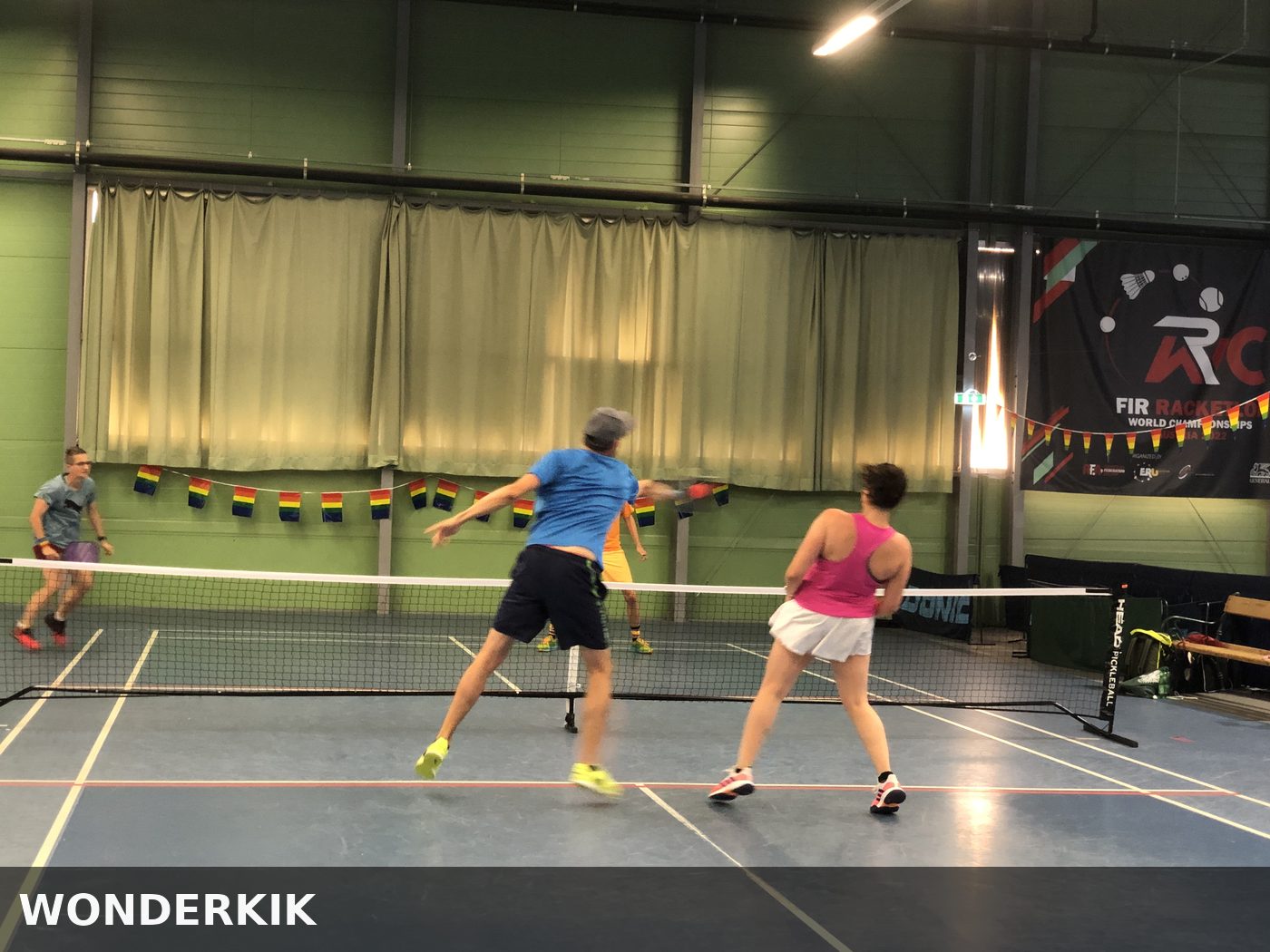
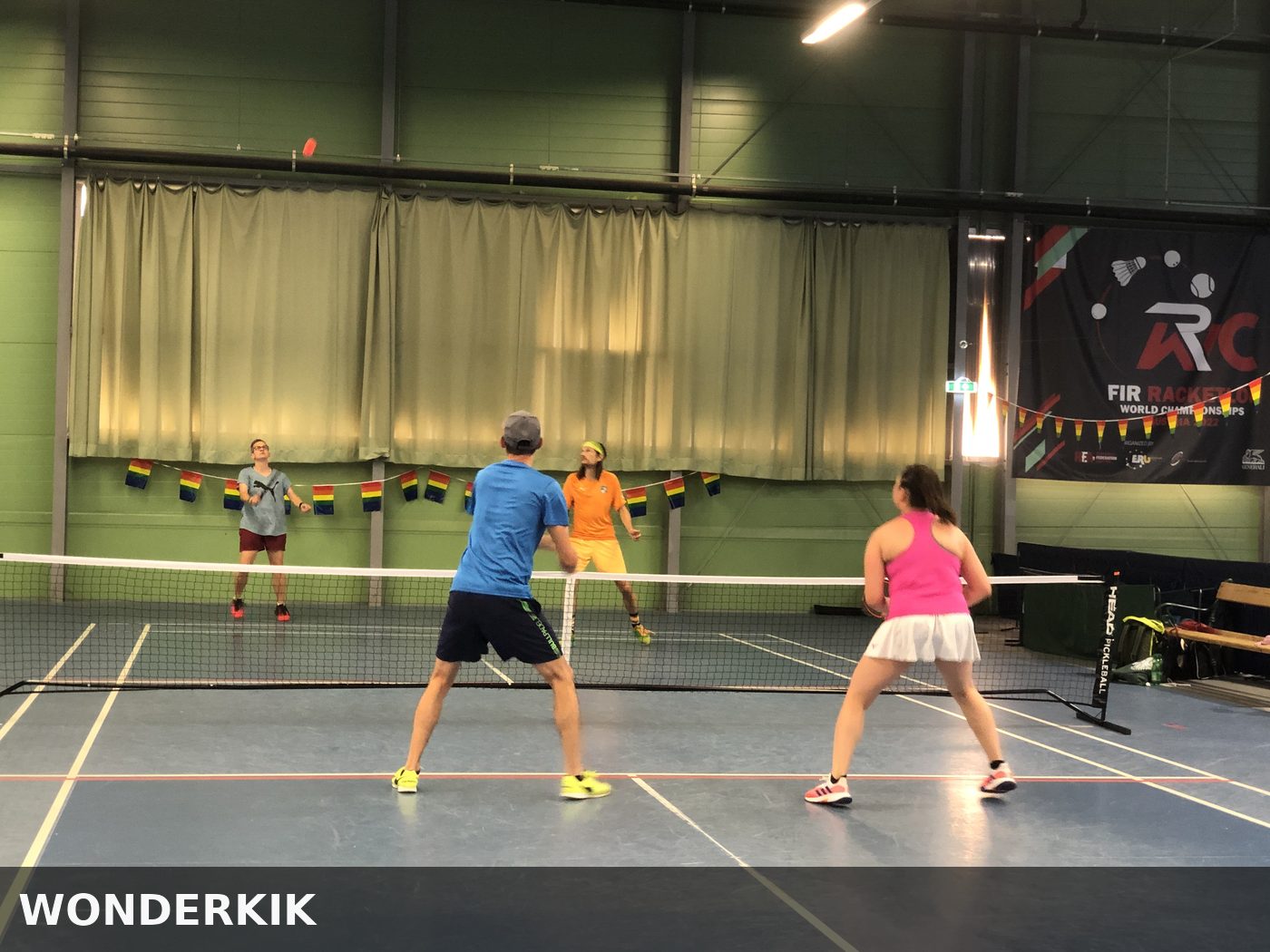
Pickleball tournament Friday 19 July – CC CC BY-SA 4.0 (Wikimedia Commons)
Why pickleball triggers tennis elbow
Tennis elbow isn’t caused by power — it’s caused by repetition on a stiff lever. Pickleball checks every box:
Short, repeated strokes. Dinks, resets, and volleys are all compact arm swings — the same tendon fires over and over.
Stiff paddle = no damping. A rigid paddle face transfers impact vibration straight to your forearm.
Tight grip. Anxiety at the kitchen line makes players squeeze harder, which loads the extensor tendons.
Too much, too fast. Beginners often play 3-4 sessions a week, giving tendons zero recovery time.
The 3 paddle fixes that actually reduce vibration
If your elbow already complains, the paddle matters more than rest. These three features cut the impact:
1. Polymeric core (not raw carbon)
Thermoformed and polymer-core paddles absorb a lot more shock than raw, uncovered carbon faces. If you’re injury-prone, pick paddle marketing calls “soft feel” — it usually means it.
2. Lighter weight (7.6–8.2 oz)
A heavy head-heavy paddle amplifies every impact. A lighter, head-light paddle at 7.5–8.2 oz takes away the whip that torques your elbow.
3. Thick, padded handle
A larger-diameter grip (4.25″+ built up with an overgrip) lets you hold the paddle more loosely. Looser grip = less forearm load. Add a cushioned overgrip even on a paddle you like.
The 5-minute fix without new gear
Before buying anything, try this for two weeks:
Under-grip the handle with 2mm overgrip tape — it forces a looser hold.
Two-hand your backhand — it borrows your non-dominant arm for the load.
Hit within 85% effort — nearly all club players over-hit, and over-hitting multiplies elbow stress.
Ice after sessions for 10 minutes on the outer elbow.
Pickleball’s short, repeated swings on a stiff paddle transmit vibration to your forearm tendons. Most players paddle up dozens of times a set, so the load builds fast — usually on the lateral elbow tendon.
How long does pickleball elbow take to heal?
Mild cases improve in 2-6 weeks with rest, grip adjustment, and lighter paddles. Severe cases can take 3-6 months and need physiotherapy. Persistent pain beyond 8 weeks should be seen by a doctor.
Which pickleball paddle is best for tennis elbow?
Look for a polymer core, thick handle, and low weight (7.5-8.2 oz). A longer handle lets you play two-handed shots and spreads the force across more of your arm.
Should I stop playing if my elbow hurts?
Yes — playing through the pain usually worsens it. Rest until you can grip a coffee cup without pain, then return for short sessions with a padded grip and two-handed backhands.
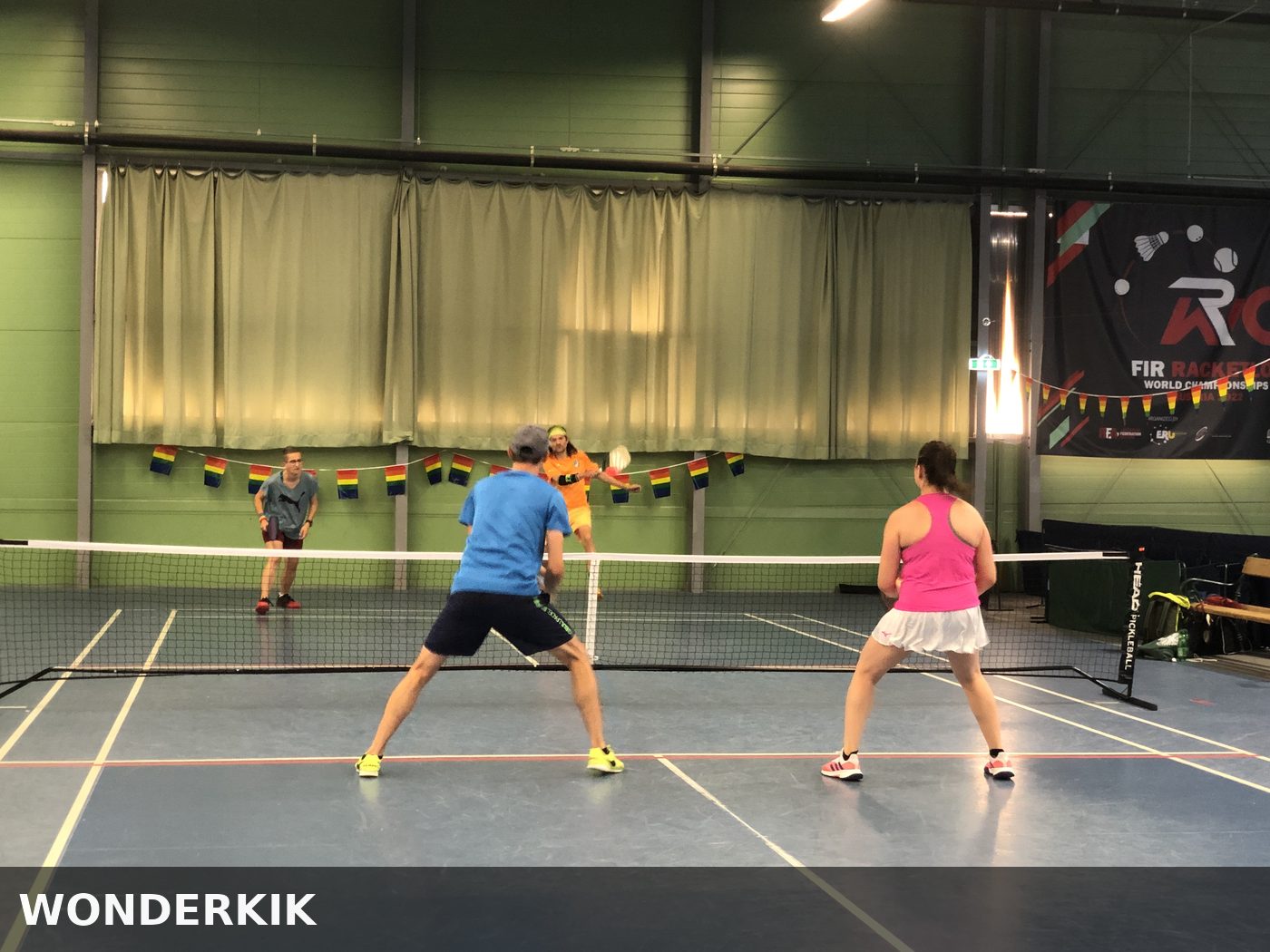
Pickleball tournament Friday 19 July – CC CC BY-SA 4.0 (Wikimedia Commons)
The bottom line
Pickleball elbow is a dose problem: too many swings, too stiff a paddle, too tight a grip. Fix the gear and the grip, respect recovery, and most players are back on court in a month. If it’s been painful longer than two months, see a professional rather than guessing.
Racquet sports player and writer covering pickleball, padel, tennis, badminton, and squash. Former collegiate tennis player turned recreational pickleball enthusiast. Jackson writes beginner-friendly guides to help new players get on court faster.







Recent Comments