Padel’s reputation says “tennis with walls” and this half-truth sets everyone up wrong on day one. The scoring is tennis’s, mostly. The strategy is closer to squash’s. And the serve — underhand, bounced, aimed at glass — exists solely to be a formality.
Here’s how to play padel, from your first point to your first win, in plain English.
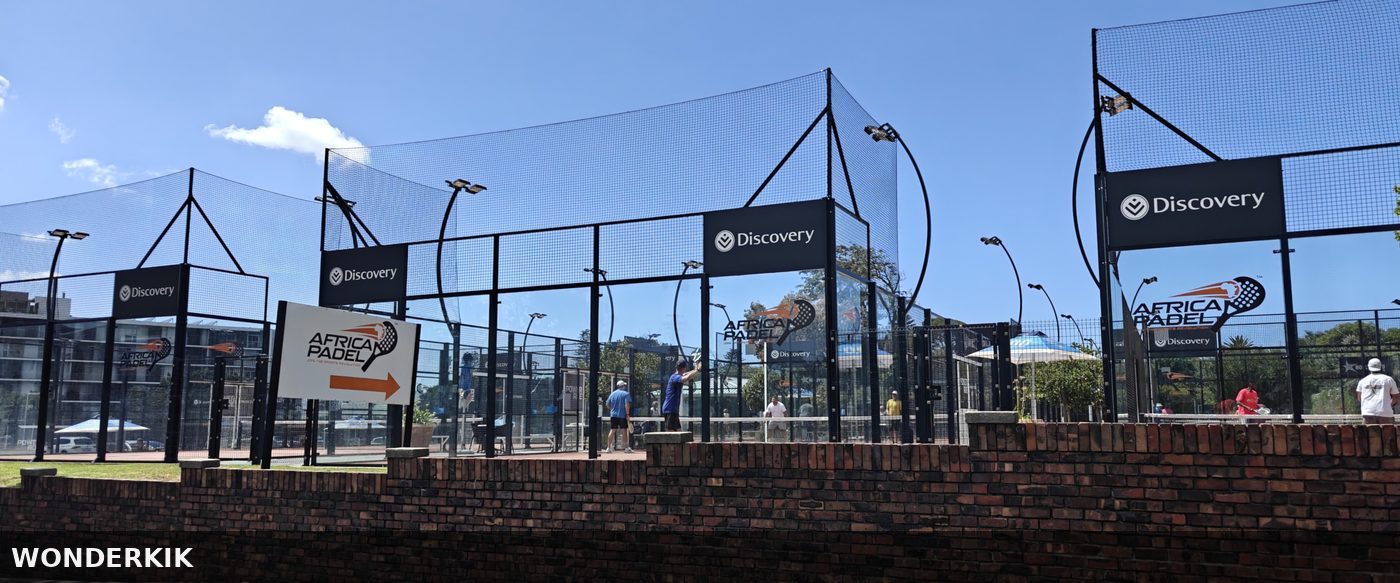
Africa Padel courts in Claremont, Cape Town, with signage for partner company Di – CC CC BY-SA 4.0 (Wikimedia Commons)
The court, in one breath
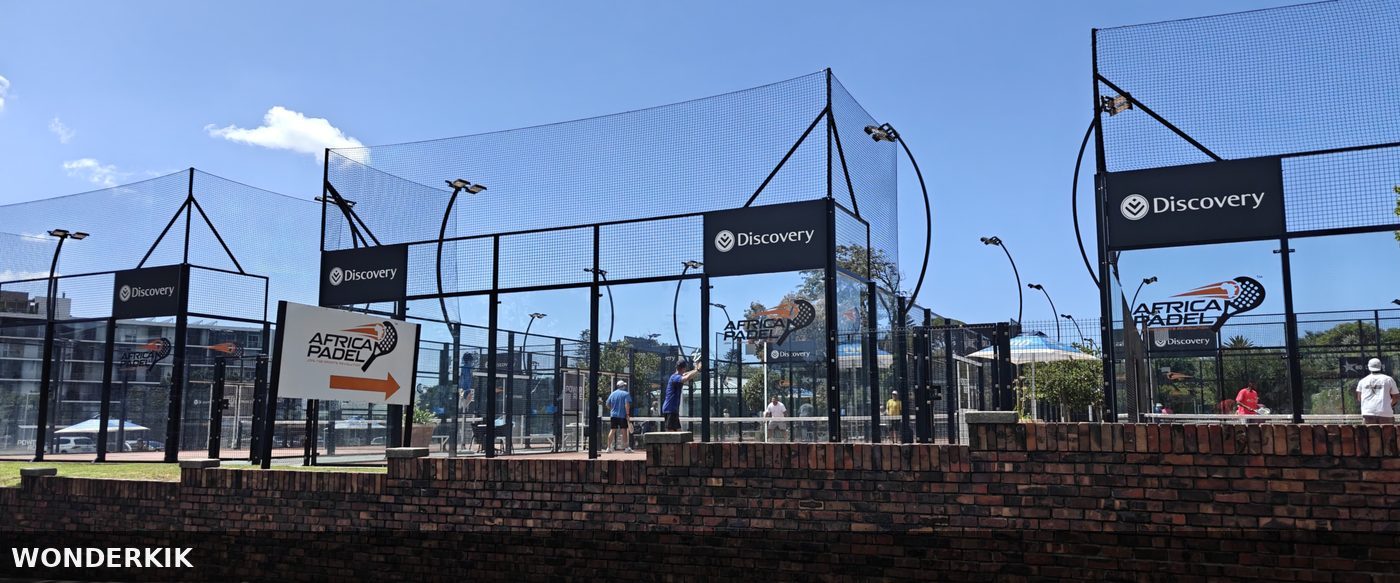
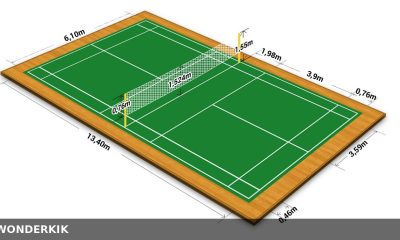
The padel court is 20 meters long by 10 meters wide (about 66×33 feet), closed in by glass panels at the back and on parts of the sides, with metal mesh on the top sections. Net height is 88 cm in the center (about 34.5 inches). Everything important happens inside that box — because the walls keep the ball alive.
That one fact — the walls are in play — explains 80% of padel’s strategy. Our padel court dimensions guide has the full spec if you need the details.
Africa Padel courts in Claremont, Cape Town, with signage for partner company Di – CC CC BY-SA 4.0 (Wikimedia Commons)
The serve: underhand, bounced, into glass
This is the rule that shocks everyone:
Stand behind the baseline, like tennis.
Toss or drop the ball, let it bounce, and hit it underhand, below your waistline.
The serve must land in the diagonal service box — and in most formats, it must touch the back glass on the fly to be legal.
That’s it. No overhead. No aces in the tennis sense (your serve basically can’t end a point). Padel decided serve length like a civics decision: the point should start fairly. So the serve becomes a warm-up shot, and the actual rally begins right after.
Scoring (the tennis part)
Padel scores like tennis: love, 15, 30, 40, deuce, advantage, and tiebreaks in most formats. You play games → sets (usually 6) → match depends on format (often best-of-three sets). If you’ve ever watched tennis, the digits will be the only familiar thing on the court.
The wall rules (the squash part)
Two rules run everything:
Bounce first. A ball can only hit your own back (or side) wall after bouncing once in your court. Volley-cleaning a fast shot directly into the glass without a bounce is a fault.
Opponent’s side: the ball must bounce on their floor before it touches a wall there — a ball that goes wall-first on their side is out.
Learn to read the rebound (the scrape-and-turn of a ball coming off glass) and you’ll win points no one in your beginner group can defend yet.
The four beginner strokes worth drilling
Before you worry about smashes and bandejas (the advanced spin shots), nail these:
Serve-plays: safe, deep, and down the middle on your serve — place it where the opponents aren’t.
The drive: a tennis-ish groundstroke — the bread and butter rally shot. Keep it flat and control the center of the court.
The lob: hit the ball high and deep toward the back glass. In padel, the lob is a defensive weapon — it pushes opponents off the net and earns you time.
The volley: padel has no kitchen restriction, so volleys at the net are powerful. Move up to the net whenever you get the chance; net dominance in padel is the single biggest difference between wins and losses at low level.
The golden padel principle for beginners
Every point is a positioning problem before it’s a power problem. The court is small, but the walls make every defensive position recoverable. Beginners lose padel points by swinging hard; players win them by being in the right place. Watch a club match and you’ll notice the winning duo isn’t usually the hard hitters — it’s the pair that shuffled into position.
The racket you can’t use
A tennis racket. Ever. The padel racket is solid, drilled face, 360–390 grams, thick and stringless. Trying to play padel with a tennis racket is like driving a race car on cow paths — it’ll work until it very suddenly won’t, and the wrist damage between wall rebounds is real. Our padel racket guide explains the shapes and what matches your level.
First match checklist
Book a rental or intro session at a padel club; most loan pairs of rackets for beginners.
Wear court shoes (not running shoes — the surface is sandy-rubber compound).
Go with a partner, or let the club slot you into a beginner foursome. Doubles is the only format.
Laugh at your first ten wall bounces. Everyone does.
How to get better in two weekends
Drill the lob — it’s the most under-appreciated stroke in beginner padel. A good lob turns the court around.
Get to the net on your serve — serve, then take two steps forward; at beginner level the front-court pair wins.
Watch the rebound, not the ball — your eyes follow the ball into the glass and you’ll early-hang your head. Watch it come off the glass and you get the free half-second that decides rallies.
Yes, and honestly it’s smoother for some people. The underhand serve removes the biggest tennis obstacle, and the wall forgives beginner strokes. Tennis skills transfer, but lack of them isn’t a handicap here.
How long does a padel match last?
Typical best-of-three sets runs 60–90 minutes at club level. Rally-heavy matches run longer — that’s the wall tax.
Do I have to play doubles?
At any real club, yes — padel is doubles-only by regulation. It’s why the sport is so social: you’re never alone on the court.
What’s the difference between a padel serve and a tennis serve?
Everything. Padel is underhand, below the waist, bounced first, and must hit the back glass in most formats. Tennis serve is overhead and a weapon. Padel’s serve is designed to not end points; tennis’s serve is designed to end them.
Can I lob in padel like in tennis?
Yes — and it matters more. In tennis, a lob is a desperation shot. In padel, deep lobs toward the back wall are a core tactical weapon because the wall keeps them playable and forces your opponent off the net.
Racquet sports player and writer covering pickleball, padel, tennis, badminton, and squash. Former collegiate tennis player turned recreational pickleball enthusiast. Jackson writes beginner-friendly guides to help new players get on court faster.











Recent Comments