Padel is a racket sport that’s gone from niche hobby to one of the fastest-growing sports in Europe in about a decade — millions of players across Spain, Argentina, Italy, Sweden, and beyond, with an Olympic bid now officially on the table for the Brisbane 2032 Games.
Here’s what padel actually is if you’ve never stepped onto one of those glass-walled courts, plus why the sport hooks basically everyone who tries it.
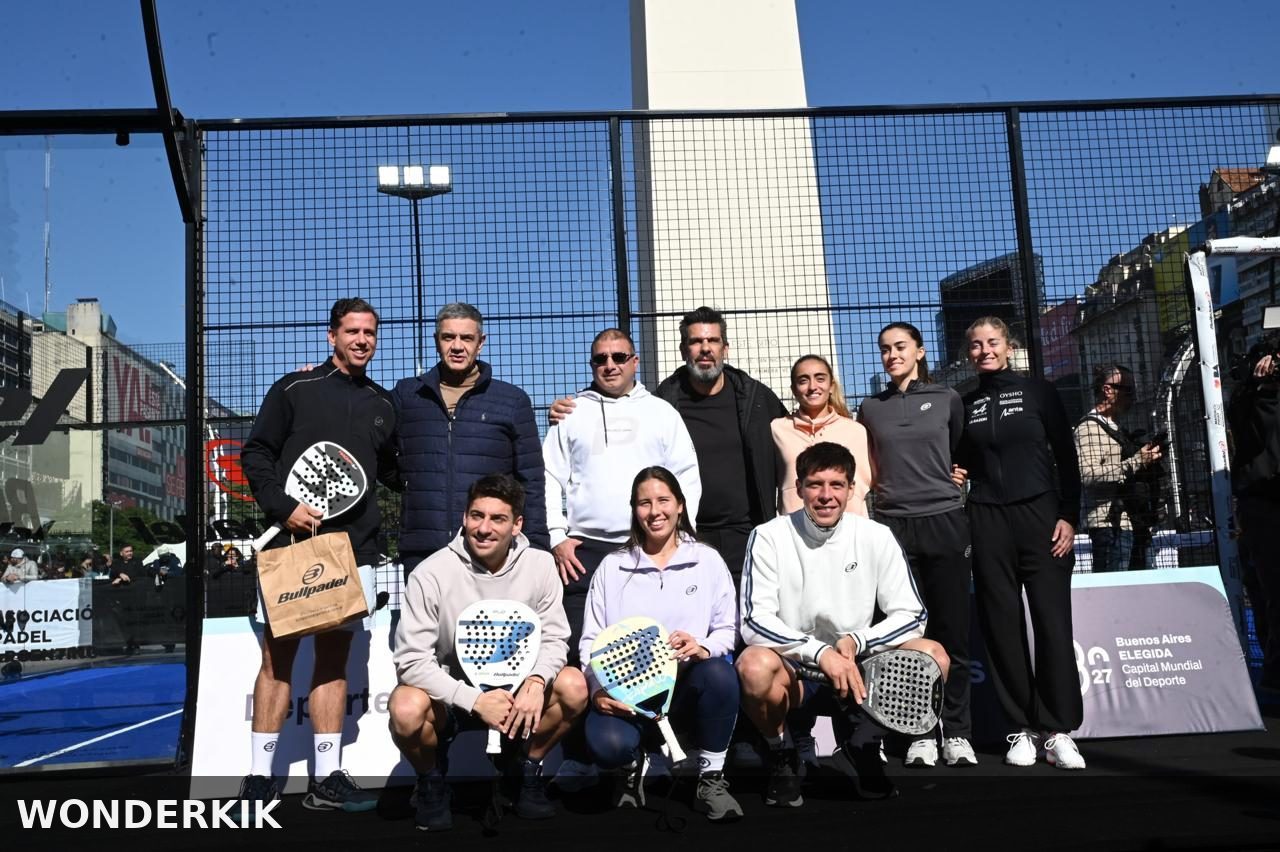
Jorge Macri during a padel exhibition at the Buenos Aires obelisk before the sta – CC CC BY 2.5 ar (Wikimedia Commons)
The 60-second definition
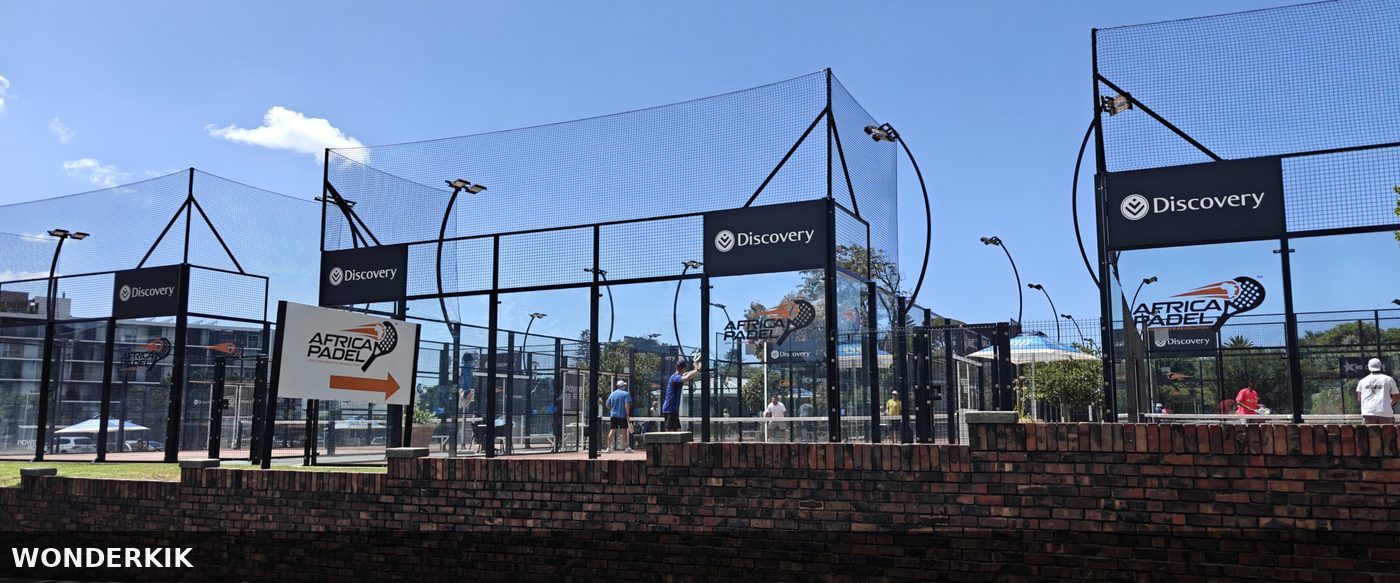
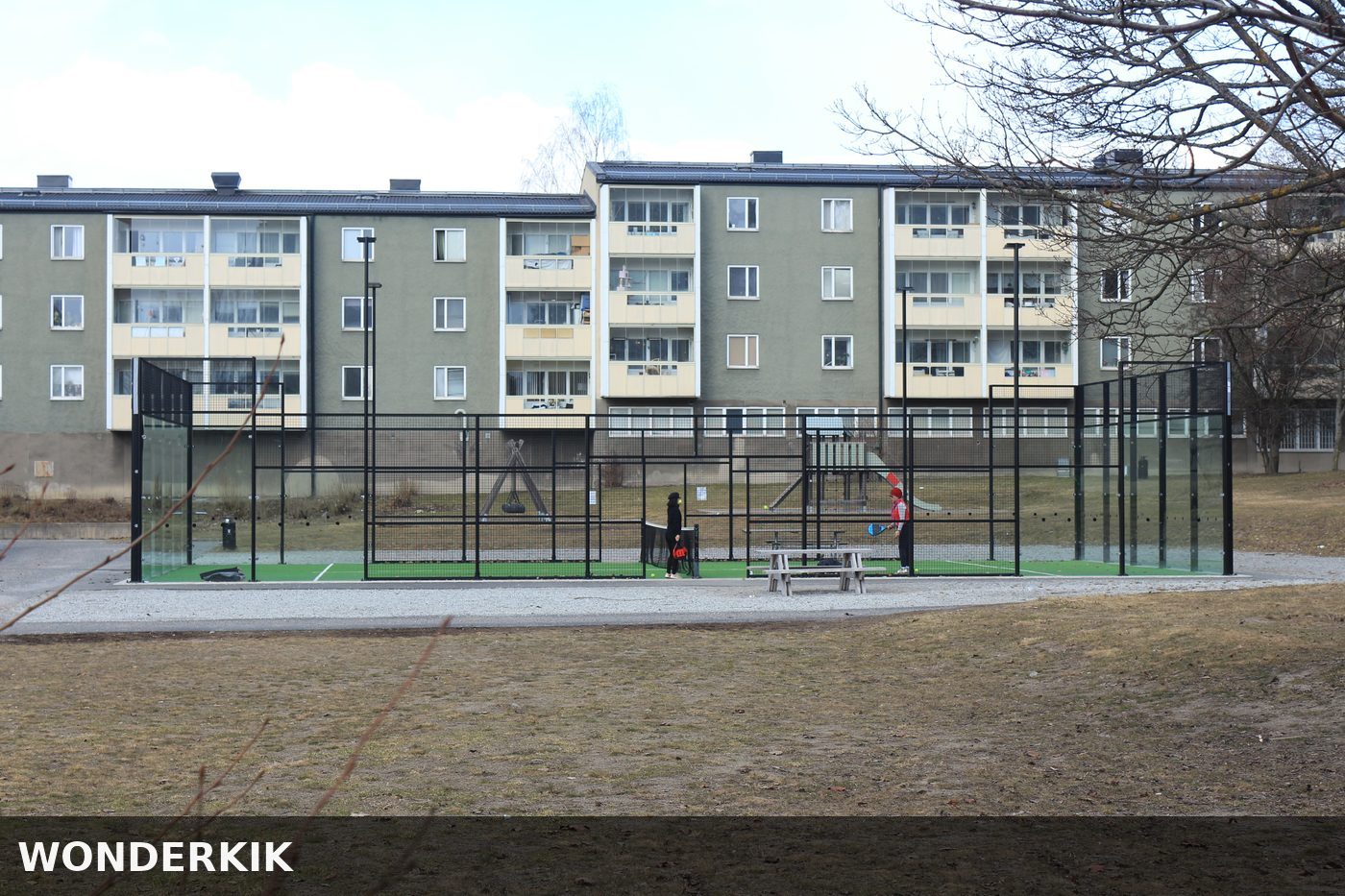
Padel is a doubles racket sport played on a rectangular court roughly 20×10 meters (about 66×33 feet), enclosed on all sides by a mix of glass and mesh walls. You play it with a solid, perforated paddle (no strings) and a ball similar to a slightly firmer tennis ball. Points are started with an underhand serve — no tennis-style overhead smashes allowed.
And here’s the defining twist: the walls are legal. The ball can rebound off your own back (and side) glass, giving every defensive rally a second life and turning the court into a strategic box rather than open space.
Bagartorp padelbana. Bostadshus i Bagartorp, Solna. – CC CC BY-SA 4.0 (Wikimedia Commons)
Wait, is it “paddle tennis”?
People mix up padel with paddle tennis, but they’re different games. Paddle tennis uses a solid paddle too (no strings) and a deadened ball, but plays on a smaller, open court with no walls. Padel’s signature is the enclosed, walled court. If someone invites you to “paddle tennis,” you’re getting a flatter game than padel — both are fun, but don’t expect glass rebounds.
How a point works
The flow will feel familiar to tennis players — love, 15, 30, 40, deuce, tiebreaks — but the rhythm is entirely its own:
Serve underhand from below the waist, bounce the ball first, and land it in the diagonal service box.
The serve must then contact the back glass on the fly to be legal in most regular formats (yes, seriously — the wall is part of the serve).
Once the serve is in, both teams rally. The ball can be hit off the floor, or off your own walls after a single bounce on your side.
Volleying is allowed (no kitchen restriction like pickleball), and end games are won at 4 or so until you hit 2 games clear in most sets.
If that serve rule sounds odd, it’s intentional: padel borrowed tennis’s scoring but decided to make the serve a warm-up, not a weapon. The same philosophical nerf that pickleball’s underhand serve and double-bounce accomplish.
Why the walls change everything
In tennis, an out is an out — the ball leaves the court and the point dies. In padel, a ball that would be a clean winner in tennis comes flying back off the glass.
Practically, what this teaches: defense is a skill, not a defeat. You can return near-impossible shots off the back wall because the wall is your teammate. The result is longer rallies, more angles, and a game that rewards brain over brawn. It’s why squash fans (another wall sport) pick up padel faster than tennis players do.
Who plays padel
In Spain, padel outranks tennis in club membership at many facilities; celebrities, footballers, and royalty have been photographed on padel courts; and the sport has become a genuine cultural fixture across Europe and South America. It’s played by everyone from retiree doubles to professional touring circuits with real sponsorship money.
The social engine is the same one that powers pickleball: small court, doubles default, approachable learning curve. In padel’s case, but with the added theatrics of glass walls and faster ball speed.
How to get started
Find a club: padel is played at clubs, not public parks, because the courts are expensive to build. Almost every mid-size European city now has one — book an intro session and ask about beginner racket loans.
Gear: a padel racket (solid, drilled, ~360–390g) — not a tennis racket, ever. Beginners often hire or borrow at clubs first. Our padel racket guide explains what actually matters when you buy.
Bring a partner or go solo: doubles is the game, and most clubs will slot you into a beginner group.
Is padel better than pickleball or tennis?
That’s the wrong question — they suit different moods and priorities. Padel is more athletic than pickleball once you progress, and more tactical than tennis thanks to wall geometry. If you’re comparing the three racket sports, we’ve got the head-to-heads: padel vs tennis, pickleball vs padel, and pickleball vs tennis.
For the fastest route from “what is this” to “I’m obsessed,” read the padel rules for beginners next — it’s everything you need before your first match.
The basics are easy — the serve is underhand, the court is small, and the wall rescues your mistakes, so you get playable fast. Mastery is deep: reading the wall, spin, positioning. It’s genuinely beginner-friendly at club level.
Can I play padel in my running shoes?
No. Padel courts are typically synthetic grass-style surfaces with subtle sand infill; proper indoor court shoes keep you from slipping, and your knees will thank you.
Is padel like squash?
Squash is the closest cousin most people know — both use walls and an enclosed court. But padel has rackets, scoring like tennis, doubles default, and a lower ball speed. If you like squash’s wall play but want a more social, less wall-hugging game, padel is it.
Is padel more expensive than tennis?
Generally yes on court costs (club fees and indoor facilities price higher than free public tennis courts) but comparable on gear. Availability varies a lot by country — in Spain padel is cheap and everywhere; in the US it’s still a club sport.
Do I need to be fit to play padel?
At beginner level, no. As you improve, lateral movement, lunges into walls, and the rally length make it genuinely athletic. It’s a sport you can grow into.
Racquet sports player and writer covering pickleball, padel, tennis, badminton, and squash. Former collegiate tennis player turned recreational pickleball enthusiast. Jackson writes beginner-friendly guides to help new players get on court faster.











Recent Comments