Elena Rybakina’s path to world No. 1 is one of the strangest and most satisfying in modern tennis. A Moscow-born player who switched to Kazakhstan, she won Wimbledon in 2022 as a big-serving surprise, climbed quietly for years behind the sport’s bigger headlines — and in 2026, finally reached the top of the women’s game.
This post covers her full career: the nationality switch, the Wimbledon title, the injuries that slowed her, and her 2026 breakthrough to No. 1.
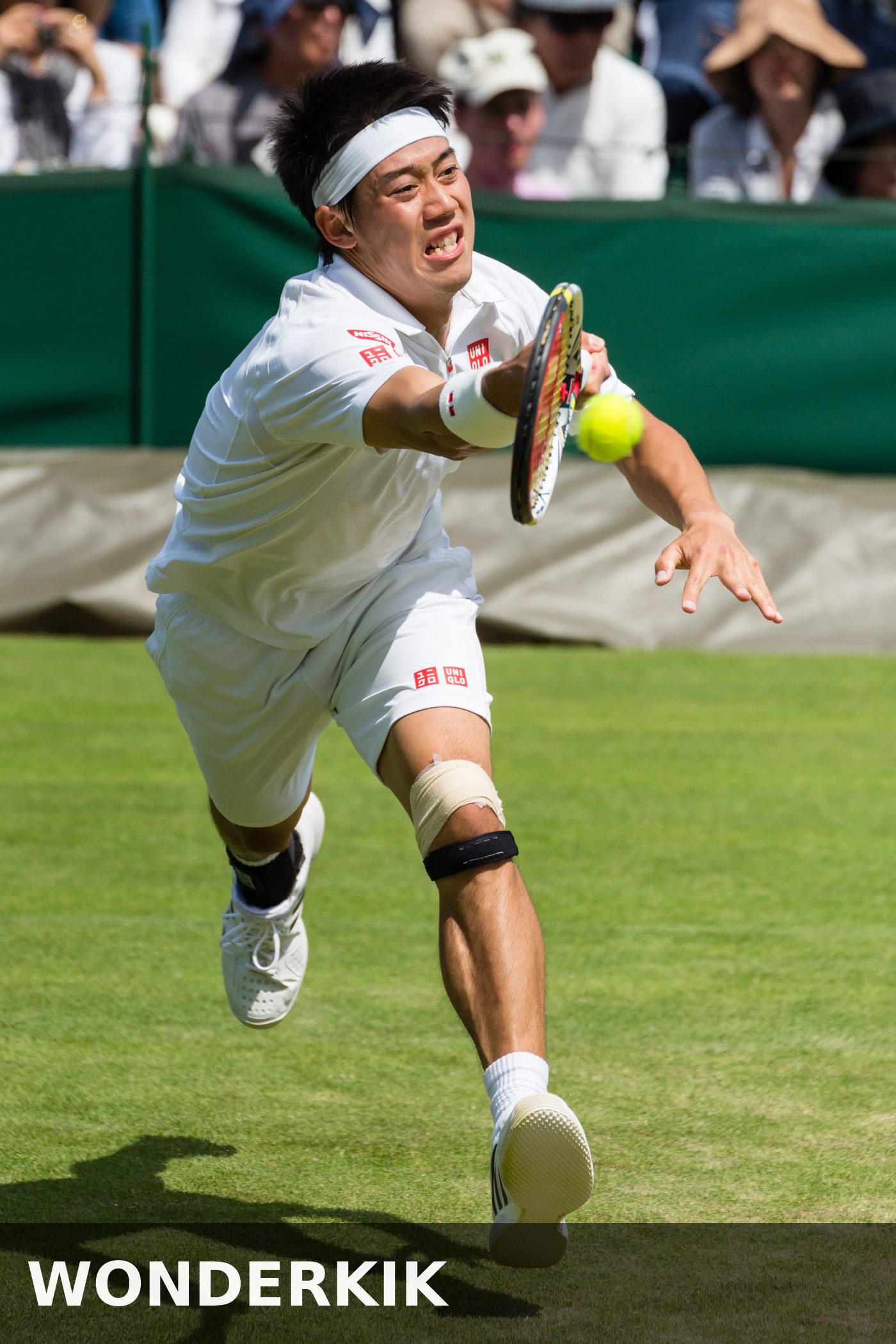
Kei Nishikori lunging for the ball in his first round match at the 2013 Wimbledo – CC CC BY-SA 3.0 (Wikimedia Commons)
Quick facts: Elena Rybakina
Detail
Info
Full name
Elena Rybakina
Born
June 17, 1999 — Moscow, Russia
Nationality
Kazakhstani (since 2018)
Height
6 ft 0 in (1.84 m)
Plays
Right-handed (two-handed backhand)
Turned pro
2014
Highest ranking
No. 1 (2026)
Grand slam titles
1 (Wimbledon 2022)
Coach
Stefano Vukov (multiple stints) / others during the 2025–26 period
Billie Jean King Cup
Kazakhstan
Serve
One of the fastest on the WTA Tour
Early life: from Moscow junior to Kazakhstan pro
Elena Rybakina was born in Moscow and grew up in the Russian capital’s tennis system. Her parents were not athletes, but she showed athletic precocity across sports — she originally trained in gymnastics and ice skating before being steered to tennis as a junior.
She won the 2014 junior Grand Prix circuit titles and reached No. 5 in the junior world rankings before turning professional in 2014 at age 15.
The nationality switch that changed her career
In 2018, at age 19, Rybakina made a decision that would define her professional life: she switched national allegiance to Kazakhstan. The Kazakh Tennis Federation offered her direct financial support, coaching resources, and guaranteed tournament access — something the packed Russian junior system couldn’t match.
The move was controversial in Russia but proved pivotal:
– She gained WTA access and funding that accelerated her development
– Representation in the Billie Jean King Cup came immediately
– It also insulated her from the qualifying-route grind common to unsponsored Russian juniors
By 2020, the switch was clearly paying off: she reached two WTA finals that season and broke into the top 20 for the first time.
Career timeline: the complete arc
2018–2020: The breakthrough years
2018: Switched to Kazakhstan; first WTA main-draw wins
2019: Reached top 30; first WTA final
2020: Reached two more finals; entered top 20
2021–2022: The Wimbledon coronation
2021: Consistent quarterfinal runs at slams; top 20 stability
2022: Won Wimbledon — the defining moment. En route she beat several high seeds, then defeated Ons Jabeur 3–6, 6–2, 6–2 in the final. The win made her the first Kazakh grand slam champion.
2023–2024: The near-misses
2023: Reached Australian Open final (lost to Sabalenka); reached No. 3 in the rankings
2024: Won the Rome Masters; a strong clay season after years of being seen as a grass/indoor specialist
2025–2026: The climb to No. 1
2025: Multiple finals; consistent top-5
2026: Beat Aryna Sabalenka in a decisive match to take world No. 1 — completing a climb that had stalled for two years behind injuries and the Sabalenka era
Playing style: the big-serve architect
Rybakina’s game is built around her height and her serve. At 6’0″, she generates free points that few women can match:
Shot breakdown
Shot
Rating
Notes
Serve
9/10
Among the fastest and most consistent on tour
Forehand
8/10
Heavy, flat, decisive from mid-court
Backhand
7/10
Solid two-hander; consistent under pressure
Net game
6/10
Improving; not a defining strength
Movement
7/10
Good for her height; she moves forward well
Return
7/10
Underrated; she steps in on second serves
Her game is “architectural”: she builds points with the serve, then controls the rally on her terms. When her serve is landing, she’s nearly unbeatable — which is why her biggest wins (Wimbledon, the 2026 No. 1 decider) all featured dominant serving conditions.
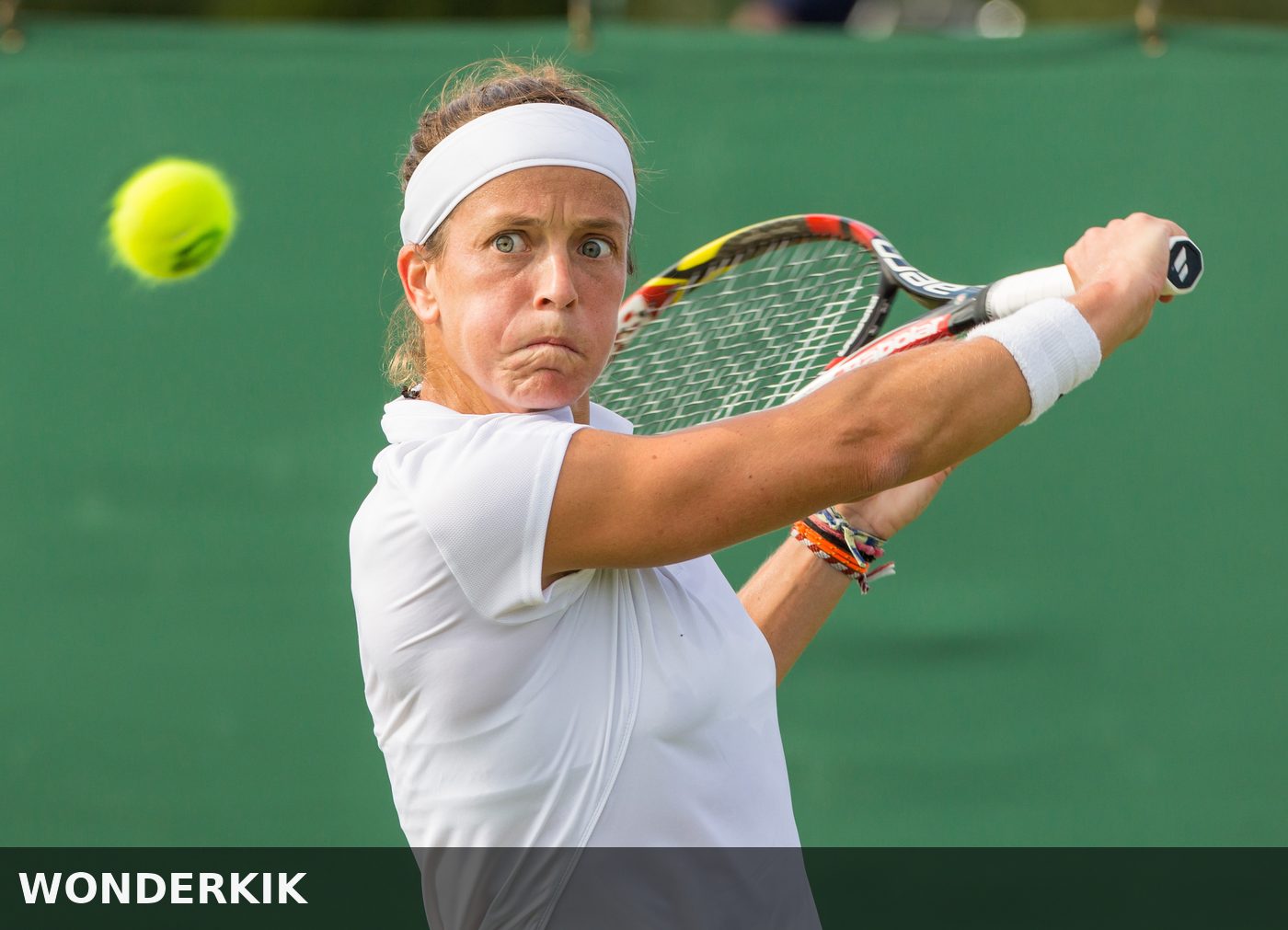
Lourdes Domínguez Lino in the first round of the 2015 Wimbledon Qualifying Tourn – CC CC BY 3.0 (Wikimedia Commons)
The Sabalenka rivalry
The rivalry that defined Rybakina’s climb is with Aryna Sabalenka — the hardest-hitting player of the 2020s. Sabalenka beat Rybakina in the 2023 Australian Open final and led their head-to-head for years.
Their 2026 match that decided world No. 1 was billed as serve vs. serve, power vs. precision. Rybakina’s steadier serving and bigger points won out — a result that flipped the public narrative from “Rybakina can’t beat the best” to “Rybakina is the best.”
Injury history and the comeback
Rybakina’s career has been interrupted repeatedly by health problems:
– 2023–2024: Multiple respiratory illnesses and back issues forced withdrawals at several majors
– 2025: A shoulder problem limited her serving rhythm early in the season
– 2026: A full, healthy season coincided with her rise to No. 1
Her team has increasingly managed her schedule around protecting the serve and avoiding jammed, humid slams where her illness history re-emerged.
Kazakh tennis legacy
Rybakina is the most important athlete in Kazakh sports history on the world stage. Her Wimbledon title was the country’s first grand slam in any sport, and her 2026 No. 1 ranking makes Kazakhstan the home of the world’s best women’s player.
The switch was derided in some corners as a “purchase” of nationality, but Rybakina’s commitment to Kazakhstan — she plays the Billie Jean King Cup for the country and credits its federation for her development — has won over most critics.
What’s next for Elena Rybakina
At 27, Rybakina is at her peak. Her targets:
– Win a second grand slam — Wimbledon 2022 is her only major to date
– Defend the No. 1 ranking through the 2026–27 season
– Complete the set of surfaces — she’s proven on grass (Wimbledon) and is building toward the clay/indoor titles she needs for a true all-surface CV
The 2026 US Open and 2027 Australian Open will be early tests of whether she can convert No. 1 into a multi-slam career.
Yes — Elena Rybakina became world No. 1 in WTA singles in 2026, following her victory over Aryna Sabalenka. She had previously reached No. 3 in 2023–2024 before completing the climb to the top spot.
How tall is Elena Rybakina?
Elena Rybakina is 6 feet (1.84 meters) tall, one of the tallest players in the women’s game. Her height powers one of the biggest serves on the WTA Tour.
What grand slam titles has Rybakina won?
Elena Rybakina has won one grand slam title: Wimbledon 2022, where she defeated Ons Jabeur in the final. She reached the Australian Open final in 2023 (lost to Sabalenka) and has been a consistent slam quarterfinalist since.
Why does Elena Rybakina play for Kazakhstan?
Rybakina was born in Moscow, Russia, but switched her sporting nationality to Kazakhstan in 2018, receiving funding and support from the Kazakh Tennis Federation. She has represented Kazakhstan in the Billie Jean King Cup since the switch.
Racquet sports player and writer covering pickleball, padel, tennis, badminton, and squash. Former collegiate tennis player turned recreational pickleball enthusiast. Jackson writes beginner-friendly guides to help new players get on court faster.









Recent Comments